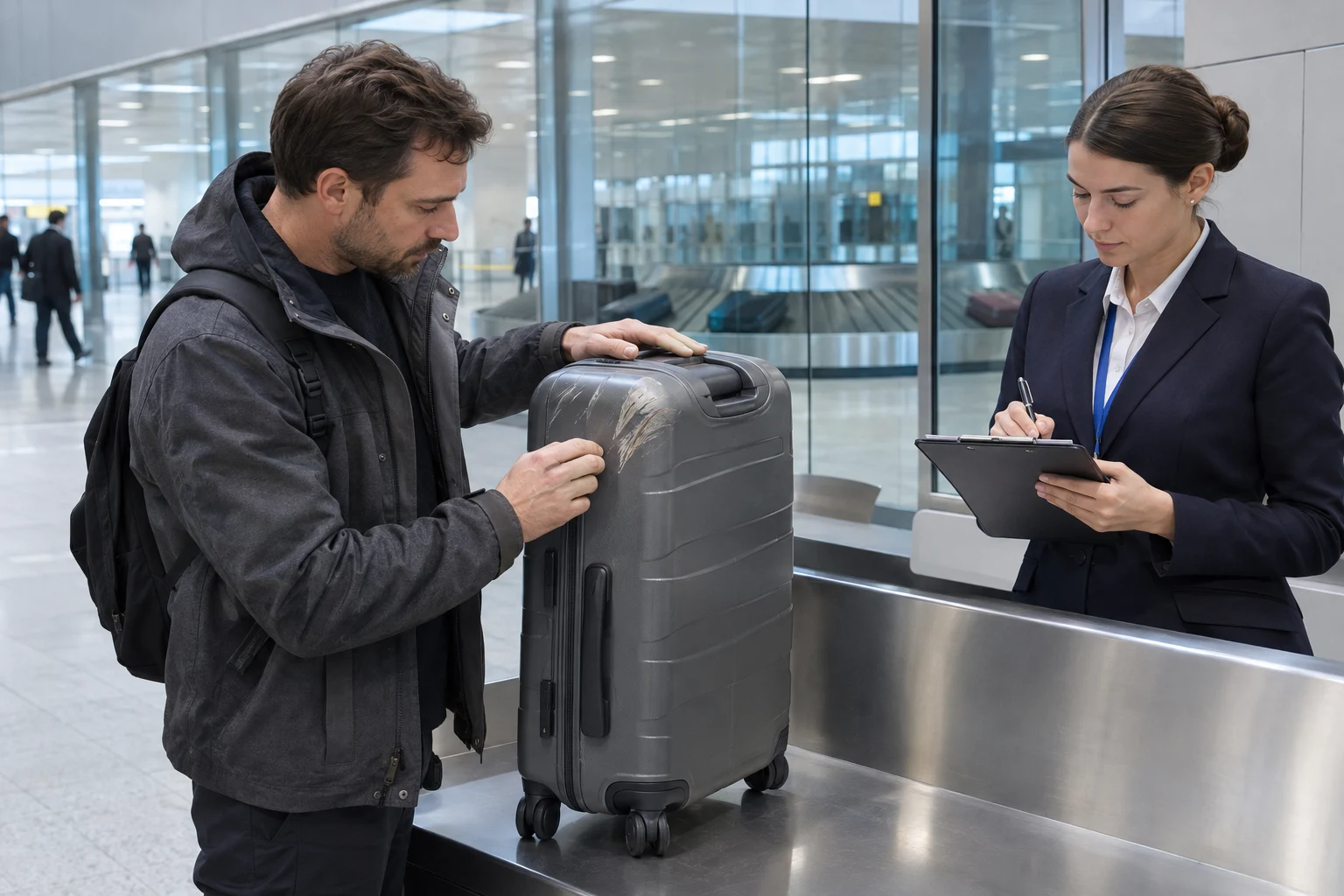

Travel baggage insurance: delay, loss and damage
Delayed baggage, a damaged suitcase and a missing possession are different situations. Medical travel insurance does not automatically protect every personal item. For a traveller from Moldova, first check whether a separate clause exists and when it can apply.
This article explains insurance questions and evidence organization. It promises no reimbursement or amount for every delay and confirms no separate product available through ING Broker. Read carrier requirements and insurer conditions separately without importing rules from other markets.
Checked baggage or belongings kept with you?
Describe who had custody at the relevant time. A suitcase handed to a carrier and a backpack kept by the traveller raise different evidence and procedure questions. Do not assume a general baggage label treats them identically.
Keep the handover record and route link where available. For multi-segment journeys, record when you noticed the problem and where baggage should have arrived. This timeline helps but does not independently establish carrier or insurer responsibility.
For car, coach or other travel, describe actual circumstances. An airport procedure is not a universal list for all journeys. The actual contract should identify relevant transport, territories and circumstances.
Delay, loss, theft and damage
Delay may require evidence of the period and your location. Definitive loss can involve documents different from temporary absence at the carousel. Request policy definitions and procedures rather than turning ordinary words into contractual conclusions.
For damage, retain clear photographs and observable descriptions. Do not decide the replacement value is automatically the insurer's obligation. Evaluation methods need document review and requested evidence.
Theft and unexplained loss should not be called the same situation. Follow relevant procedures and obtain records from competent institutions. This article sets no legal deadline or universally sufficient document list for every country.
Which belongings were packed?
A pre-departure inventory can help identify items, especially valuable ones. Keep available purchase documents and your photographs without publishing information exposing values and locations unnecessarily.
Ask about electronics, fragile items, documents and other important categories. Being in the same suitcase does not automatically establish inclusion. An overall maximum may coexist with per-item or category rules needing confirmation.
Describe business property separately. A company laptop, photography equipment and personal belongings do not necessarily receive identical treatment. Ask before assuming a personal-baggage clause also finances commercial equipment.
Carrier and insurer procedures differ
Reporting to the carrier is not automatically notification to the insurer. Identify both procedures, contacts and records. Keep reference numbers separately so you can explain where each request was submitted and which reply was received.
Do not assume carrier compensation and insurance benefits can be combined without conditions. Disclose other payments accurately when requested. Do not conceal reimbursement or present an already funded expense as unpaid.
Ask which carrier documents the policy review needs and whether a particular response is required. Do not invent deadlines from a previous journey. Check actual requirements with relevant organizations for the current contract and circumstances.
Keep transport references separate from insurance references. For a hypothetical delay, record expected receipt, when the problem was noticed and the communications received. This does not create a compensation threshold. It helps explain the sequence without assuming that a carrier report also notified the insurer.
Purchases while waiting for baggage
Travellers may need essential items during a delay. Do not assume every purchase is reimbursable. Before relying on insurance, check the relevant clause, conditions and required evidence for eligible expenses.
Keep itemized invoices linked to the incident period without altering descriptions. A bank statement shows payment but may not identify the item. Request the document list and seek missing information from the issuer.
Do not copy daily allowances or thresholds from another product. This page states no tariffs, limits or minimum delay. Compare only conditions actually supplied for the alternatives being considered.
For each purchase, retain its description, payment evidence and date. An expense needed for convenience is not automatically accepted under the contract. Request the applicable conditions instead of copying a daily amount from another policy. Keep payments already received from any other organization visible.
Limits and values
Check the total limit and item or category maximums. Ask about valuation and wear where specified. Sentimental value and demonstrable financial value are different questions in a submission.
The premium is the contract cost; the excess is your share under the conditions. Neither is the compensation limit. A low price alone does not show which values or personal costs can be considered.
Use the same indicative inventory and journey for comparisons. Note differences in baggage, transport, people and territories. Where a category is unanswered, mark it unconfirmed rather than copying a benefit from another offer.
Storage and unattended belongings
Ask about actual storage in a vehicle, room or luggage facility. A hotel name or lock does not establish acceptance of every scenario. Read relevant conditions before departure.
Knowing where documents are and who can access luggage is useful organization, not a universal insurance condition. Request actual contractual requirements separately. General advice must not become invented duties for every traveller.
Keep luggage-storage receipts and service descriptions. Custody services and travel policies are distinct mechanisms. This page does not legally decide who is liable for an incident at a storage location.
The request file
An organized record can cover journey, handover, discovery, communications and expenses. Request the actual list for your case. Do not post identity copies, booking references or baggage labels publicly to ask about procedure.
Keep originals, photographs and submitted copies. Track replies from different organizations separately. A receipt confirmation is not a final payment decision and should not be described as one.
For further information requests, ask precisely what is missing and who can issue it. Do not create carrier documents yourself or adjust the inventory to fit policy limits. Accuracy matters more than appearing to match a commercial presentation.
Business travel and company equipment
Separate personal and company property before employees travel from Moldova. Identify the owner, the person carrying the equipment and its intended use. Commercial-property insurance and personal baggage clauses are not interchangeable solutions.
Agree who holds purchase documents and coordinates communication after an incident. Every employee does not need the complete accounting archive. A clear internal route for obtaining requested evidence may be sufficient.
Travel insurance does not automatically promise full equipment recovery or lost revenue. Item delay and a lost business opportunity are different subjects. Describe the actual interest and what remains unconfirmed.
For business travel, keep the internal contact for purchase records available before departure. This helps obtain requested documents without giving every traveller unnecessary access to accounting archives. It does not establish inclusion of company equipment under a personal-baggage clause.
Before the next departure
Check route and journey purpose against declared information. Carrier changes, extra connections and longer stays can require new questions. Do not reuse a previous trip's policy by assumption. Keep applicable documents and dates, distinguishing reservations from insurance.
Describe inventory sufficiently for later identification without publishing serial numbers or valuable collections. Keep photographs and available records safely, separately from transported belongings. They help organization but do not automatically confirm acceptance of all categories.
For family travel, know whose name appears on reservations, labels and contracts. One shared suitcase does not automatically establish ownership of every item or inclusion of every person. Ask before departure instead of changing an inventory after an incident to suit a personal limit.
On return, keep records until requests are clarified under relevant procedures. No immediate reply does not mean acceptance or refusal. Send later carrier records appropriately and keep transmission evidence without exposing trip information publicly.
Frequently asked questions
Does medical travel insurance include luggage?
Not automatically. Check the separate clause, belongings, events, territories and limits. The general policy name is not the answer.
Can I buy anything while baggage is delayed?
Do not assume reimbursement of every purchase. Check any delay clause and evidence requirements. No thresholds or eligible sums are established here.
Is a carrier report enough?
Not necessarily. Identify the insurer's procedure and contacts too. Keep references for each request separate.
How are delayed and lost baggage different?
Delay describes temporary non-arrival. Declared loss and its records follow the carrier's procedure. A policy may use its own definitions. Request the appropriate evidence instead of inventing a waiting-period payout threshold.
Insurance ING Broker SRL is a broker. The insurer reviews requests under the contract. Product availability and expense eligibility need individual verification.
Next step
Request a conversation with ING Broker to check assessment and intermediation possibilities. The broker explains options and arranges insurance. Risk acceptance, conditions and claims handling belong to the insurer under the contract. This article does not confirm product availability or coverage of an individual case.
Related reading: Separate baggage from medical expenses.
Sources and limits
- MOLDCARGO: travel-medical conditions, distinct clauses require separate reading
- National Bank of Moldova: insurance contract elements
The Romanian original records source consultation on 12 November 2026. The translation revision date does not mean the sources have been checked again. Preparation lists are editorial recommendations, not policy conditions. Cited products belong to their providers and are not ING Broker offers. Legal obligations and individual circumstances require specialist verification.