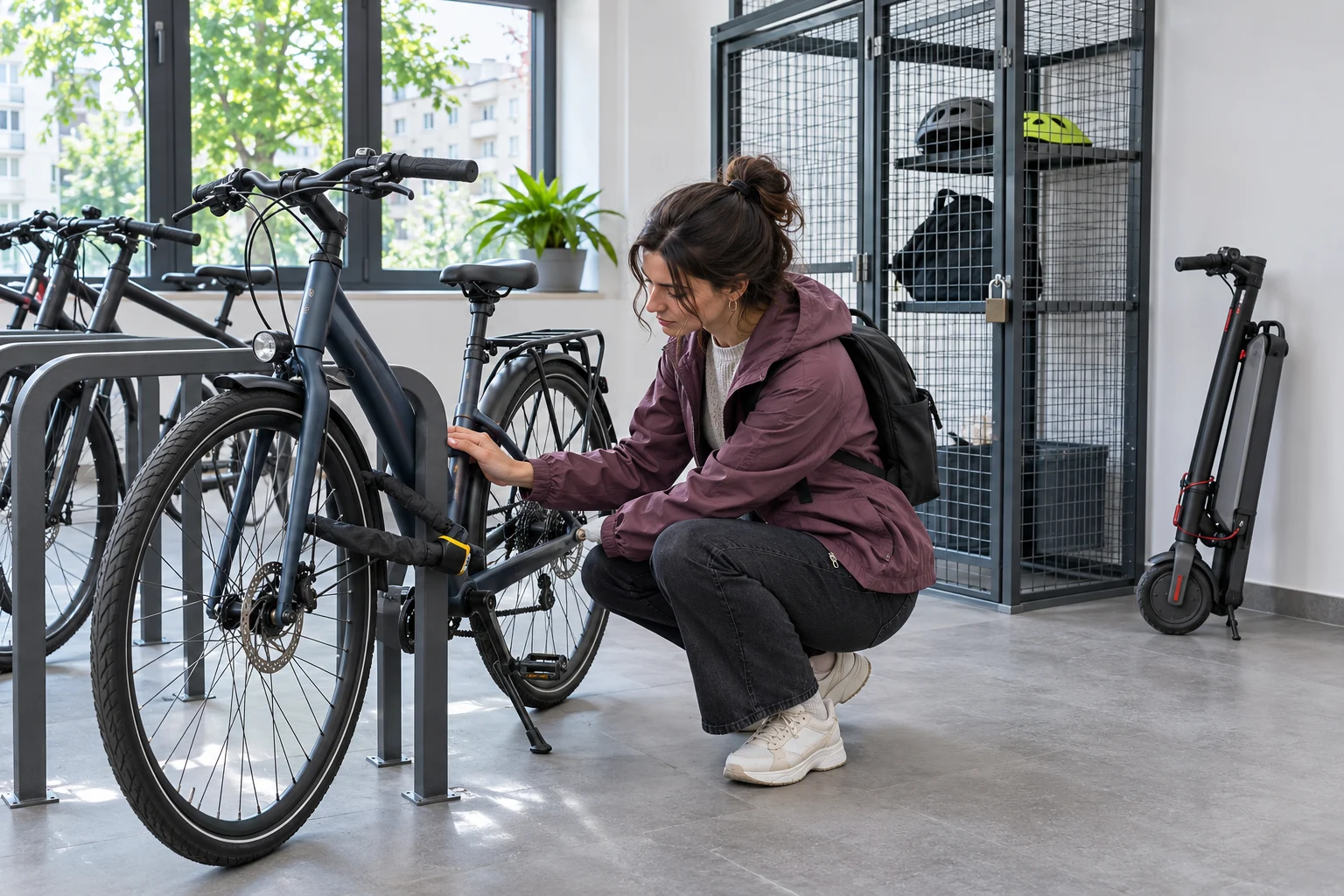

Bicycles and scooters: preparing an insurance assessment
Damage to a bicycle or scooter, injury to the person using it and harm to somebody else are different insurance questions. A policy with a large sum does not automatically include all three. In the Republic of Moldova, start by describing the actual vehicle, how it is used and where it is kept. Only then can the possibilities and conditions available for that situation be checked.
This article does not confirm a dedicated policy for every bicycle or scooter. It does not determine traffic rules or the legal classification of a particular model. Those questions require official sources and competent specialists. Its purpose is to prepare information for an insurance assessment without promising that every theft, accident or damaged component will be accepted.
Separate the property from the person using it
If the bicycle is damaged, the question concerns the property and the circumstances in which that damage is assessed. If its user is injured, personal accident insurance may be a separate discussion. If another person claims compensation, liability needs its own examination. The same vehicle being involved does not make these situations equivalent. Ask for the relevant documents and explanations for each.
A household policy, a personal accident policy and a possible property product are not automatic substitutes. Prepare three questions: what happens to the bicycle, what happens to the user and what happens to third parties? Comparing answers becomes clearer when each identifies the actual object, people, territory and events described in the contractual wording.
Identify the model and its actual specifications
Record the brand, model, available serial number and purchase documents. For an electric vehicle, provide the specifications requested in the questionnaire rather than estimating them from its appearance. Disclose changes to the original configuration. A modified scooter should not be described as the standard model if that is no longer accurate. A precise description supports relevant questions; it does not guarantee acceptance.
Photographs kept for the assessment can show condition and equipment, but they do not independently justify every stated value. Keep invoices and documents in a private file. Do not publicly post the full serial number, storage address or details about access to the premises. First ask what is needed and how to send it securely, rather than uploading every personal document at the initial enquiry.
Personal use is not the same as rental
Explain whether the vehicle is used for personal journeys, work, deliveries, competitions or rental. A proposal for personal use cannot automatically be applied to a fleet made available to other users. Frequency, users and supervision should be described accurately. Availability must be checked against the real activity, not against a more convenient description.
A company can prepare an inventory and handover procedures without unnecessary customer information. Identify who owns the vehicle and who operates or uses it. Keep the relevant versions of rental or service agreements. This article does not interpret those contracts or establish a user's liability. It helps separate commercial relationships, operational arrangements and insurance questions.
Property value and the cost of components
Separate the original purchase price from the value proposed for assessment. Identify important accessories and documented modifications without assuming they are included. A battery, electrical assembly, navigation device or mounting system can raise different questions from the frame itself. Ask which property and components are actually identified in the documents.
Check how wear, repairs and replacement components are treated under the proposed conditions. Not every breakdown is an insured event. Distinguish routine maintenance from damage caused in an event and disclose the known history accurately. A total without an inventory may not explain what was requested or provide a common basis for comparing proposals.
Keeping the vehicle at home or in shared premises
Describe its usual storage: inside the home, a garage, an outbuilding, a shared space or another location. These should not be treated as identical in a property policy assessment. Check the addresses and relevant definitions. A bicycle belonging to the family does not establish that every place where it is left is an insured location.
Ask about the security requirements actually stated in the contract without publishing your own security details. A lock or access system alone does not prove that a theft will be accepted. Understand the circumstances and documents that would be considered. If storage changes, check whether the information needs updating instead of assuming the original proposal extends without conditions.
Journeys and parking away from home
State the towns and countries where the vehicle is used and whether it is carried in other transport. A proposal linked to property at the home address does not automatically provide protection while travelling. Ask about territory, relevant periods, parking locations and users. The commercial product name is not a substitute for these answers.
For carriage by car, aircraft or another carrier, retain the carrier's conditions separately from insurance documents. Carrier liability is not the same as a policy for your property. This article does not establish a carrier's limits or duties. Handover records and identification of the bicycle help support a review of the actual route and method of transport.
Describe theft and damage through their circumstances
Before choosing, ask for the distinctions between situations listed in the wording. The word theft is not a complete description of every disappearance of a vehicle or component. Ask which locations, circumstances and documents matter to the insurer's assessment. In your comparison table, distinguish a confirmed answer from a question that remains subject to further review.
After an incident, put personal safety first and follow the competent authorities' instructions. Separately check the policy notification procedure and preserve available information. Do not invent a timeline or cause to fit a contractual condition. A broker can help explain administrative steps but cannot promise the claim outcome or replace a competent investigation.
For electric vehicles, ask about the battery separately
Include the battery and charger in the property description where relevant to the enquiry. Identify replacements and available documents. Ask about detachable components, additional equipment and the difference between a fault and accidental damage. These are contractual questions, not instructions for using or repairing the vehicle's electrical system.
Do not alter a battery, charger or settings for a photograph or file submission. Follow competent product instructions for use and maintenance. Have a technical problem checked by a suitable specialist rather than drawing conclusions from an insurance article. Maintenance advice and confirmation of insurance coverage have different functions and should not be confused in communication.
How do you compare premium, limit and deductible?
The premium is the amount paid for insurance. The deductible is the portion of a loss borne by the insured under the contract. Compare proposals for the same vehicle, use and territories. Check that accessories, components and users are described consistently. Without that common basis, a price difference may hide an important difference in the insured object or conditions.
Ask for the limits and documentation needed for a possible repair. A low price does not by itself prove that a proposal is weak, while a high price does not mean protection against everything. Keep the exclusions, meaning situations for which the contract does not provide coverage, alongside the comparison. Mark an important unconfirmed requirement explicitly instead of treating it as included by assumption.
Illustration: a personal bicycle also used for deliveries
A person initially uses a bicycle for personal journeys and subsequently starts deliveries. Before relying on an older proposal, they describe the new use and ask for the conditions to be checked. This is an illustration, not an actual customer case or a statement that a particular product accepts that activity. The point is to correct the information before choosing.
The person prepares purchase evidence, vehicle identification and the explanation of use. The property question remains separate from personal injury and claims from other people. A household proposal is not used as evidence for all situations. If no suitable solution is confirmed, that remains an assessment limitation rather than a promise that a generic policy resolves the difference.
When the owner or user changes
If you sell the bicycle or leave it with somebody else for a longer period, ask how contractual information is updated. The serial number may remain unchanged while the owner, user and storage location change. Do not assume the document automatically follows the object regardless of who uses it. Keep transfer evidence and the answer on validity. For second-hand property, obtain identification and available documents without treating a missing original invoice as automatic acceptance or rejection.
A useful final inventory check
Compare the purchase record, the actual configuration and the description used in the enquiry. Where equipment was added later, preserve the original invoice and record the later change separately. An unknown specification should remain an open question rather than being copied from a similar model online. For several vehicles, use separate inventory rows so that repairs, handovers and changes are not attributed to the wrong item.
When answers arrive, record which version of the description they address. An answer for a personally used bicycle should not migrate into a commercial rental comparison. Note the date, outstanding question and supporting document. This improves the accuracy of the discussion but does not create coverage. Resolve contradictory explanations before treating a proposal as suitable.
Frequently asked questions
Is a bicycle automatically part of home insurance?
Check the inventory, definitions and insured location. Mentioning household contents does not automatically confirm every vehicle or use away from home. Ask for an answer specific to the bicycle and its storage.
Does personal accident insurance pay for a stolen bicycle?
Do not equate insurance of the person with insurance of the property. Read the object and conditions of each contract. A missing bicycle and an injured person are separate questions even when they involve the same user.
Can a modified scooter be insured?
Describe the actual configuration and request an availability check. This article confirms neither eligibility for every model nor its legal classification. Do not hide changes or use specifications that no longer describe the vehicle.
What should I provide initially?
The model, known specifications, usage and general storage arrangements are useful. Then request the exact list and secure channel for documents. Do not publicly disclose full serial numbers, personal documents or detailed household security information.
Next step
Discuss your questions with ING Broker to check possibilities for assessment and intermediation. The broker explains options and acts as intermediary. Risk acceptance, conditions and claims settlement belong to the insurer under the contract. This guide confirms neither product availability nor coverage of an individual case.
Related reading: Separating property from home insurance.
Sources and information limitations
- DONARIS VIG: home, contents and liability - a local example
- National Bank of Moldova: elements of an insurance contract
The Romanian original records consultation of these sources on 12 November 2026. The translation revision date does not represent a new legal or product verification. Preparation lists are editorial recommendations, not policy conditions. Product examples belong to the cited providers and are not an ING Broker offer. Legal obligations and individual circumstances require specialist verification.