
CASCO insurance in Moldova: price, deductible and comparison
CASCO is voluntary insurance for your own vehicle under conditions agreed with the insurer. It does not replace RCA or mean every scratch, breakdown or theft is automatically paid. A useful comparison for a Moldova owner brings together accepted risks, vehicle value, the excess, territory and repair arrangements. The package name alone does not explain those elements or determine the response to a particular incident.
When looking for a CASCO price in Moldova, first prepare vehicle information and its actual use. A calculation for a personal car cannot be assumed suitable for taxi, courier or rental activity. This article explains practical checks without invented indicative rates, discount promises or confirmation that a particular vehicle will be accepted. An old percentage or another owner's price is not a current proposal for your own circumstances.
What do you want CASCO to protect?
Begin with the concern you want to understand: accident repairs, parking damage, theft or another event. Describe the actual situation instead of only naming a package. Similarly named proposals may use different definitions, evidence and limits. Before comparing payment, request the provision relevant to each important risk. Keep the explanation linked to the actual version offered so a reply about another package does not silently become your own contract.
Separate accidental damage from vehicle maintenance. Replacing consumables, a worn component and damage following an event are different questions. An advertising list does not promise payment of every workshop expense. Ask about exclusions and maintenance responsibilities remaining with the owner. Known condition should be described accurately rather than treating an existing problem as an uncertain future event or assuming every later service bill belongs to insurance.
Vehicle information must be accurate
Prepare the make, model, manufacturing year, identifier and registration record. Establish whether ownership belongs to you, the company or a leasing organization. MOLDASIG's public form requests vehicle type, value and use for assessment. Completing a form is not an issued policy or accepted terms. Compare entries with current documents rather than an old sale advertisement, and retain what was submitted so the final proposal can be checked against it.
Describe significant modifications, additional equipment and existing damage. For equipment added after purchase, ask whether it enters the proposed valuation. Do not send complete identity or vehicle records through public comments on your own initiative. Use the indicated channel for necessary documents and retain confirmation of the information underlying the offer. The description should concern the actual car, not a similar model with different equipment or condition.
Market value is not the owner's desired selling price
Ask how the value accepted in the contract is established and what supports it. An advertisement for a similar vehicle may inform a question but does not independently determine the insured sum. Describe your own vehicle's condition, specification and history. A figure entered in an application is not automatically recognized by the insurer. Keep the valuation basis identifiable rather than treating a preferred selling price as an agreed contractual amount.
Request separate explanations of repair and any defined total-loss situation. Ask about valuation, possible deductions and treatment of vehicle remains. A large figure on the first page is not enough: understand its application to the event and the records required for examination. Two proposals displaying the same sum may still treat particular costs differently. The question is what the actual wording provides, not what a headline value seems to promise.
How to read the deductible
The excess, also called the deductible, is the part of a loss borne by the insured under the contract. Request an explanation using the same scenario across proposals, without treating the calculation as promised compensation. Check whether a fixed sum, percentage or event-specific rule applies. The percentage basis needs to be clear in the document; identical numerical percentages do not necessarily establish the same personal contribution.
Do more than ask whether an excess exists. Record when it applies, any repair-versus-theft differences and whether events are treated separately. A lower premium can involve a greater contribution to a loss. Consider what you could bear as well as the policy-purchase budget. Compare price and participation together rather than describing two documents as equivalent protection while important assumptions about your own expense differ.
Check territory and use before departure
For travel abroad, request the territories actually written into the contract and any additional conditions. CASCO in a country does not replace the motor documents required for the journey. A travel photograph or an insurer's foreign network does not establish your international protection. Check your own wording against the planned route and keep unanswered destinations as questions instead of applying a general reassurance to every trip.
Disclose professional use, frequent journeys and people who will drive according to the provider's questions. For a car used by several employees, ask for a clear rule and maintain the relevant internal record. Do not transfer RCA driver explanations automatically to CASCO: these are different contracts and the information considered may differ. An unchanged company vehicle label does not explain every actual use or person involved.
Workshops, parts and vehicle warranty
Ask who examines the damage and how a workshop is chosen. If the vehicle has warranty requirements, present the relevant terms before selecting insurance. Request explanations of parts, labour and repair approval. A relatively new vehicle does not automatically receive authorized-dealer repairs under every proposal. Keep the final wording beside any service explanation rather than relying on a salesperson's general description of what normally happens.
Compare arrangements while the vehicle is unavailable. Roadside assistance, towing and replacement cars require confirmation. Where mentioned, ask about providers, limits and access. A family's or company's daily expense does not automatically become insured merely because it follows an accident.
Initial inspection and photographs
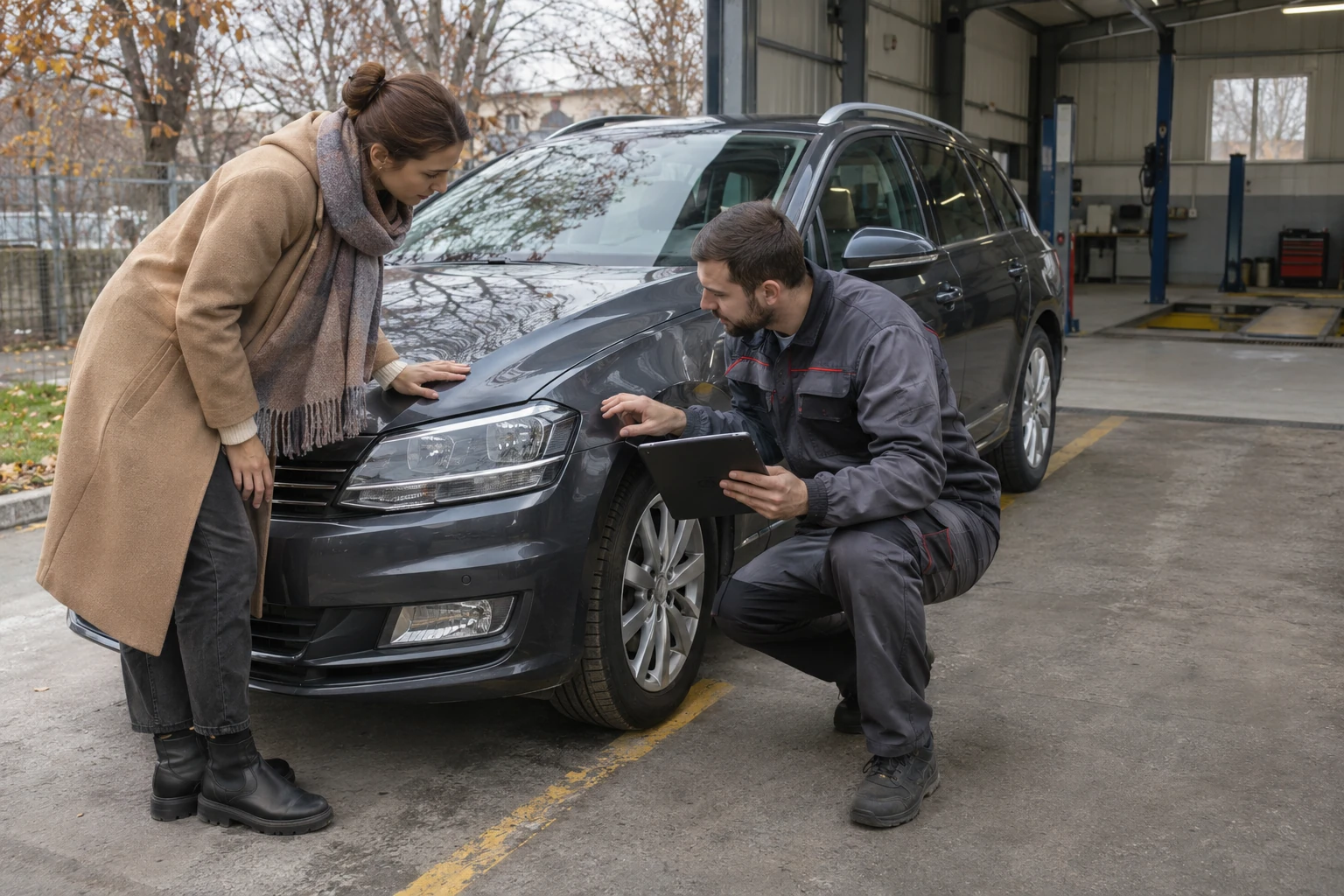
Follow the requirements for the actual proposal. Photographs must show real condition without filters concealing scratches or repairs. Retain submission dates and responses. Sending photographs to a consultant does not necessarily replace every other procedure or confirm the contract's effective moment.
Check names, vehicle, period and observations when documents arrive. Request corrections before relying on an incorrect document. For instalments, read due dates and contractual consequences. Payment or application confirmation is not equivalent to checking every commencement condition.
What to prepare after damage occurs
Prioritise personal safety and competent authorities' instructions. Then follow contractual notification and request a reference. Keep relevant photographs, documents and correspondence. This article sets no universal deadline and does not replace your event's instructions, including those from the insurer.
Before repairs or disposal of parts, clarify inspection and documentation without delaying necessary safety. An organised file can contain chronology, photographs, estimates and expense records. They support assessment but do not alone confirm payment is due or an estimate will be accepted fully.
A simple side-by-side comparison
Tabulate accepted value, risks, deductibles, territory, repair and premium. Add unanswered questions and written-response dates. Compare the same car and use. Mark unconfirmed conditions instead of filling gaps with information about a friend's policy.
A useful ING Broker discussion begins with those details. The broker explains and intermediates options; the insurer accepts risks and applies the contract. Do not seek only a complete-CASCO label. Seek a verifiable answer for your concern and the financial share remaining with you.
Leased cars: read the financier's requirements too
For leasing, driver preference is not the only consideration. Prepare financing clauses and ask what must be respected. Documented parties and communication after damage may matter. This article does not confirm a particular financier's requirements or that every insurance proposal fulfils them.
A salesperson's agreement is not the requesting party's written acceptance. Retain responses and check the final policy. If the car is replaced, sold or returned, ask separately about insurance consequences. A changed vehicle situation does not automatically update all documents and obligations.
A specific question without promising compensation
Instead of asking if everything is included, explain daily commuting and courtyard parking, then ask which documents and own contribution apply to parking damage caused by an unknown party. This is a comparison question, not a statement of cover or payment.
Record the answer beside the cited provision and check it concerns the actual offer. If the explanation refers to an absent package, request clarification. Useful answers connect scenarios to documents, not complete or premium adjectives. Use the same method for theft, windows, repairs and travel territory.
After comparison, you should know what you chose, what you declared and what remains unconfirmed. You do not need every insurance term, but should not replace unread conditions with assumptions. Retain decision documents and written clarifications.
Frequently asked questions about CASCO
How much will CASCO cost for my car?
A current calculation needs the vehicle, value, use and proposed conditions. A percentage from an old article is not an offer. Request price together with deductibles and limits.
Do RCA and CASCO pay for the same damage?
Their subjects differ. RCA concerns motor liability; CASCO concerns your own car under agreed conditions. Check the actual event and documents without assuming a particular policy pays.
Are parking scratches included?
This depends on the accepted risk and assessment procedure. Ask explicitly about unknown parties, required evidence and deductibles, not only the package name.
Next step
Request a discussion with ING Broker to check assessment and intermediation possibilities. The broker explains options; acceptance, conditions and claims decisions belong to the insurer under the contract. This article does not confirm product availability or individual cover.
Read also: Organising policies for several vehicles.
Sources and limits of this information
The Romanian source consulted these sources on 9 November 2026. Preparation lists are editorial recommendations, not policy conditions. Examples belong to the cited providers and are not an ING Broker offer. Legal obligations and individual situations require specialist verification.