
Family civil liability in Moldova
Damage caused to a neighbour or another person is not the same situation as damage to your own belongings. Family civil liability insurance needs to be checked against the people, activities and circumstances described in its contract. Do not assume that every everyday incident is included simply because a policy uses the word family.
For a household in the Republic of Moldova, a review can start with straightforward questions: who lives together, where damage could occur, what property is used and whether a home policy already exists. This page helps organise those questions. It does not determine fault in an incident or confirm a product available to every household.
Your belongings and your neighbour's loss
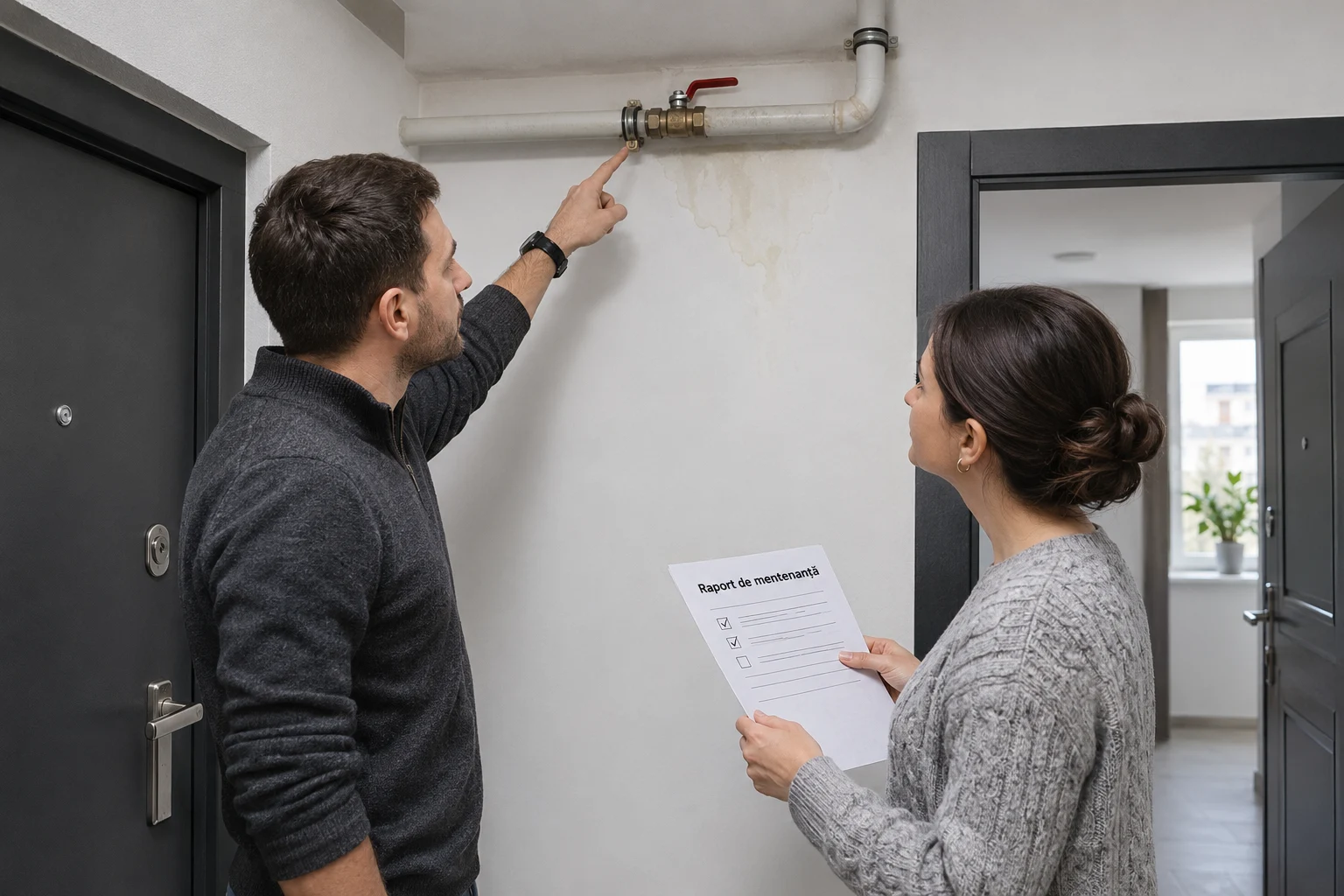
If water affects your home and the apartment below it, there are two different perspectives: damage to your own property and another person's demand. Protection for furniture must not be treated automatically as protection against a neighbour's claim. Identify the relevant contractual sections and the persons involved separately.
Local home-insurance presentations can distinguish the building, its contents and liability towards third parties. That distinction helps formulate questions; it does not prove that every proposal has identical conditions. Request the actual document relevant to your premises and household.
Neither a voluntary repair nor a payment to a neighbour confirms subsequent acceptance by an insurer. Before agreeing financial arrangements, clarify the contractual procedure and seek advice from the appropriate specialist. Safety emergencies and measures to limit damage are distinct from deciding liability.
Who is included in the family?
In ordinary language, family may include more people than a particular contract names. Ask whether specific individuals are listed, whether living at the same address matters, and how children, guests or members temporarily living elsewhere are treated. A family relationship alone does not answer those questions.
A household change merits discussion if it affects the declared information. A relative moving out, or a room being rented, may change the situation originally described. The useful questions are what needs updating and when any confirmed amendment would apply.
Keep a working list of the people for whom a review is requested without publishing their personal details. An insurer may subsequently request necessary information through an appropriate channel. A public form is not the place for identity-document copies or detailed accounts of children's private lives.
Where might the protection be relevant?
A clause concerning use of a home can have a different scope from a product concerning everyday activities outside it. Ask for the address, territory and circumstances to be specified. A short brochure statement cannot adequately establish whether an incident in a park, during a visit or while travelling would be considered.
Distinguish ownership from use. An apartment may belong to one person, be rented by another and house several household members. Describe the actual arrangement and ask who must be identified in the documents. The owner and the insured person are not necessarily the same.
If the home is also used professionally, disclose that use. Receiving customers, storing goods or providing services should not be concealed behind a description of exclusively private occupation. Business risks and household risks need a clear boundary rather than a shared label.
Children, animals and borrowed belongings
Children, animals and borrowed property raise separate questions, with answers dependent on the policy and circumstances. Request an explanation for each category. Do not assume that an incident involving a child or an animal is automatically included. This article does not establish who is legally responsible for a particular event.
Ask about borrowed property or property in your care separately from damage to a third party. A borrowed phone, a rented object and something accidentally damaged during a visit may be treated differently. Identify your relationship to the object, how it was used and who is seeking compensation.
For bicycles, scooters or other means of transport, describe the exact type and use. Private activity is not equivalent to paid delivery work or renting equipment to others. Request written clarification of the boundary with motor insurance and any applicable legal requirements, without importing rules from another country.
How should you read limits and the deductible?
A limit is a contractual ceiling, not the amount paid for every incident. Check whether separate limits apply to different categories of loss and how several claims arising from one situation are treated. Ask for a simple numerical illustration only on the basis of the actual proposed conditions.
The deductible is the portion borne under the contract. It can substantially affect the practical usefulness of a proposal for small losses. Compare proposals with the same limit and deductible, then record differences in persons, territory and activities. A lower price alone is not a sufficient conclusion.
Ask about defence costs and who approves action concerning a claim. Do not assume that any lawyer you choose, expert assessment you commission or private settlement will be accepted for payment. Learn the procedure before an incident, when it can be read without pressure.
What information should you retain after an incident?
A neutral record can include the date, place, people involved and observable description of the damage. Retain relevant photographs and messages without publishing them. Avoid premature conclusions about fault or estimates unsupported by documents. An accurate account is more useful than a story altered to fit a policy.
Damage in an apartment block may involve information from its administrator, neighbours or contractors who attended. Request documents relevant to the situation, not unrelated personal information. Confirm the insurer's required list: there is no universal file for every cause and every contract.
Follow the notification method and deadline in the applicable policy. A general article cannot replace those instructions and should not justify postponement. If you cannot find the document, contact the channel stated in the policy and clarify the steps for the particular case.
A check before buying: an illustrative example
A family lives in a rented apartment and already has a policy for certain personal belongings. It wants to understand what would happen if an incident affected the apartment next door. The first issue is not the television's value, but whether there is a separate liability section and who the insured persons are.
The relationship with the owner, the address and the use of the property also matter in that discussion. If the family works from home, describe whether this is computer work only or whether customers visit. This is an example of preparing information, not a case for which coverage is confirmed.
Avoiding overlap without leaving gaps
Gather existing policies before requesting another one. A home-insurance liability clause or another relevant contract may already exist. The comparison should identify overlaps and differences, not assume that two policies automatically produce two payments for the same damage.
Keep unconfirmed risks separate. If one proposal refers to the home and another to private life, do not consider them equivalent until their definitions have been compared. A household benefits more from a clear confirmed, not included and clarification needed list than from a presentation promising total protection.
What changes when you move?
Moving can change the address, type of home and the people using it. Check which information needs updating and when an accepted change would take effect. A policy showing the old address must not be assumed suitable simply because its holder is unchanged. Keep the response with the relevant amendment, not just in a conversation with the person who recommended it.
A detached house may involve circumstances different from an apartment: outdoor areas, objects used by visitors or activities conducted at home. These are examples of information to describe, not categories this page declares included. A simple record of actual use helps you ask appropriate questions before a proposal is considered.
For a tenant, moving may coincide with a change in the contractual relationship with the owner. Keep lease requirements separate from the terms of any insurance policy. A contract requesting particular protection does not prove that an arbitrary proposal meets it. Ask for the documents to be compared without treating this article as legal interpretation of the lease.
At the end of the review, summarise which people and circumstances have been confirmed. A short explanation can prevent misunderstandings within the household, but does not replace the policy. Original documents and applicable conditions remain the basis for reviewing an actual request.
For documents shared with an owner or administrator, identify the issuer and date without seeking personal details unrelated to the incident. Accurate records can clarify facts but are not a liability decision. Keep the technical findings, the neighbour's demand and the insurer's response distinct: each serves a different purpose.
Frequently asked questions about family liability
Does a home policy automatically include damage to neighbours?
Do not assume so. Check for a third-party liability section, the persons it concerns and the relevant circumstances. Protection for your own belongings and liability are separate questions.
If a neighbour requests an amount, will the insurer pay it?
The demand alone confirms neither eligibility nor value. Documents, investigation of the circumstances and application of the contractual conditions are required. The broker does not determine or guarantee compensation.
Are professional activities at home included?
Declare and check that situation separately. Do not infer inclusion because an incident would occur at home. An accurate activity description is essential to obtaining a useful answer.
What should I ask for before signing?
Ask about the persons, activities, territory, limits, deductible and claims procedure. Insurance ING Broker SRL can act as broker in reviewing documents, but this material does not confirm a proposal available for every family situation.
Next step
Request a discussion with ING Broker about possibilities for review and intermediation. The broker intermediates and explains options; risk acceptance, conditions and claims settlement belong to the insurer under the contract. This guide does not confirm a product's availability or cover for a case.
Read also: Your belongings and home insurance.
Sources and limits of this information
The Romanian source consulted these references on 12 November 2026. Preparation lists are editorial recommendations, not policy conditions. Product examples belong to the cited providers and are not an ING Broker offer. Legal obligations or an individual situation require specialist verification.