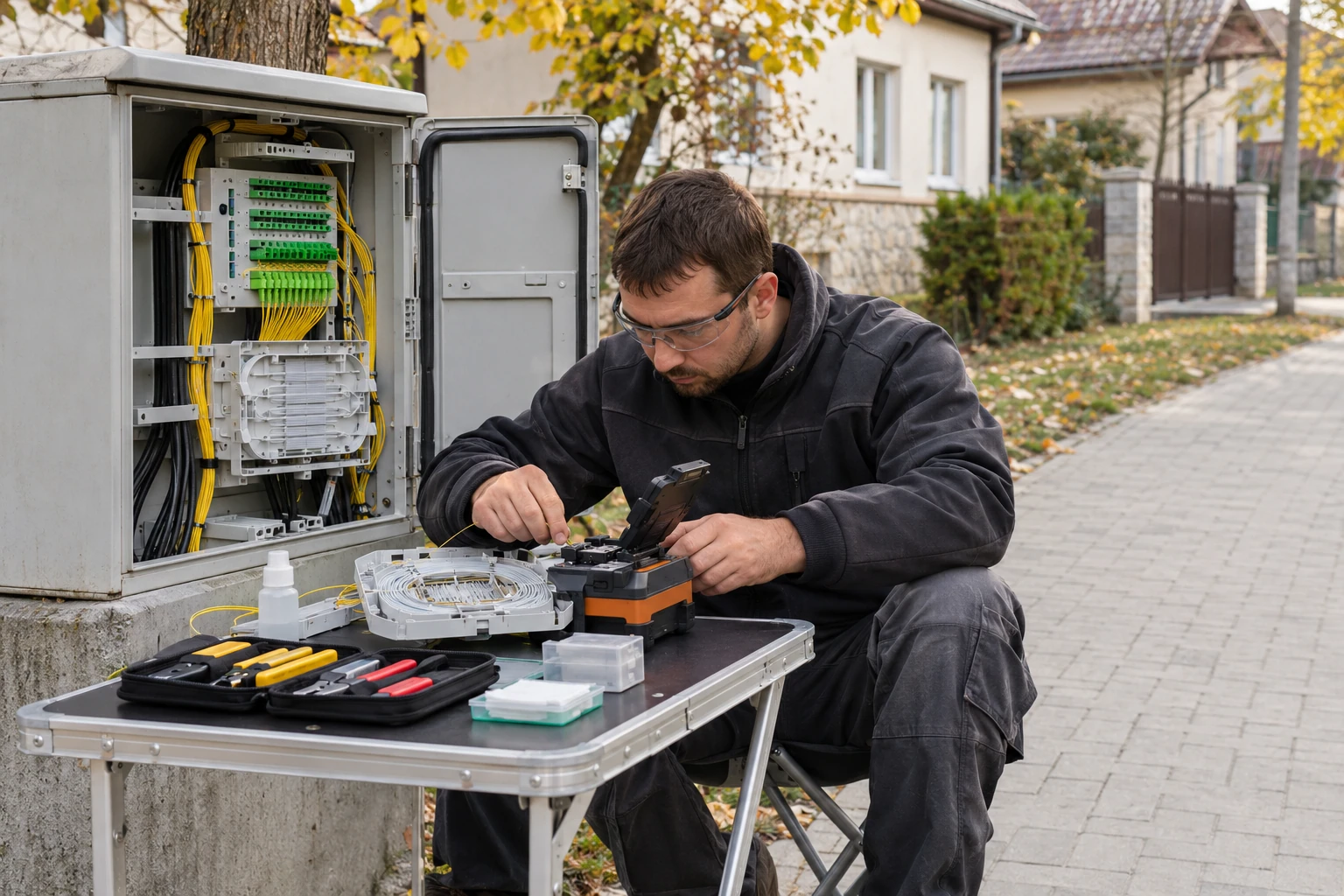

Telecommunications insurance: networks, equipment and maintenance
When assessing insurance for a telecommunications network in Moldova, separate equipment, routes, intervention work and obligations to subscribers. Damage to a component and loss of service are different problems. An accurate description shows where the assets are and who can work on them.
This material addresses operators, infrastructure managers and communications contractors. It sets no licensing obligations, technical standards or universal protection. Those require separate review with competent specialists and the applicable contracts. The existence of a network does not establish eligibility for every insurance product.
Divide the network into traceable categories
Prepare separate inventories for nodes, active equipment, cables, power supplies and mobile assets used for interventions. Record each category's owner and valuation document. An unstructured total can hide omitted components or assets belonging to another operator. A summary can serve the initial assessment until the exact required list is agreed.
Do not publish detailed routes, vulnerabilities or administrative access in a quotation form. Sensitive technical information goes only through the agreed channel to recipients who need it. Describing risk should not create a public map showing how the network could be interrupted. An initial overview and confidential technical annexes serve different purposes.
Ownership and the right to use are different
Equipment may be owned, hired or used under a partnership. Technical rooms, roofs and supporting infrastructure can belong to other parties. Present relevant agreements to identify responsibility for each element. Paying rent does not automatically mean the premises owner insures the operator's equipment. The room and the devices inside it may involve different interests.
For shared components, clarify identification and access boundaries. Do not count a partner's entire infrastructure as company property without supporting records. Before drawing an insurance conclusion, establish the company's interest in the asset and the responsibility assumed, not just its location. An asset list should preserve those relationships rather than erase them for convenience.
Describe exposed routes by their placement
Separate overhead, underground and indoor cables. For risk planning, record dependencies on other people's works, repair access and alternative routes. This article does not confirm protection against every type of damage. Request assessment of scenarios relevant to the actual network configuration, retaining any unanswered question instead of borrowing another operator's conditions.
After expansion or alteration, keep work records and update inventories. An old network plan may not explain recent damage. If work has not reached acceptance, record its stage and available documents. Do not present a component still being installed as a verified operating installation. Planned, installed and operational components need to remain distinguishable.
Nodes depend on premises, power and cooling
For each node category, describe its premises and supporting services. Who provides electricity? Who manages temperature? Who can enter after an alarm? A problem in a rented building can affect the data network even without a defect in its own equipment. Distinguish those causes in the preparation file rather than treating every service interruption as a component failure.
Document maintenance and tests conducted in controlled conditions. The name of a backup installation is not a promise of autonomy. Parameters and safety need technical assessment for the actual equipment. In the insurance discussion, distinguish damaged property, intervention expenses and the commercial consequences of interruption. Confirmation concerning one does not answer the others automatically.
Interventions differ from ordinary operation
Installation, replacement and repair can involve subcontractors, access to another party's property and transported equipment. Explain who performs and coordinates the work. A policy for operating assets does not automatically include every installation task or every loss caused during an intervention. The actual operation should be visible in the submitted description.
Prepare relevant work orders, responsibilities and acceptance documents. This article gives no electrical procedures or work-at-height rules. Competent people must carry out those tasks under applicable conditions. A policy replaces neither work organization nor permission to enter or intervene. Do not treat an insurance response as authorization for technical action.
Transported tools and parts need their own inventory
Record which equipment goes into the field, who receives it and how it is stored between visits. Separate reusable tools from components intended for installation. Describe courier or company-vehicle transport and its documents. Motor insurance should not be interpreted as automatic protection of every item carried inside the vehicle.
A team inventory can help identify missing or damaged property. Use the company's handover and return procedure without publishing unnecessary personal names or locations. Ask which proposed locations and uses are considered in the insurance assessment. Common company ownership does not establish that every mobile asset is included wherever it happens to be.
Assess continuity through the affected services
One shared component can affect several services, but impact needs evidence. Record the observed period, service categories and available rerouting measures. Physical reinstatement differs from verifying service for users. Do not turn every alarm into an assumed financial loss without documents and a calculation method. The technical signal and its commercial effect need separate explanations.
In the internal plan, identify spare parts, intervention responsibility and access dependencies. For business interruption, ask which cause and proposed expenses can be considered. A continuity plan does not confirm insurance for revenue losses, subscriber compensation or every period of downtime. It remains useful operational preparation even where the desired insurance is unavailable.
A subscriber claim is not the operator's own damage
Review a customer's request against the service agreement and actual circumstances. Keep the incident record, communications and relevant measurements. Do not accept a payment obligation on the insurer's behalf. If a policy may be relevant, follow its notification procedure and seek guidance before making definitive commercial commitments. The customer's position and a contractual insurance decision are different matters.
Compare property, liability and possible business interruption separately. The premium, meaning the amount paid for insurance, does not explain every difference. Request limits, exclusions, excess and document requirements for each component. Mark what the insurer has not yet accepted or clarified instead of presenting every requested item as confirmed protection.
Example: interruption during external work
Imagine a fibre route affected during work by another company. Separate technical observations from assumptions about fault. Preserve relevant documents and photographs safely without exposing the network. This hypothetical example illustrates documentation, not the contractor's liability or a payment under particular insurance. It does not describe an assessed ING Broker client case.
Record how the affected section was identified, who authorized the intervention and which services were checked after repair. Cable replacement, team expenses and a customer's commercial demand should be tracked separately. A report combining them into one unexplained amount can make both the event and the supporting evidence harder to understand.
Access agreements must be easy to find
For rented technical rooms and sites, keep role-based contacts and agreed access rules. This does not mean publishing keys or codes. During an intervention, the team needs to know whom to contact and which document permits entry. Equipment may be technically available but practically inaccessible because organizational arrangements are unclear.
When a premises owner or manager changes, check contacts and documents. Do not assume an old verbal understanding remains sufficient for every situation. Legal interpretation of access rights or maintenance duties requires appropriate advice. This article establishes no access rule and does not justify entry without the necessary permission, regardless of the urgency of a commercial service question.
Check the dependencies of an alternative route
Ask the team whether two supposedly independent routes share a duct, node, power source or provider. Do not publish the detailed answer in commercial material. An initial dependency summary may suffice. Describe real limitations rather than turning the existence of another route into a promise of complete continuity or an impossibility of interruption.
After an extension, check intervention procedures as well as inventories. Parts, skills and access may differ from the previous configuration. Record what has been tested and what is only planned. A risk questionnaire must describe the actual state when completed, not a project still awaiting implementation. Do not report a planned safeguard as an operational control.
A working list for proposal comparison
Use the same activities and values when requesting explanations. Equipment at one office is not directly comparable with dispersed assets, interventions and liability. Ask for the differences to be identified. For each cost or scenario, retain the relevant clause or answer and its date. Do not fill uncertainties with assumptions drawn from similar products.
- Owner and location of each equipment category.
- Routes and nodes described without exposing security.
- Installation and maintenance actually performed.
- Mobile assets and handover records.
- Power, premises and other-operator dependencies.
- Proposed limits for property, interventions and claims.
At renewal, review changes in services offered to customers too. New obligations or sites should be assessed before assuming unchanged protection. Broker explanations and insurer documents have different roles. Acceptance of a specific situation requires the applicable process, not the existence of an article. Keep unresolved points visible in the final comparison.
Frequently asked questions about telecommunications
Does building insurance include our antennas and equipment?
Do not assume so. Identify the owner, assets and insured interest. Read the premises agreement separately from the proposed insurance conditions.
Are subcontractors' works automatically included?
There is no general confirmation. Describe activities, stage and responsibilities. Installation, operation and harm to others need distinct assessment.
Can the same inventory be used after expansion?
Check it against the actual situation. Ask how changes are communicated and when they are contractually accepted. Installation alone does not establish that new components are insured.
Next step
Request a conversation with ING Broker to check assessment and intermediation possibilities. The broker explains options; risk acceptance, conditions and claims handling belong to the insurer under the contract. This material does not confirm product availability or coverage of a particular case.
Related reading: Infrastructure dependencies and service continuity.
Sources and information limits
The Romanian original records source consultation on 9 November 2026. The translation revision date does not mean the sources have been checked again. Preparation lists are editorial recommendations, not policy conditions. Cited product examples belong to their providers, not ING Broker offers. Legal obligations and individual circumstances require specialist verification.