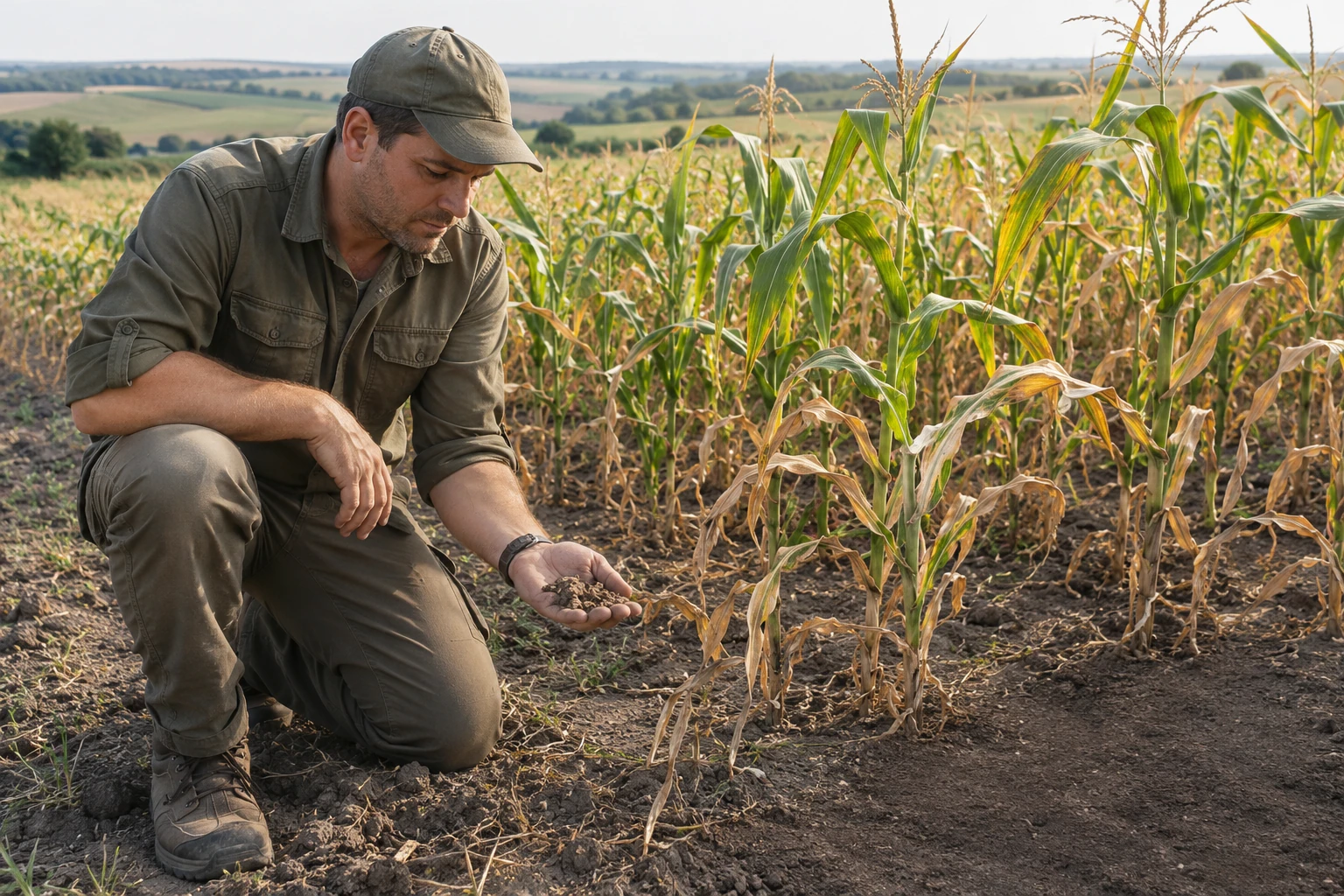

Crop insurance against drought in Moldova
Crop insurance against drought is assessed for specifically identified land, crops and periods. For a farmer in the Republic of Moldova, the useful question is not simply whether drought can be insured. Ask how the product defines drought, which loss it addresses and how the event is established. A period without rain does not, by itself, prove an insured event.
MOLDASIG mentions drought in its public presentation of agricultural risks. This provides a local example, not confirmation that every crop, location or application date will be accepted. This article helps you prepare a file and questions. It does not determine eligibility, announce subsidies or promise payment for an expected harvest before the contract is examined.
Start with individual fields, not the farm's total area
Prepare a list showing each field's location, area, crop and identifying document. If land lies in different localities, do not combine it into one unexplained entry. The distance between fields and their organisation matter when describing the farm, even if one company manages the work and sells the harvest together.
Check that the agronomist's list matches land-use documents and financial records. Mark fields that have not yet been sown, have been resown or have been removed from the plan. An offer based on an outdated list may describe a different crop from the one growing in the field. Correct the information before signing and keep the submitted version, its date and the person who confirmed it.
The crop and season determine the questions to ask
Record the variety or hybrid, dates of relevant work and the crop's condition when applying. For planning, distinguish autumn crops from spring crops and explain the cultivation methods used. Do not assume that an example for wheat means the same protection, period and conditions apply to maize, sunflowers or another crop.
Ask for the precise protection period and entry conditions. Establish what information about the current condition must be provided and whether an inspection is required. An already known event or an already damaged crop must not be described as an uncertain future situation. An accurate description of the field is more useful than a hurried application.
What drought means in the proposal documents
Request the exact risk definition and the method used to establish it. The word drought may appear in marketing material without explaining every assessment criterion. Ask which period and data sources apply, and what connection must be demonstrated between the phenomenon and crop loss. Do not replace a written explanation with a comparison to last year's weather.
If an indicator-based mechanism is discussed, ask which indicator is used and how it relates to payment. Availability of such an option in Moldova must be confirmed separately. Do not assume that a rainfall deficit measured at one station, or a photograph of the soil, leads automatically to the same conclusion for every field and contract.
Expected harvest and expenditure are different valuation bases
Separate production estimates from expenditure actually incurred. Prepare the area, expected quantity and economic justification for the proposed values. Ask which figures are used in the proposal. A sum associated with an estimated harvest does not mean guaranteed farm income regardless of the selling price or the season's outcome.
Local product presentations describe different valuation approaches. Request the formula and documents for the product offered to you, not a package mentioned in an old advertisement. Keep seed, cultivation, fertilisation and other costs separate, without assuming that all are eligible. The accounting value and the amount accepted by the insurer must be clarified explicitly.
Describe irrigation as it actually operates
Explain which fields are irrigated, the water source and the installation's actual limitations. If part of the area cannot be watered simultaneously, say so. A pump in the inventory does not prove that the entire field has continuous access to water. This information supports assessment and planning without confirming acceptance of the risk.
Insuring the crop does not establish protection for the pump, pipes or electrical installation. Prepare a separate equipment inventory and ask about property conditions. Discuss interruptions of electricity supply and lack of water at the source separately. Do not automatically describe them as insured drought or assume their consequences will be paid under the same policy.
Check exclusions, deductibles and limits before comparing prices
Exclusions are situations or risks for which the contract does not provide cover. Ask how they apply to your crop. Discuss disease, pests, delayed field work and other factors that can reduce production separately. These are assessment questions, not a statement that all agricultural products exclude the same events.
A deductible is the part of a loss borne by the insured under the contract. Check its calculation basis and whether assessment is per field, per crop or organised differently. A small premium difference may conceal a different contribution to a loss. Request an explanatory example with clearly labelled assumptions, not an estimate of a future payment.
Seasonal records begin before an incident
Keep field plans, work records and documents supporting relevant expenditure in one organised file. Correctly dated and located photographs may help your records but do not automatically replace documents requested by the insurer. Assign responsibility for updates when the crop changes or problems arise. Do not reconstruct the entire history only after yields fall.
Record agronomic observations consistently and distinguish facts from estimates. Leaves affected in an identified area describe an observation; total loss of the farm is a conclusion requiring evidence. Ask which sources are accepted for weather data and official findings. A screenshot from a weather app is not universal proof of the cause or extent of damage.
What to do when crop damage becomes apparent
Follow the contract's notification procedure and deadlines using confirmed contact details. Describe the field, crop, observation date and known facts without inventing a cause. Request instructions for inspection and preserving evidence. There is no single notification period stated here for every agricultural product: read the documents applicable to your farm.
Discuss urgent work and harvesting with the responsible specialists so that you protect the crop while respecting the assessment procedure. This article is not advice to leave fields unattended. Keep communications and decision records. Assessment and any compensation are the insurer's responsibility under the conditions, not the broker's or a weather forecast provider's.
Subsidies require a separate check
If you wish to examine public support for agricultural insurance, request the official rules applicable when you apply. Farm eligibility, eligible crops, documents and programme funding cannot be inferred from an article about an earlier season. This article gives no reimbursement percentages and does not confirm that an application will be approved or paid.
Separate the insurance premium payable under the contract from support you hope to receive. Ask who submits the documents, at which stage and on what basis. Keep a farm budget scenario without unconfirmed support. The existence of a programme must not be presented as an immediate reduction of the amount due without the relevant documents.
Use the same information for a meaningful comparison
Send the same field list, crops and justified values to each provider. Compare risks, periods, assessment criteria, deductibles and limits before the total premium. Mark any crop or locality missing from a proposal. Two totals for different areas do not automatically show which offer is more suitable for the farm.
Prepare a final note separating confirmed points from unanswered questions. Request written answers about the drought definition, the start of protection and assessment method. A broker can help structure the discussion but cannot change the insurer's conditions through an explanation. Accept a contract only after understanding the risks that remain with the farm.
A seasonal record for each field
For internal organisation, use four sections: identification, work, observations and documents. Identify the field and confirmed crop. Record operations and available dates. Describe observations without premature conclusions about the cause of loss. For documents, record where relevant files are kept rather than copying them into numerous uncontrolled folders.
Do not mix weather forecasts, field observations and specialist conclusions in one box. They answer different questions. If records conflict, keep the discrepancy visible and seek clarification. An organised file does not guarantee payment, but supports a coherent explanation and reduces the risk of sending one field's documents for another.
At the end of the season, compare planned areas and results with actual figures for internal records. Note what information was missing when preparing insurance and who can obtain it next year. Do not turn one season's result into a weather promise or an invented loss ratio. Update the information and request current conditions at renewal, even if the provider is unchanged.
Frequently asked questions about drought and crops
Does every dry year lead to compensation?
No. The defined risk, period, field, cause and product conditions must be checked. Reduced production or lack of rain alone does not establish an insured event.
Can I include an already damaged crop?
Describe its actual condition and request the insurer's assessment. Do not assume a known event will be accepted or omit damage observed when applying.
Does crop insurance include the irrigation system?
Do not infer this. Installations, harvest and consequences of an interruption require separate checks even when used on the same field.
What should I prepare for the first discussion?
The fields, areas, crops, current condition, periods and justification of values. Additional documents and eligibility must be confirmed for the specific proposal.
Next step
Request a discussion with ING Broker to check the possibilities for assessment and intermediation. The broker intermediates and explains options; risk acceptance, conditions and claims decisions belong to the insurer under the contract. This article does not confirm product availability or cover for an individual event.
Read also: Irrigation equipment must be assessed separately from the harvest.
Sources and limits of this information
- National Bank of Moldova: what to check before signing an insurance contract
- MOLDASIG: agricultural risks, a local product example
The Romanian source consulted these sources on 9 November 2026. Preparation lists are editorial recommendations, not policy conditions. Product examples belong to the cited providers and are not an ING Broker offer. Legal obligations and individual situations require specialist verification.