
Office building insurance: property, fit-out and business continuity
Office building insurance starts by separating the property, fit-out, equipment and tenants' belongings. A building policy does not automatically confirm protection of computers or payment of income lost during repairs. In Moldova, assessment starts with the address, actual use and property in which there is an identifiable interest.
This material is for owners, managers and businesses renting office space. It explains how to organize information and questions before comparison. It sets no policy conditions and does not confirm availability of every risk mentioned. Acceptance and limits belong in the actual proposal documents.
Owners and tenants have different inventories
The owner may hold the building and fixed installations, while the tenant provides furniture, equipment and fit-out. A manager may administer common areas without owning assets. Record each category's owner, who bears reinstatement costs and which documents explain that position.
A lease may require maintenance, repairs or insurance. Present relevant clauses without converting them automatically into coverage. An obligation between landlord and tenant does not, by itself, oblige an insurer to pay. Seek clarification of unclear wording before choosing a policy.
For each important category, record the owner, user, supporting value document and proposed location. Keep leased computers separate from the landlord's installations and tenant improvements. A blank answer is not confirmation of inclusion. Ask for clarification and preserve the version to which the answer relates.
Describe more than total floor area
Prepare the exact address, storeys, construction year if known and principal materials. Separate occupied office space from parking, archives, basements and technical rooms. Disclose shops, kitchens or workshops in the same building instead of describing every activity as administration.
Add available roof, electrical, heating and water-system information. A refurbished reception does not establish replacement of all installations. If the date of work is unknown, state that and seek the record. An accurate incomplete description is more useful than assumptions filling every field.
Distinguish fit-out from movable property
Partitions, ceilings, floors and cabling raise different questions from chairs and laptops. A tenant may invest in premises it does not own. Prepare budgets and invoices and ask how improvements are treated in the proposal, including questions relevant to the end of a lease.
Group movable furniture, movable air-conditioning units, presentation equipment and working technology. Avoid one unexplained fittings value hiding very different objects. Identify leased or borrowed property separately with appropriate records. The actual ownership and use matter more than a convenient accounting label.
Computers and data face different problems
Physical computer damage and an unavailable database are not the same loss. For equipment, record model, year and documented value. For continuity, describe essential applications and backups without sending passwords or client data through a public request form.
Ask separately about equipment used away from the office, including home-working laptops. A declared office address does not establish worldwide protection. Equally, a property policy should not be described as a solution for every cyberattack or user error.
Prepare comparable values
List the supporting basis for each value: invoice, accounting record, budget or available appraisal. Purchase price, book value and reinstatement cost may differ. Ask which basis is proposed for the sum insured, meaning the amount recorded for the assessed property.
Do not artificially reduce the inventory to lower the premium. The premium is the amount paid for insurance, but comparison also needs the costs retained after a loss. Ask how an inappropriate declared value is treated and how to update records after new equipment purchases.
Water, fire and building work need actual descriptions
A pipe above an archive may have a different impact from one in an empty corridor. Explain where important records and equipment are kept. Disclose known leaks, damage and action taken instead of presenting an existing problem as a new future risk.
For building work, state its location, duration and contractors. Hot work, installation changes and roof interventions need discussion against the proposed conditions. This article does not state that property insurance automatically includes all damage during renovation.
Read limits and excess
The excess or deductible is the part of a loss borne by the insured under the contract. Check whether it is a fixed amount, percentage or a different rule for certain risks. Request a hypothetical explanation without treating it as a promise for a future claim.
A high overall limit may coexist with smaller limits for particular property or expenses. Look for archives, basement goods, clean-up and other relevant items. Exclusions are situations without cover and must be read alongside accepted risks, not omitted from comparison because a headline limit appears sufficient.
Visitor liability requires a different assessment
Customers and couriers may use reception, stairs, lifts and parking. Damage to your own building and a visitor's claim are distinct questions. Describe responsibility for those areas and outsourced security, cleaning or maintenance services.
If the company supplies professional services, an error in that service is not the same as an incident in reception. Ask about general liability and professional indemnity separately for the actual activities. Sharing the word liability does not make the products interchangeable.
What if the office cannot be used?
Prepare a practical plan for temporary staff relocation, document access and communications. Record substantiated costs and dependence on one site. Do not assume a building policy pays alternative rent or income lost during closure.
Any business interruption component needs a separate assessment of events, periods and financial records. Clarify who bears the loss: an owner missing rent or a company unable to work. These are different interests even when the same incident affects both.
A short but verifiable submission
Initially organize building description, category inventories, use and known incidents. Photographs may help but do not replace documents. Avoid unnecessarily exposing people, confidential screens or access-control details. Identify what further technical information is missing rather than inventing it.
Assign someone able to answer technical questions and someone able to check values. Compare proposals for the same address, property and period. Otherwise a seemingly cheaper price may simply omit part of the premises, an equipment category or a location relevant to the business.
An illustrative company renting one floor
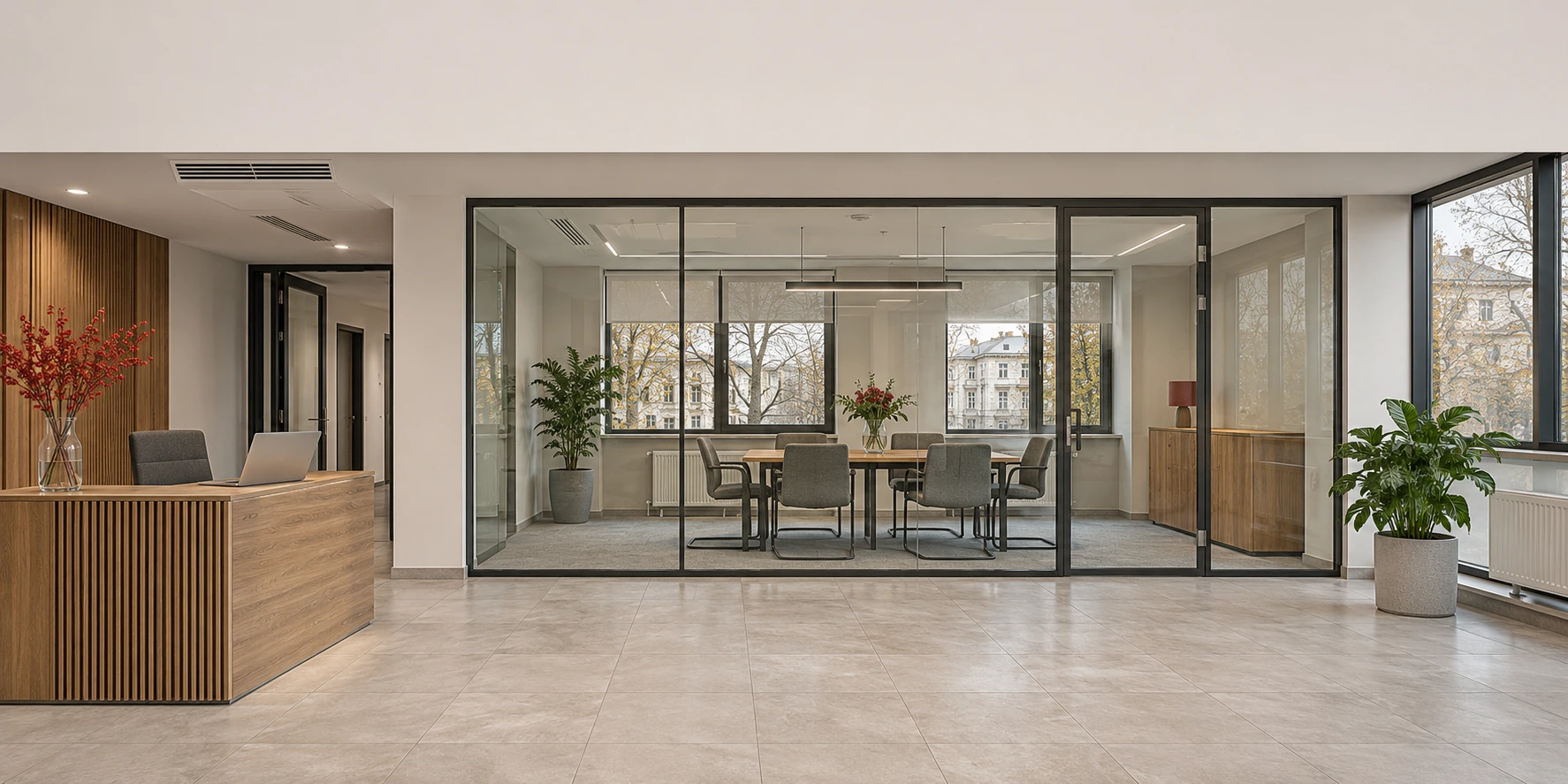
A hypothetical company rents a floor in a multi-user building. The owner holds common installations while the company owns furniture, computers and meeting-room fit-out. Before comparison, they separate inventories and documents explaining reinstatement costs instead of assuming one policy protects every interest.
The company also prepares temporary working arrangements because access could be restricted. This example is not a real client and confirms no claim payment. It shows why inventory, lease and continuity belong in one discussion without becoming the same insurance subject.
Archives and original records
An archive can contain contracts and technical originals not replaceable by purchasing paper. Inventory document types and available copies. Ask whether the proposal addresses physical media, information-reconstruction costs or only listed property. Do not assume all three have the same treatment.
Do not send complete confidential files merely to prove their existence. Quantity, location and recovery arrangements are more useful initially. Manage confidential access separately. If archives are in a basement or rented at another address, state that in the description.
Annual review before renewal
Compare the original inventory with purchases, disposals, relocations and fit-out investments. A growing team may have more workstations than the old questionnaire shows. Check use as well as object counts. A changed working pattern can matter even when total floor area has stayed the same.
Record incidents and preventive action, including resolved problems. Request updates of relevant proposal elements. Renewal should not be reduced to price selection. Old conditions may no longer match a relocation, subletting or work at additional locations.
Keep dated versions of the comparison inventory and accepted documents. They help explain what was declared at a particular time, but do not replace contract review or the insurer's assessment. Keep current documents distinct from archived versions so colleagues do not rely on obsolete files.
Frequently asked questions
Is the landlord's policy sufficient?
Do not assume this. Check property, interests and persons in the contract. Tenant equipment and improvements require discussion using inventories and lease documents.
What determines office insurance cost?
Compare location, construction, use, property, values, risks, limits and excess. This article gives no universal Moldovan office tariff. Another firm's price does not establish the cost for your premises.
Can a travelling laptop be included?
Ask for territorial and off-premises conditions. Listing a laptop does not automatically establish protection while travelling, at home or in a vehicle.
What should I do after damage?
Protect people, safely limit aggravation and follow contractual notification procedures. Preserve available evidence. Do not assume one universal deadline or document list for every policy.
Next step
Request a conversation with ING Broker to check assessment and intermediation possibilities. The broker explains options and arranges insurance. Risk acceptance, conditions and claims handling belong to the insurer under the contract. This article does not confirm product availability or coverage of an individual case.
Related reading: Office IT equipment needs its own inventory.
Sources and limits
- National Bank of Moldova: questions before signing
- MOLDASIG: property insurance for legal entities, local context
The Romanian original records source consultation on 9 November 2026. The translation revision date does not mean the sources have been checked again. Preparation lists are editorial recommendations, not policy conditions. Cited products belong to their providers and are not ING Broker offers. Legal obligations and individual circumstances require specialist verification.