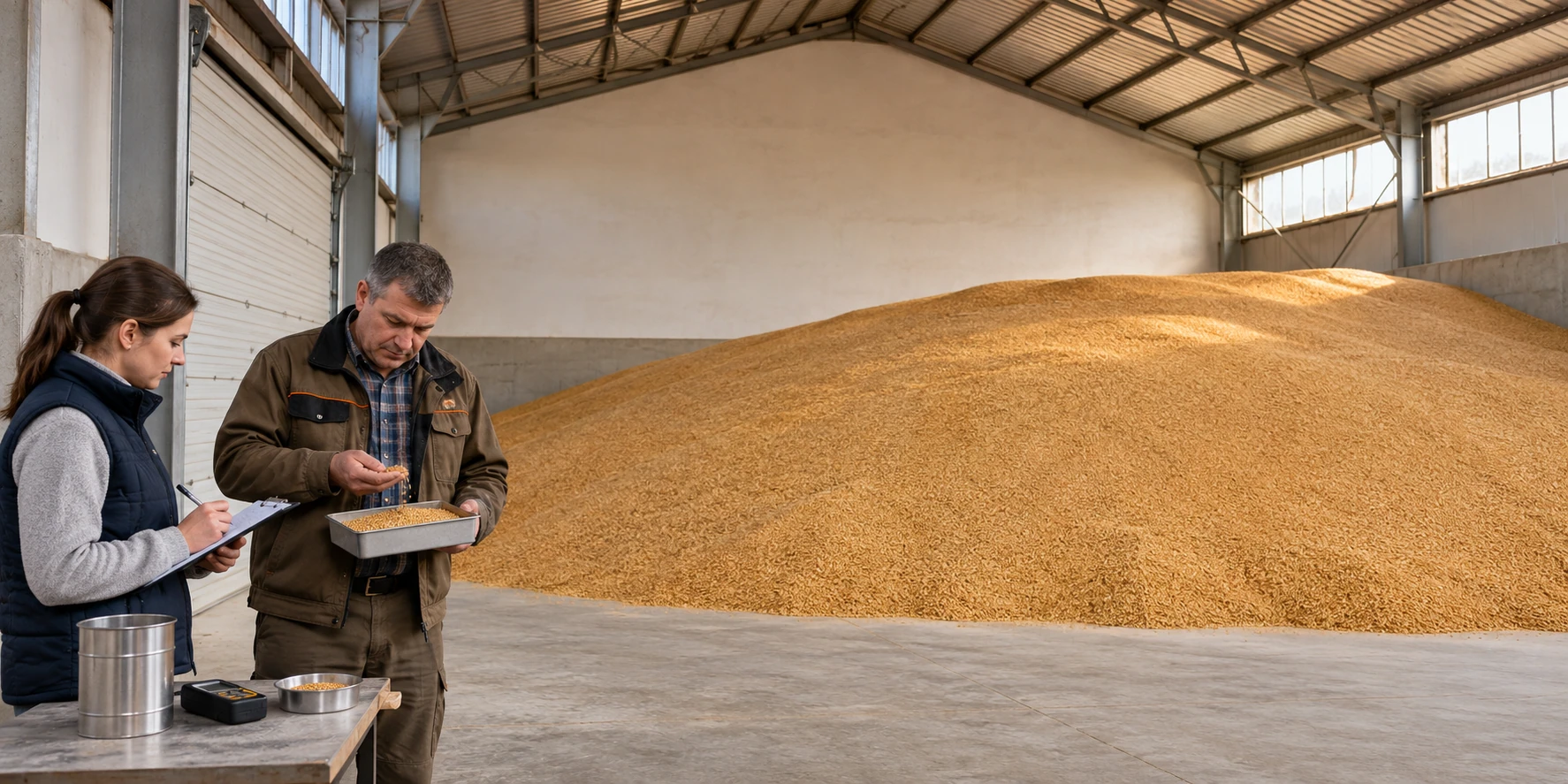

Grain warehouse insurance assessment in Moldova
Prepare grain warehouse insurance separately for buildings, equipment and stored products. Wheat, maize and other stock differ from the structure, while customer goods must be distinguished from owned stock. A property-policy title does not automatically include every component.
This article helps Moldovan agricultural businesses, traders and storage operators prepare risk information. It is not storage engineering guidance or an offer for every location. Insurers assess eligibility, conditions and events; competent specialists separately check technical and legal requirements.
Identify the warehouse type and operations
Describe whether goods are kept in a hall, a silo or several structures. State which operations actually take place: receipt, cleaning, drying, storage or dispatch. Premises used only for holding goods need a different description from a facility with installations and a continuous flow of trucks. Explain the real activity rather than relying on the word warehouse.
Prepare a simple site plan and the names used for buildings in the inventory. Mention rented premises and areas used by other companies. Do not declare the whole site as one object without clarifying which property and activities you want assessed. The plan helps connect the described operations to identifiable structures.
Separate structure, installations and stock
The inventory can use three groups: buildings, equipment and stored products. For equipment, identify conveyors, aeration systems, dryers and other existing installations without assuming automatic inclusion. Each group's values and supporting documents should remain separately traceable. A combined site total does not replace identifying the individual property under consideration.
If a component has already been assessed under another contract, retain that policy for review. The aim is to understand boundaries, not add the same value to several lists. The broker can organise questions about contracts. Identifying installations and assessing their technical condition requires competent specialists, not an assumption based on a policy title.
Describe products and storage form
Specify grain types and whether they are stored in bulk, packaged or in separate lots. Explain how lots are identified both in records and physically. A general description such as agricultural goods is insufficient where products have different characteristics or owners. Keep those differences visible in the description prepared for assessment.
Include available information about the condition of goods on arrival and receipt records without inventing certifications. Actual temperature, humidity and storage conditions are determined technically for the product concerned. This article gives no universal thresholds and does not replace the storage manager's instructions. Technical information and an insurance acceptance decision remain separate.
Show seasonal stock changes
Use company records to describe ordinary quantities and the period of maximum stock. Explain significant receipts and dispatches, including temporary spaces used after harvest. A photograph taken on a low-stock day does not describe the full year's exposure. Identify the reference period behind the quantities rather than treating one observation as an annual inventory.
Ask for the proposal's mechanism for declaring and updating values to be explained. Do not assume every seasonal increase is accepted without information being communicated. At renewal, compare current circumstances with the previous file and correct differences before signing. An updated internal stock sheet is not by itself evidence that insurance conditions have changed.
Customer goods require separate records
If you store grain for others, describe the service and documents accompanying each lot. Identify who owns the goods and which values appear in the records. Physical presence in the warehouse does not make products the operator's property or establish that the operator has already insured them. Ownership and contractual inclusion need individual clarification.
Assessment of property insurance and liability for storage services are distinct. Ask for clarification of the insured person, interest and limits in the proposal. Customer contracts and any liability obligations need separate review. This article does not determine who would be responsible in an actual dispute or infer liability from the goods being on site.
Discuss fire against actual activities
For assessment, describe installations, their power supply, heat-producing operations and maintenance arrangements. Present existing documents and checks without declaring compliance merely from a completed questionnaire. Competent people must assess safety conditions. They cannot be inferred from an image of the building, and the article does not provide technical certification of the premises.
Ask the insurer to explain events, requirements and exclusions relevant to the actual proposal. Do not present fire, explosion or any other situation as automatically included for every warehouse. A general product category does not replace the contract's conditions. Keep the response linked to the described location and activities.
Physical stock damage is not an unexplained shortage
A physically damaged lot, a weighing discrepancy and unexplained missing stock are different situations. Prepare separate questions and show how quantities are tracked on arrival, during storage and at dispatch. Do not merge them under the vague expression grain losses. Accurate records help describe the issue without deciding its cause or contractual treatment.
Check separately how the contract treats quality, gradual deterioration, contamination, pests and other problems relevant to operations. This list contains questions, not confirmed cover. A new policy must not be presented as a solution for a lot already affected or a stock discrepancy already known. Disclose the actual chronology and circumstances.
Water and the actual site
Describe the roof, openings, floor level and nearby areas that could affect water entering the building. Use available site information and records of work performed. Do not claim a risk is absent merely because no damage has occurred in recent years. The description should reflect the actual premises rather than only claims history.
Ask separately about rain, flooding and installation damage, using definitions and conditions. Obtain competent advice on structures and technical measures. Do not modify them based on an insurance article.
Support grain values with documents
Prepare purchase documents, accounting records and relevant documents for customer lots. Ask for an explanation of the valuation basis used in the proposal and how stock variation is treated. An expected selling price must not automatically be confused with the value accepted for insurance. Record which figures are supported and which are estimates.
Check units and avoid confusing per-tonne with total amounts. Record dates and currency. These checks prevent file mistakes but do not replace financial assessment or contractual calculations.
Clarify storage and transport boundaries
Receipt at the gate, unloading, internal movement and dispatch can involve different people and equipment. Identify who performs each operation and when documents are created. Do not assume goods are protected at every stage merely because the destination is an insured warehouse. The start and end of the proposal's subject need explicit clarification.
Ask where the proposal starts and ends. Transport requires separate cargo and carrier-liability assessment where appropriate. This storage article confirms no transport, loading or third-party duties.
Document without exposing people
Safety and mitigation come first. Do not enter dangerous spaces or climb grain heaps or silos for photographs. Follow emergency procedures and obtain competent help. Record evidence only safely.
Keep lot records and relevant documents, then check notification and contractual steps. Do not invent one deadline applying to all policies. If affected products must be moved or separated to limit damage, coordinate measures with competent people and contractual requirements without compromising safety or the information needed for assessment.
Illustration: own grain and customer lots
A hypothetical operator stores its own wheat in a hall and customer maize separately. Its file identifies owners, seasonal quantities and common equipment. Buildings, machinery and stock remain distinct at one address.
The operator requests property assessment and separate storage-service questions. This is no real client, offer or paid claim. It explains why lot-and-owner records are more useful than a single total.
Reconcile physical inventory and documents
Before assessment, compare the stock summary with available receipt and dispatch documents for the same reference date. If differences exist, ask the responsible stock manager for an explanation. Do not change figures merely to obtain a convenient total or present an estimate as a confirmed physical inventory. Preserve the distinction between records and assumptions.
Link other owners' products to documents and spaces. Separate transit, already-dispatched and not-yet-received lots. This identifies the relevant time and place without artificially enlarging the proposal's subject.
Finish with missing information and who can confirm it. Mark unavailable values or installation records explicitly. Transparent gaps are better than apparent completeness mixing assumptions with facts.
What to prepare for the broker
- Structures, location and actual operations.
- Installations, values and maintenance records.
- Products, quantities and values by lot and owner.
- Peak periods and desired update arrangements.
- Event history and known problems without omissions.
Frequently asked questions about grain warehouses
Does building insurance automatically include wheat?
No. Check stock identity, owner, value and accepted risks. Building and products may need distinct descriptions and conditions.
Can customer grain be assessed?
Provide storage contracts and lot records to check eligibility. Do not confirm inclusion before the insurer replies. Property and operator liability differ.
What does warehouse insurance cost?
Area or capacity alone is insufficient. Prepare site, operations, values and stock for a possible offer. No unverified rates or savings are published.
Does the policy pay every quality or quantity reduction?
No. Causes, events, exclusions and documents need review. Stock records support assessment but do not themselves confirm compensation.
Next step
Request a discussion with ING Broker to check assessment and intermediation possibilities. The broker explains options; acceptance, conditions and claims decisions belong to the insurer under the contract. This article does not confirm availability or individual cover.
Read also: Logistics warehouses: distinct property and responsibilities.
Sources and limits of this information
The Romanian source consulted these sources on 8 November 2026. Lists are editorial recommendations, not policy conditions. Examples are not an ING Broker offer. Legal obligations and individual situations require specialist verification.