
Commercial drone insurance: aircraft, equipment and liability
For a drone used commercially in Moldova, separate three questions: your aircraft, auxiliary equipment and liability towards other people. A policy for one component does not establish inclusion of the others. Assessment starts with the actual operation: what the drone does, where it works, who operates it and which documents are needed.
This informational material does not confirm product availability for every drone or mission. Operating requirements must be checked under Moldova's current framework and with the Civil Aviation Authority. Rules from Romania or another country are not automatically applicable. Insurance is not a flight authorization and does not replace approvals needed for the actual activity.
Describe the commercial activity first
Event filming, a roof inspection and agricultural work cannot be adequately described by the same general phrase. List your services and usual working conditions. Include the type of location and proximity to people or property without publicly disclosing client information. An identical aircraft does not make every mission equivalent for assessment.
If activities change, ask what information must be communicated before new operations. Do not assume an assessment for photography automatically includes carrying objects, applying substances or different operating conditions. Accurate description helps check eligibility. Vague wording can hide the difference most relevant to the insurer and flight approval.
Inventory the aircraft and accessories
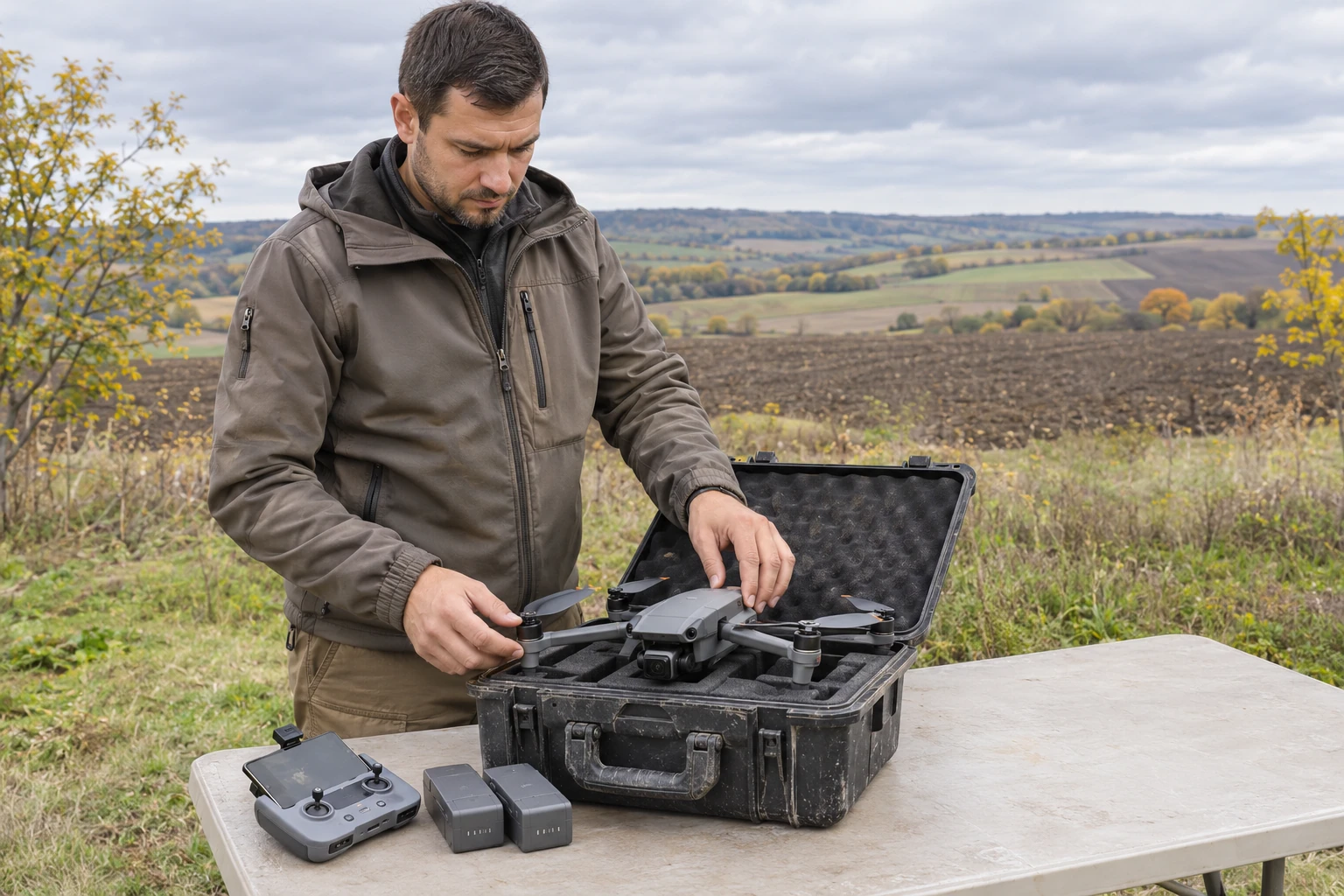
Record the model, serial number, year, mass and relevant configuration from technical documents. Distinguish the drone from its camera, sensors, control station, batteries and other accessories. Ask which objects could be considered and on which conditions. A shop's total kit price does not establish that every component is included in one contractual value.
Keep purchase records and changes to the equipment. For a hired, borrowed or client-owned aircraft, state its owner and agreed responsibilities. Do not describe someone else's property as your company's merely to simplify an application. The right to use it and the insured interest require clarification before conclusions about protection or payment for damage.
Aircraft damage and third-party claims are distinct
Damage to the drone concerns an asset used by the operator. A claim for damage to a client's property or injury to someone concerns another risk component. Do not assume liability is included just because the aircraft has an insured value. Ask which people, property and situations each proposed document considers.
A client contract may also impose obligations concerning results, delays or redoing work. Those do not automatically become insured risks under equipment protection or third-party liability. Keep commercial requirements separate from insurance questions. Obligations to clients require legal review of the contract, not conclusions drawn from a policy name.
Check operating documents separately
Consult official Civil Aviation Authority information and the framework applicable to the aircraft category and mission. This article sets no universal list of permits, mass thresholds or minimum amounts for all aircraft. Requirements can change and depend on the operation. Confirm them before organizing a flight or taking on a client obligation.
Prepare existing documents about the operator, aircraft and pilot as required for the review. An insurance proposal does not prove that an operation is authorized. An operating approval does not confirm every policy condition either. The two files should be consistent, but each has its own purpose and checks.
Where and how the drone is used
Describe the usual environment: farmland, construction site, industrial yard or another relevant area. Mention obstacles, the ground team and procedures for separating the work area. This description does not establish permission to fly. Access, permissions and technical conditions require checks with competent people and institutions before operation.
For work abroad, request separate checks on territory and local requirements. A policy considered for Moldova is not automatically suitable elsewhere. Do not copy another operator's list of countries. Prepare documents for the actual trip and keep a written answer concerning any territory that matters to you.
Maintenance and pre-mission checks
Internal records may cover aircraft inspections, relevant updates and battery condition under applicable technical instructions. Such records are not a coverage list or a promise of acceptance. They show how equipment is managed and who confirms readiness. Safety cannot be reduced to a policy in an administrative file.
Keep information about repairs, parts and configuration changes. Describe previous incidents accurately. Do not assume a repaired aircraft automatically has the condition or value of a new one. Ask which inspection and valuation documents are required rather than filling in a general equipment declaration from memory.
Discuss transport and storage
A drone may fly only a few hours but travel frequently between sites. Describe how the aircraft and accessories are kept when not flying. Ask whether a proposal considers mission use only or other stages too. Theft from a vehicle, transit damage and warehouse handling are not implicit protections without checking the document.
Separate company equipment, employees' belongings and client accessories. Labels and serial numbers aid identification but do not independently determine compensation. Store records in a controlled internal channel. Do not publish full serial numbers, detailed mission routes or sensitive client-system information just to request an initial insurance conversation.
Limits and your share of a loss
If a proposal is available, compare the aircraft value, liability limit and any excess separately. The excess or deductible is the portion borne by the insured under the contract. Do not combine these amounts into one field. A third-party liability limit does not identify the accepted aircraft value or confirm payment for every lost component.
Ask about concrete situations without turning examples into payment promises. You might ask about damage during a mission or a claim involving someone else's property. Link every answer to the applicable conditions and required records. Do not compare annual premiums alone when subject, territory or limits differ.
Organize information after an incident
Safety and applicable reporting duties take priority. Preserve the timeline, relevant mission information and documents without editing files to fit a narrative. Follow instructions from authorities and the provider for the actual event. This article establishes no universal deadline and does not replace technical or legal procedures needed after an incident.
Separate aircraft damage from third-party claims. Do not use a commercial message to admit unverified legal conclusions. Send the file through the agreed channel and keep receipt confirmation. A case number is not acceptance of payment. The broker can explain documents, but the insurer decides coverage under the contract.
The agreement with your client
If the client requires insurance evidence, obtain the exact requirement before selecting a product. It may matter who is identified, which activity is described and which period the work concerns. Do not promise compliance merely because the company holds a general policy. Compare the requirement with the actual proposal and mark unresolved points before accepting a commercial obligation.
Do not copy a technical description into an insurance application if it does not match your mission. Explain subcontractors' and hired equipment's roles and ask which interests are considered. A commercial relationship does not establish inclusion of every participant. Legal review of the client's requirement and review of policy conditions remain different tasks even when discussed together.
A mission sheet without sensitive information
For an initial conversation, prepare the work type, aircraft configuration, estimated duration and location context. Client names, sensitive coordinates, passwords and confidential footage are not automatically needed. If further information is required, clarify its recipient and channel first. Minimizing information does not mean hiding a relevant risk.
Update the sheet when circumstances change and keep the version used for assessment. If an answer concerns a different configuration or mission type, ask for correction. Acceptance of a conversation is not policy issuance. Distinguish preliminary assessment, proposal and a contractual document that can be checked against the actual operation.
This organization is useful even if no insurance solution is found for a requirement. Retain that conclusion and its limits without inventing cover to proceed with a project. An explicit lack of confirmation is preferable to an assumption. Plan operations and compliance with competent specialists regardless of whether a commercial product exists.
Frequently asked questions from commercial operators
Does drone insurance allow flights anywhere?
No. Operating conditions and authorizations require separate checks with the Civil Aviation Authority and under the applicable framework. A policy does not replace requirements concerning the location, person, aircraft and mission.
Does third-party liability pay for my drone too?
Do not infer that. The interests and objects differ. Ask for precise identification of the aircraft and liability assessed, with appropriate documents and limits for each component.
Is there a standard tariff for every drone?
This article confirms no such tariff or product. Aircraft and operating details are needed, followed by availability checks for the particular case without automatic acceptance promises.
Should I send all client footage immediately?
Do not unnecessarily share confidential material. Start with an aggregated activity description. Files needed for assessment can follow through an agreed channel respecting access and confidentiality.
Next step
Request a conversation with ING Broker to check assessment and intermediation possibilities. The broker explains options and arranges insurance. Risk acceptance, conditions and claims handling belong to the insurer under the contract. This article does not confirm product availability or coverage of an individual case.
Related reading: Equipment inventory and declared values.
Sources and limits
- National Bank of Moldova: insurance contract elements
- Civil Aviation Authority: drone operation information
The Romanian original records source consultation on 9 November 2026. The translation revision date does not mean the sources have been checked again. Preparation lists are editorial recommendations, not policy conditions. Cited products belong to their providers and are not ING Broker offers. Legal obligations and individual circumstances require specialist verification.