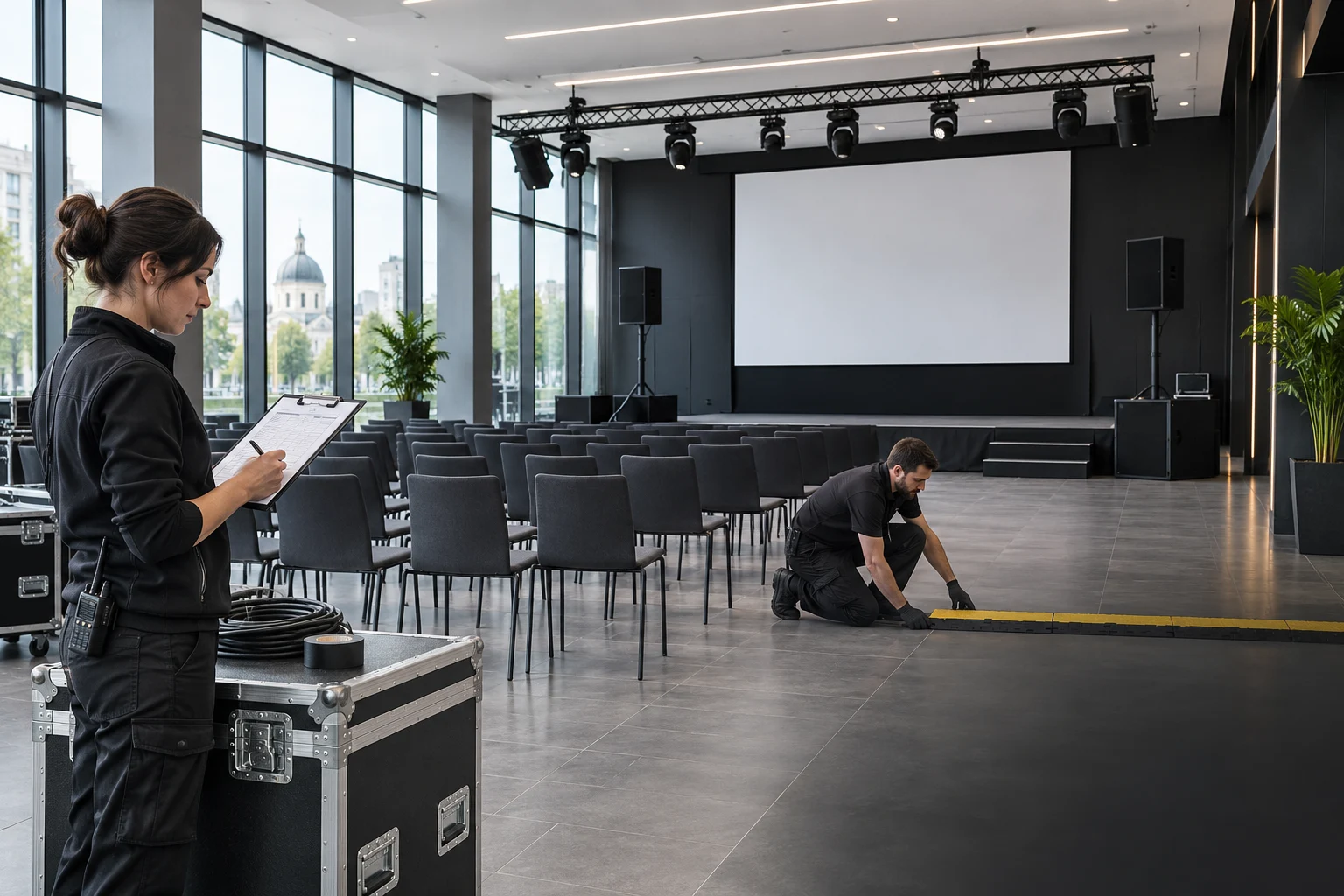

Corporate event insurance
For a corporate event in the Republic of Moldova, insurance assessment starts with actual activities, premises, equipment and organisers' roles. A conference, product launch and partner meeting have different exposures. This article promises no policy automatically including participants, property, liability and cancellation. Each question needs separate checking.
This material is a preparation list for a company organising a business event. Use it with venue staff and suppliers before requesting an insurance assessment. Availability for the actual event requires confirmation. Do not send guests' personal data for a preliminary discussion or present this article to partners as evidence of cover.
Start with the programme, not the event name
Describe what happens: presentations, equipment demonstrations, meals, guest transport or outdoor activities. Record estimated attendance, duration and public or invitation-only access. A brief containing those details is more useful than “standard event”, which can conceal very different activities.
Include preparation and dismantling, not only hours when guests attend. Who brings, installs and checks equipment? If the programme is unfinished, separate confirmed elements from proposals. Do not submit the simplest version when the team already discusses an added demonstration or location change.
Who organises and provides each service?
Identify the organising business, venue owner or manager and suppliers for staging, sound, lighting, catering, security and transport. Contracts need not be published, but responsibilities should be explainable. For a co-organised event, show each party's duties and the common file contact.
A venue policy does not automatically protect every organiser activity. Nor does a supplier certificate alone establish your company is included. Request relevant documents and check roles, periods and operations. Legal liability after an incident differs from a commercial event description and may require specialist assistance.
Check the venue and temporary arrangements together
Prepare the address, organisers' plan and occupied zones. Show indoor and outdoor areas, delivery access and rooms holding property overnight. Describe actual arrangements for terraces or courtyards rather than assuming every activity at one address is treated identically by contracts.
Safety, permitted capacity and applicable requirements are not established by an insurance article. Responsible people and specialists must check them. Do not move or obstruct safety equipment for a more photogenic arrangement. Insurance assessment should start with a responsibly organised event, not replace technical and operational checks.
Consider a hypothetical meeting moved to another room in the same building. Record the new area, delivery access, setup timing and equipment. The unchanged postal address does not establish unchanged conditions. Check which teams still hold the earlier programme and agree one dated current version.
Do not mix owned, rented and borrowed equipment
Inventory screens, sound, lights, temporary furniture and displayed products. For each, record owner, supported value and time with the organiser. Separate demonstration items from goods sold or distributed. A single total without an inventory does not explain which items are included.
Ask separately about transport, installation, use, storage and dismantling. A rental agreement may impose company duties without those being automatically accepted by a policy. Check correspondence between the documents. Retain handover records and condition observations, including defects existing before the event.
Liability toward others is a separate assessment
Liability discussion concerns declared activities and potential claims for harm under the contract. Do not confuse it with insuring every participant against every health problem. Explain organiser and supplier operations before choosing a proposal, so questions address the actual event.
Clarify insured people or entities, activities, period, territory and limits. Ask about property in your care and subcontracted work. Do not present these as included benefits until confirmed. Exclusions are situations for which the contract gives no cover and must be read alongside protection descriptions.
Guest transport and additional activities have their own documents
If the company arranges travel, record the route, operator and participant pickup point. Do not assume event insurance resolves every vehicle or passenger question. Request operator documents and discuss relevant insurance separately. Understand each contract's role before communicating a protection promise.
Describe sporting activities, practical demonstrations or factory visits completely. Do not hide them under “team building”. Ask specialists to check safety and insurance assessors to confirm conditions. This article does not certify activity eligibility or provide instructions for technical or dangerous operations.
The event budget is not automatically an insured amount
Separate paid expenditure, deposits, property and future payments. Show contracts allowing changes and unresolved points. An internal budget organises work; it does not itself establish a loss accepted by an insurer. Keep the supporting document and currency for every amount discussed.
Do not confuse property insurance with possible cancellation protection. An unavailable speaker, poor sales, changed business plans and damaged equipment are different situations. If cancellation assessment is wanted, request availability and accepted events. Do not promise recovery of every cost or anticipated ticket income.
Prepare the request without unnecessary documents
Start with an event sheet: organiser, venue, dates, activities, estimated participants and important property. Add suppliers and questions arising from contracts. Use aggregated data initially. Describing general exposures does not require registration platform passwords or guest database access.
Decide who confirms the final programme and communicates changes. Mark missing documents as unconfirmed with a responsible person. A smaller coherent file is more useful than many contradictory files. Sensitive commercial or personal records should be sent only when necessary through the agreed channel.
Compare proposals using the same information
Use the same programme, venue and period for every request. Identify the documents forming the offer, including conditions and schedules. A premium is the amount paid for insurance; an isolated price does not explain accepted activities. Do not compare one day with preparation and dismantling included elsewhere without explaining the difference.
Record limits, excesses, exclusions and incident procedures. An excess or deductible is the part of a loss borne by the insured under the contract. Request an explained example using a realistic organisational scenario without turning it into a compensation promise. Mark unconfirmed answers separately so decisions do not rest on assumptions.
Example of a check before opening the hall
A company plans a conference with presentations and demonstrations. Its team notices a rented screen arrives the previous evening, while the original schedule mentions only event day. This is illustrative, not an actual customer. The organiser updates the file and checks the relevant period and operations before treating the file as complete.
The record also names the screen owner, installer and receiving contact. This administrative record does not create insurance cover. A schedule change can introduce another stage requiring description. Updating commercial records and confirming insurance conditions are different steps.
Organiser's checklist
- The actual programme and preparation stages are described.
- The venue and occupied areas are identified.
- Organiser and supplier roles are clear.
- Owned and rented property have separate inventories.
- Relevant contracts are read alongside the proposal.
- Additional activities are communicated.
- Limits, exclusions and deductibles are understood.
- The person communicating changes is appointed.
During an incident, participant safety comes first. Use competent services and venue procedures, then follow contractual notification and instructions. Preserve facts without publishing personal information. Insurance ING Broker SRL acts as broker; assessment and payment belong to the insurer under the contract, not the editorial team.
Ask insurance questions about the changed operations: a different supplier, additional property or another custody period. An answer for the previous arrangement does not automatically transfer. Keep pending confirmations clear before telling partners everything is accepted. This example prepares a traceable file; it is not a real claim or promise of product availability.
Keep one final version for every team
After programme confirmation, date the version and send responsible people the information relevant to them. Venue staff, technical suppliers and the insurance contact should not use three schedules. Keep a brief change list so room, activity and equipment changes do not remain only in a phone conversation.
Afterwards, organise property handover and return documents. Preserve observations, timing and relevant communications. Completing the event does not establish every contractual obligation has ended. Follow applicable documents and obtain appropriate help for an incident or dispute. Keep an archive useful for checking without unnecessary guest data retention or distribution.
Frequently asked questions about corporate events
Is venue insurance sufficient for the organiser?
Do not regard this as confirmed without reading documents. Activities, insured parties and property may differ. Check your own programme and responsibilities, not just a certificate copy.
Are all guests and suppliers included automatically?
No. Clarify who is insured and for which situations in the proposal. Attending one event alone does not establish cover for every person, company or cost.
Can assessment begin before the final programme?
You can prepare it while identifying unconfirmed points. Before treating conditions as applicable, communicate final details and obtain necessary confirmations. A preliminary conversation is not an issued policy.
What if I change the date or room?
Inform the file contact and request a document review. Do not assume price, period and other conditions remain identical. Keep confirmation before telling partners the new arrangement is insured.
Next step
Request a discussion with ING Broker to check assessment and brokering possibilities. The broker explains options and acts as intermediary. Risk acceptance, conditions and claims decisions belong to the insurer under the contract. This guide does not confirm product availability or cover for an individual case.
Read also: Third-party liability: points to clarify.
Sources and information limits
The Romanian original records consultation of these sources on 11 November 2026. The translation revision date does not represent a new legal or product verification. Preparation lists are editorial recommendations, not policy conditions. Product examples from cited providers do not constitute an ING Broker offer. Legal obligations and individual circumstances require specialist review.