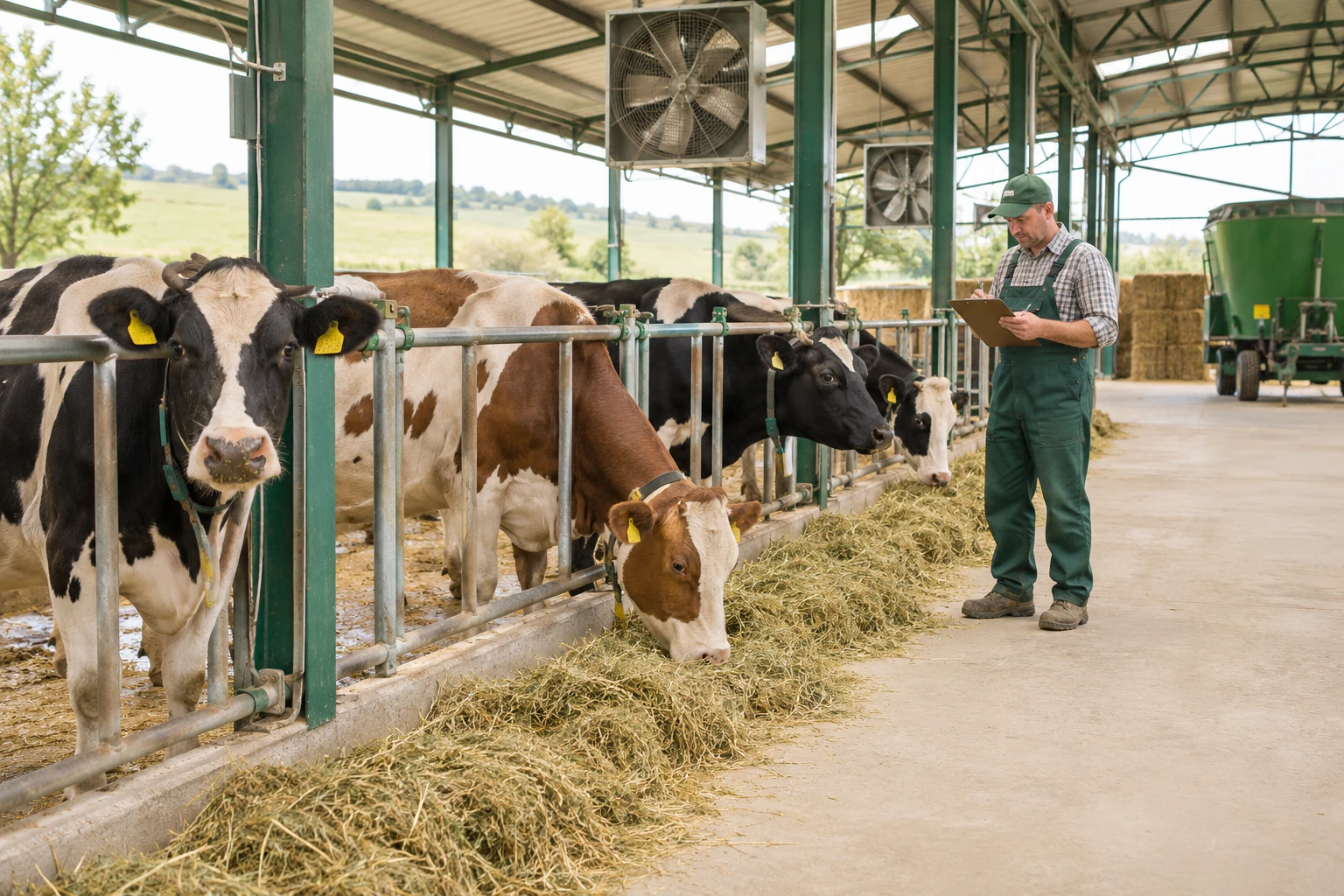

Livestock farm insurance: animals, buildings and equipment
Farm insurance preparation separates animals, buildings, machinery and other assets. A shelter policy does not establish protection of the herd, while animal insurance does not confirm payment for feed, installations or lost income. A clear list of the subjects being assessed is the starting point for a livestock farm in Moldova.
MOLDASIG publicly presents insurance for several agricultural-animal categories. A product's existence does not mean every farm, species or situation is accepted on identical terms. This article explains preparation without setting notification deadlines, compulsory veterinary conditions or subsidy percentages. Those require confirmation from current documents for the actual case.
Describe the farm's real operation
Start with breeding, rearing, milk, meat, eggs or another relevant activity. List locations and who manages each. One company may use several shelters with different circumstances. Do not rely only on total animal numbers if some are elsewhere or managed for another owner.
Describe normal operations, including movement, grazing and seasonal changes where relevant. A product for housed animals does not automatically include every movement. Accurate description identifies questions even where some situations require further clarification or cannot be accepted under the requested proposal.
The herd must be identifiable
Prepare farm records and relevant identification documents. Separate species, categories, ages and economic purposes. Date frequently updated lists. An undated table can become inaccurate between an initial calculation and signing even if each entry was originally correct.
Clarify identification requirements for the actual species and product. Do not invent one universal document list for cattle, poultry and apiaries. Request insurer instructions and check whether records link the animals with the proposed list. Explain inventory differences instead of hiding them in a rounded total.
For each location, connect the dated animal list with categories, owners and valuation documents. Keep the shelter and equipment lists separately identifiable. An unchanged total does not prove that newly purchased animals are already accepted. Request the applicable update procedure and preserve confirmations.
Substantiate animal values by category
Prepare purchase records, valuations or other relevant economic evidence. Breeding animals and animals at other production stages should not automatically receive identical values. Ask about the accepted basis, valuation date and later changes. An internal estimate is not a guaranteed payment amount.
Separate animal value from expected production revenue. Future milk, egg or delivery income is not automatically included in herd insurance. If an economic consequence matters, ask separately. An answer about losing one animal does not explain the outcome for every commercial contract of the farm.
Use an appropriate channel for health information
Request the necessary information list for herd health and relevant history. Describe known issues without stating that every disease is accepted or excluded. Requirements depend on product and circumstances. Discuss veterinary information with the competent specialist and provider, not a generic online article.
Organize existing records and identify who can answer specialist questions accurately. Do not send unnecessary personal information in a public form. This material is not veterinary advice or treatment guidance. Animal-health decisions belong with competent professionals and authorities independently of expected compensation.
Loss cause and contractual event
Product presentations may mention disease, accidents, natural phenomena or other events. Request the actual list for your herd together with definitions and limits. A public list is not protection against every cause. Ask which findings are needed and who establishes the connection between event and assessed loss.
For circumstances involving authority measures, request a separate explanation of contractual treatment. Sanitary measures and accidents may have different procedures and financial outcomes. This article does not interpret slaughter legislation or confirm epidemic payments. Such scenarios require specialist review.
Shelters, installations and feed need separate inventories
List buildings, fit-out, ventilation, heating, milking, feeding and water systems where relevant. Record owner, location, condition and substantiated value. An asset appearing in a shelter photograph is not automatically included. The inventory and proposal should match the actual property.
For feed and stored materials, describe quantities and locations. Distinguish ordinary stock from seasonal peaks. A business-property insurance product does not establish acceptance of every stock category or damage cause. Request precise answers for categories necessary to the farm's operation.
Water and power dependencies
For planning, identify operations stopping when water or electricity fails. Record backup sources, maintenance and response roles. This exercise shows vulnerability but does not mean a policy includes service interruption or every consequence. Prevention remains important even when a desired risk cannot be insured.
If equipment or breakdown consequences are proposed, ask about triggers and limits. Motor failure, spoiled stock and affected animals are different situations. Do not combine them under total farm protection. Useful comparison starts with an accurate scenario and identification of retained exposures.
Also keep distinct questions about health, equipment failure and production interruption. These can arise at the same farm without sharing the same contractual treatment. This organizational example does not prescribe veterinary measures or establish eligibility for support. It helps explain the actual request without invented tariffs or promises.
Herd movements and record updates
Specify who communicates purchases, sales and relevant changes during the contract. Ask about procedure and when an update is confirmed. New animals are not automatically included under an existing policy. Keep the submitted version and replies so the position can later be traced.
Explain seasonal locations and planned operations. Ask about transport and temporary sites before moving animals. A contract identifying one place should not be interpreted as universal territorial protection. Answers must relate to the product, dates and actual conditions rather than an administrator's assumption.
Premium, excess and possible public support
The premium is the amount paid for the contract. Compare the same herd, values, places, dates and risks. The excess or deductible is the insured's portion of a loss under the conditions. Ask for its form, calculation basis and limits. A smaller total does not automatically establish more suitable protection.
If considering a subsidy, check current official rules and the farm's eligibility separately. A product title mentioning public support does not establish approval of your application. Do not deduct an unconfirmed amount from the budget or assume the contractual premium has already been reduced. This article promises no funding, percentages or deadlines.
An incident: farm safety and factual records
Follow veterinary and competent-authority instructions, then contractual notification procedures. Communicate known facts, locations and affected animals' identification. Request instructions on findings and documents. Another product's deadline is not a general rule; check the actual contract's contacts and periods.
Preserve originals and communications without artificially changing evidence. This material does not recommend keeping biological remains or postponing safety measures. Those decisions belong with competent specialists and authorities. The broker can explain communication steps, while payment obligations and claim assessment belong to the insurer.
Prepare a useful comparison file
Confirm activities, sites, current herd, values and property inventory. Include relevant history as requested and note open questions. Distinguish evidenced facts from estimates needing review. A clear file reduces misunderstanding but does not replace required inspection or assessment.
Mark categories confirmed, unclear or not included. Seek answers before choosing by premium alone. Do not describe a proposal as whole-farm protection if it concerns only some animals or specified buildings. The aim is an understood choice, including losses the farm continues to finance itself.
Farm animals are not household pets
A livestock page does not establish veterinary insurance for a family dog or cat. Pet information likewise does not explain a farm herd assessment. An English URL may be misleading; read the actual subjects and categories rather than relying only on its address.
Keep economic purpose and actual species in the submission. Present different activities at one site separately and ask for confirmation. Do not fill an offer gap using another species' conditions by analogy. A precise question before signing is better than assuming animals means every situation.
Frequently asked questions
Does building insurance include animals?
Do not assume it. Herd, shelters and equipment need separate identification in assessment and accepted proposal documents.
Is every disease covered?
No universal protection is confirmed here. Check risk lists, definitions, exclusions and herd condition for the actual product.
Are later purchases automatically included?
Request the update procedure and inclusion-date confirmation. A farm record does not independently amend the insurance contract.
What should I prepare initially?
Activity, locations, herd categories and substantiated values, plus property inventories. Further documents follow through the agreed channel after clarifying purpose.
Next step
Request a conversation with ING Broker to check assessment and intermediation possibilities. The broker explains options and arranges insurance. Risk acceptance, conditions and claims handling belong to the insurer under the contract. This article does not confirm product availability or coverage of an individual case.
Related reading: Separate equipment assessment from animal protection.
Sources and limits
- National Bank of Moldova: checks before signing
- MOLDASIG: property of legal entities
- MOLDASIG: agricultural-animal insurance
The Romanian original records source consultation on 9 November 2026. The translation revision date does not mean the sources have been checked again. Preparation lists are editorial recommendations, not policy conditions. Cited products belong to their providers and are not ING Broker offers. Legal obligations and individual circumstances require specialist verification.