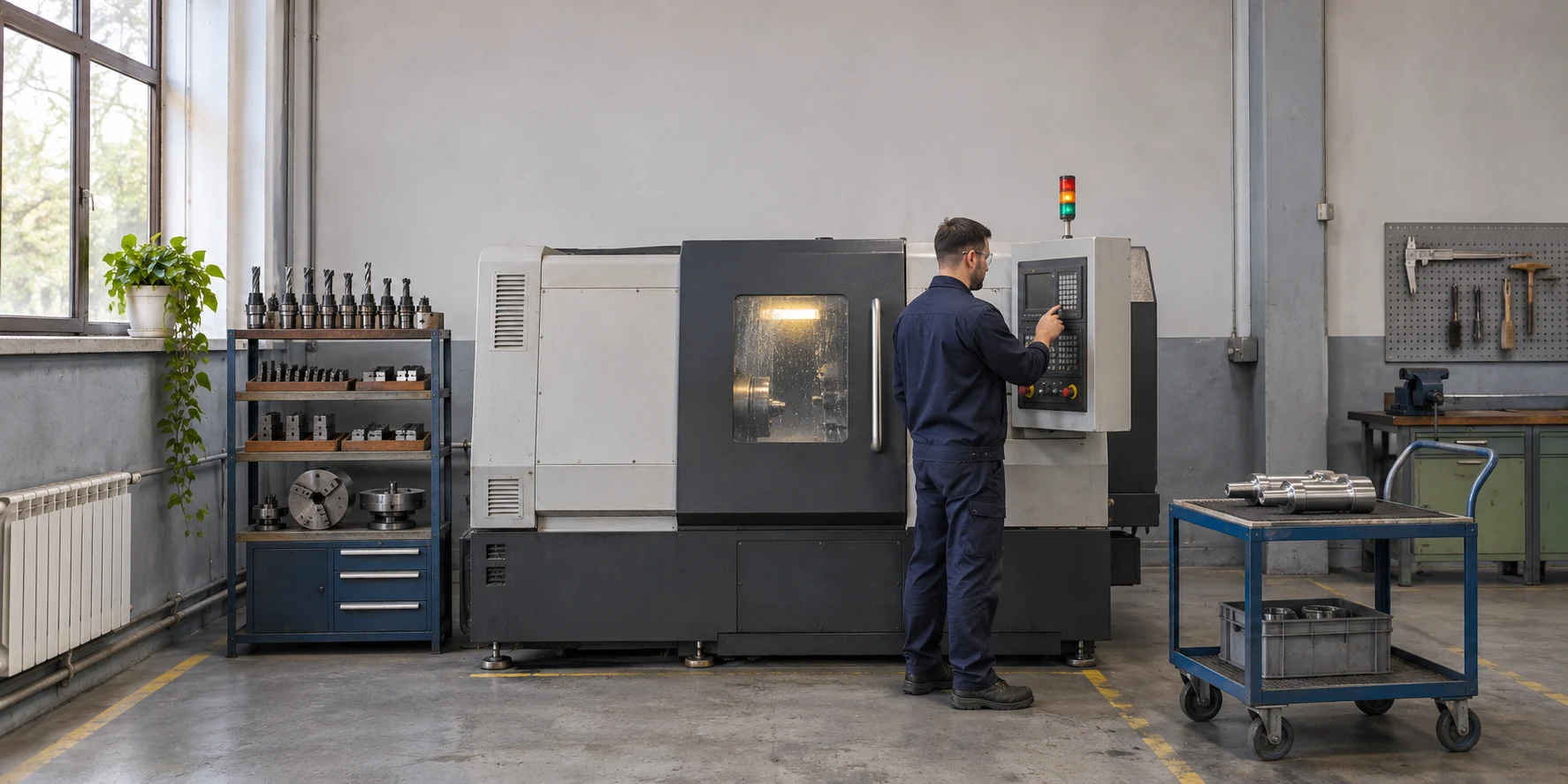

Industrial machinery insurance in Moldova
Industrial machinery insurance is assessed against the actual equipment, its use and the events accepted in the contract. A building policy does not itself confirm protection for a lathe, packaging line or compressor. For a business in Moldova, the file starts with the technical inventory and valuation documents.
This article is for manufacturers, workshops, processors and companies using owned or rented equipment. It explains questions to prepare rather than promising repair of every fault. Accidental breakdown, wear, maintenance and production interruption must be discussed separately. Availability and exact conditions are confirmed in the insurer's proposal, not by an article title.
Identify the machinery, not just the accounting total
List the name, manufacturer, model, serial number and year of manufacture where available. State the equipment's function and operating location. An accounting label such as “fixed assets” does not explain a complex installation or distinguish a main machine from its accessories.
Separate owned machinery from rented, leased or partner-provided equipment. For a modular line, describe the connections between components. Ask which components are accepted and when they must be listed separately. Do not assume every accessory added later automatically falls within the same item.
Replacement value and book value are not automatically equal
Prepare acquisition records and available information about comparable equipment. Ask which valuation basis the proposal uses. Transport, installation, commissioning and other expenditure should be discussed separately rather than automatically added to the declared sum. An old accounting total alone does not explain the cost of restoring working capacity.
If the machinery is no longer manufactured, record possible technical alternatives and which information remains estimated. An upgrade quotation is not a confirmed basis for a future compensation payment. Insurance comparisons should use the same components and accepted valuation basis. Valuation differences need to be visible before comparing premiums.
Operating location and use influence assessment
Describe whether machinery works indoors, outdoors or moves between sites. Explain working hours, seasonal use and operations involving special loads. A machine used occasionally in a workshop is not described like a multi-shift line that cannot accommodate a long planned shutdown.
Identify relevant technical conditions, including power supply, cooling, dust, humidity and dependence on other installations. Do not present these as factors with a fixed tariff effect. Ask the insurer which details are required and which operating requirements would appear in the proposed documents.
Fire and internal breakdown require separate discussion
In the public MOLDASIG example consulted, accidental machinery breakdown is presented separately from property protection against fire and other risks. This supports asking about the difference; it does not prove automatic acceptance of every machine. Request the events and consequences included in the actual proposal.
Do not treat every stoppage, noise or defective part as an insured event. Describe the known cause and existing technical documents without inventing a diagnosis. Ask about wear, maintenance and known defects. Insurance should not be presented as a service subscription or a universal performance warranty.
Demonstrate maintenance through consistent records
Prepare available technical instructions, maintenance schedules and relevant interventions. Identify who performs checks and where records are stored. Do not declare “complete maintenance” if records are missing or repairs remain outstanding. An accurate explanation is more useful than a marketing phrase concealing the actual position.
Separate routine checks from major repairs and modifications. For used equipment, identify records received at acquisition and checks performed afterwards. Do not fabricate a certificate or technical inspection to complete the file. Unknown points should be marked and clarified with a competent person.
For a modified machine, keep references to the specification, acceptance record and relevant maintenance entry separately. Mark any missing document openly rather than creating an assumed inspection result. The purpose is an accurate description of the current installation, including questions still requiring technical confirmation before an insurance proposal is accepted.
Installation, testing and relocation are different stages
State whether the machine is operating or in transport, assembly or testing. Identify the party performing each stage and the handover point. A proposal for machinery operating at one site does not automatically confirm protection during dismantling, relocation or commissioning elsewhere.
For a new investment, build a delivery and testing schedule before requesting comparisons. Ask whether transport, construction and erection, and operation need separate assessment. Do not assume all periods can be combined without further conditions. The supplier's responsibilities and warranty should be read separately from insurance.
Parts and servicing may determine the shutdown period
Identify suppliers of essential parts, technician availability and indicative response times. Distinguish confirmed information from internal estimates. For imported equipment, a part appearing on a website does not confirm immediate availability or the time required for installation and testing.
Ask how requested expenditure is assessed and approved under the proposal. Do not assume every urgent repair or expedited purchase will be reimbursed. Clearly separate safety measures, technical interventions and expenditure for which insurance coverage is being checked.
Production interruption is more than the repair invoice
Describe which products cannot be made when machinery stops and which alternatives exist. Could work continue on another line, through a partner or in an extra shift? These questions help prepare a continuity plan. They do not themselves establish a compensation amount or an event accepted by the policy.
If business interruption is being assessed, prepare expenditure, seasonality and recovery information. Request the triggering event, relevant period and calculation basis. Do not treat all lost turnover as profit or assume every commercial delay is included in machinery insurance.
How to read prices, deductibles and limits
A premium is the amount paid for insurance. Compare the same inventory, location and requested risks. A cheaper option may exclude an important component or use another valuation basis. A product name and total price do not establish equivalent protection.
An excess or deductible is the part of a loss borne by the insured under the contract. Ask how it applies to the scenarios discussed and whether specific costs have separate limits. Request a hypothetical calculation showing its assumptions. Neither that example nor a repair quotation promises the outcome of a future claim.
Backup machinery changes the recovery plan
Compare two working situations: a machine temporarily replaceable from the company's workshop and one without an alternative. Record backup capacity, parts compatibility and preparation time. Do not assume identically named machines can complete the same order at the same quality and speed. Check that possibility practically with production management.
If subcontracting is the alternative, identify transferable operations and those still dependent on the company's installation. Keep repair costs separate from temporary production arrangements. These details make continuity discussions more precise but do not confirm insurer acceptance or reimbursement of all costs.
A preparation file for industrial machinery
- Identifiable inventory, owner and site for each item.
- Process function and connections between production line modules.
- Valuation documents and requested valuation basis.
- Operating schedule, working conditions and supply arrangements.
- Recorded maintenance, repairs and known defects.
- Current stage: transport, installation, testing or operation.
- Access to service, parts and temporary production alternatives.
- Incident history and questions requiring written answers.
Use the file internally and transmit necessary details through the agreed channel. Do not attach industrial control passwords, sensitive diagrams or remote machinery access. Initial comparison needs risk information, not equipment control. Confirm the final document list for the product and site assessed.
After an incident: facts, safety and records
Follow safety procedures and applicable notification instructions. Do not restart unsafe machinery to demonstrate a fault. Preserve technical findings and intervention records in their actual form. Claims deadlines and documents come from the particular contract, not a public example for another product.
At renewal, update inventory, values and condition. Identify upgrades, replaced machinery and location changes. An old file does not automatically describe current production capacity. The broker may help organise comparisons, but risk acceptance and compensation decisions belong to the insurer under the contract.
Frequently asked questions about machinery insurance
Does a factory building policy automatically include all machinery?
Do not assume so. Check the inventory, subject and proposal conditions, including accepted components and locations.
Is wear the same as accidental breakdown?
Do not treat the terms as equivalent. Ask for definitions and exclusions using the actual technical condition of the machinery.
Does the supplier's warranty replace insurance?
Compare the documents separately. The supplier's responsibilities do not establish insurance coverage for every situation.
Is lost production paid automatically?
No. Request a separate business interruption assessment and accepted conditions. Machinery repair and operating losses are different expenses.
Next step
Request a discussion with ING Broker to check assessment and brokering possibilities. The broker explains options and acts as intermediary. Risk acceptance, conditions and claims decisions belong to the insurer under the contract. This guide does not confirm product availability or cover for an individual case.
Read also: Business interruption and loss of profit.
Sources and information limits
- National Bank of Moldova: checks before signing an insurance contract
- MOLDASIG: property and accidental machinery breakdown
The Romanian original records consultation of these sources on 8 November 2026. The translation revision date does not represent a new legal or product verification. Preparation lists are editorial recommendations, not policy conditions. Product examples from cited providers do not constitute an ING Broker offer. Legal obligations and individual circumstances require specialist review.