
Business interruption and loss of profit insurance in Moldova
Business interruption insurance concerns financial consequences of an interruption specified in the contract. It does not guarantee sales or automatically pay for every decline in profit. For a company in the Republic of Moldova, assessment begins with the event that may stop operations, the affected property and the time required to recover.
MOLDASIG's public property page presents production interruption as an addition linked to insured events. This is a local reference, not confirmation of conditions for every company. Your proposal, contract and endorsements determine what can be considered and within which limits. The following is a practical discussion-preparation sheet.
Repairing property does not necessarily restart the business
A packaging line may be repaired before production returns to normal. Adjustments, tests, material-stock replenishment and rescheduling may follow. In internal assessment, separate repair costs from operational consequences. They involve different records and questions even when arising from one incident.
Do not estimate downtime from memory. Ask people familiar with the process. Technical staff can explain repairs, purchasing can check parts delivery, accounting can describe costs, and sales can identify postponed orders and seasonality. The result should be a substantiated timeline, not a compensation promise.
Who may find this assessment useful?
It can be relevant to manufacturers, workshops, warehouses, processing facilities and businesses dependent on premises or hard-to-replace equipment. For multiple sites, ask whether work can move elsewhere. For one essential machine, identify alternatives and how soon they can be used.
These examples describe business needs, not automatically accepted insurance categories. Explain actual activity and dependencies at each site. Broad terms such as retail or food production do not by themselves describe operations. A few lines about workflow may be more useful than lengthy company marketing material.
Four questions to clarify in the proposal
1. Which event can trigger assessment of the loss?
Identify the event specified in the policy and the required connection with material damage. Do not assume every technical shutdown, lack of orders or supply difficulty falls into the same category. Describe the scenario and request an answer referring to the applicable provision. Keep any qualifications visible when comparing proposals.
2. Which financial measure is used?
Request the contractual definition of loss and calculation documents. Turnover, cash receipts, accounting profit and the policy's calculation basis are not interchangeable. Ask accounting staff to match company records to the definitions. Where insured gross profit is mentioned, request an explanation linked to your own records.
3. Which period is considered?
Clarify the beginning and end of the contractual indemnity period: the interval for which eligible losses may be assessed. Ask about any waiting period or time-based deductible. Do not confuse policy duration with the maximum period used to calculate loss after an event. Request an explanation using the proposed conditions.
4. Which limits and expenses remain with the company?
Check sums insured, special limits, deductibles and exclusions. A deductible is the insured's share of a loss under the contract. Exclusions are uncovered situations or risks. For extra expenses to maintain operations, identify the costs and approvals required rather than assuming reimbursement of every urgent invoice.
Build a realistic recovery calendar
Map the process from interruption to the intended operating level. For every stage, record responsibility, estimated duration, supporting evidence and preceding dependencies. This is an internal planning method. Durations are not insurer deadlines and do not independently establish entitlement to payment.
- Technical assessment and selection of repair or replacement.
- Supplier identification, parts availability and delivery confirmation.
- Preparing premises and installations for fitting.
- Installation, technical checks and operational tests.
- Replenishing stocks and rescheduling staff or shifts.
- Resuming orders and monitoring actual production capacity.
Distinguish normal timing from a difficult scenario. A locally available part differs from made-to-order equipment. Record alternatives such as a spare machine, external processing provider or temporary site. An alternative does not necessarily eliminate every loss or establish that the policy pays its cost.
Financial information to prepare
Organise revenue monthly and, where useful, by activity or location. Explain seasonality, significant capacity changes and contracts affecting period comparisons. One strong month does not automatically represent the annual norm. Preserve explanations so someone unfamiliar with daily operations can understand the figures.
Separate expenses continuing during interruption from those that reduce and potential additional costs. This prepares the file; contractual inclusion must be checked for each category. Do not add all lost receipts and expenses into one sum without a clear calculation basis. Ask the finance lead to review assumptions.
- Financial statements and records requested by the assessor.
- Income and expenses for comparable periods, with seasonal explanations.
- Processes and property on which operations depend.
- Relevant premises, machinery and essential-service contracts.
- Documented repair, delivery and restart estimates.
- Any continuity plan and responsible roles.
Agree a transmission channel before sending accounts, customer contracts or other confidential records. An initial discussion can begin with activity and the main dependency. The final document list follows the specific assessment; the article does not make every listed record mandatory.
Working sheet: from dependency to insurance question
Copy this structure into an internal document if useful. Complete one sheet for each critical process, without entering personal data or trade secrets in a public form. Identify missing information before requesting an offer, rather than attempting to calculate compensation yourself.
- Process: which activity stops, and where?
- Dependency: which property, installation or service is needed?
- Alternative: how can work continue partially?
- Duration: which recovery stages are needed and who confirms them?
- Impact: which revenue and costs require accounting explanation?
- Evidence: which records exist and which must be obtained?
- Question: which proposal provision needs clarification for the scenario?
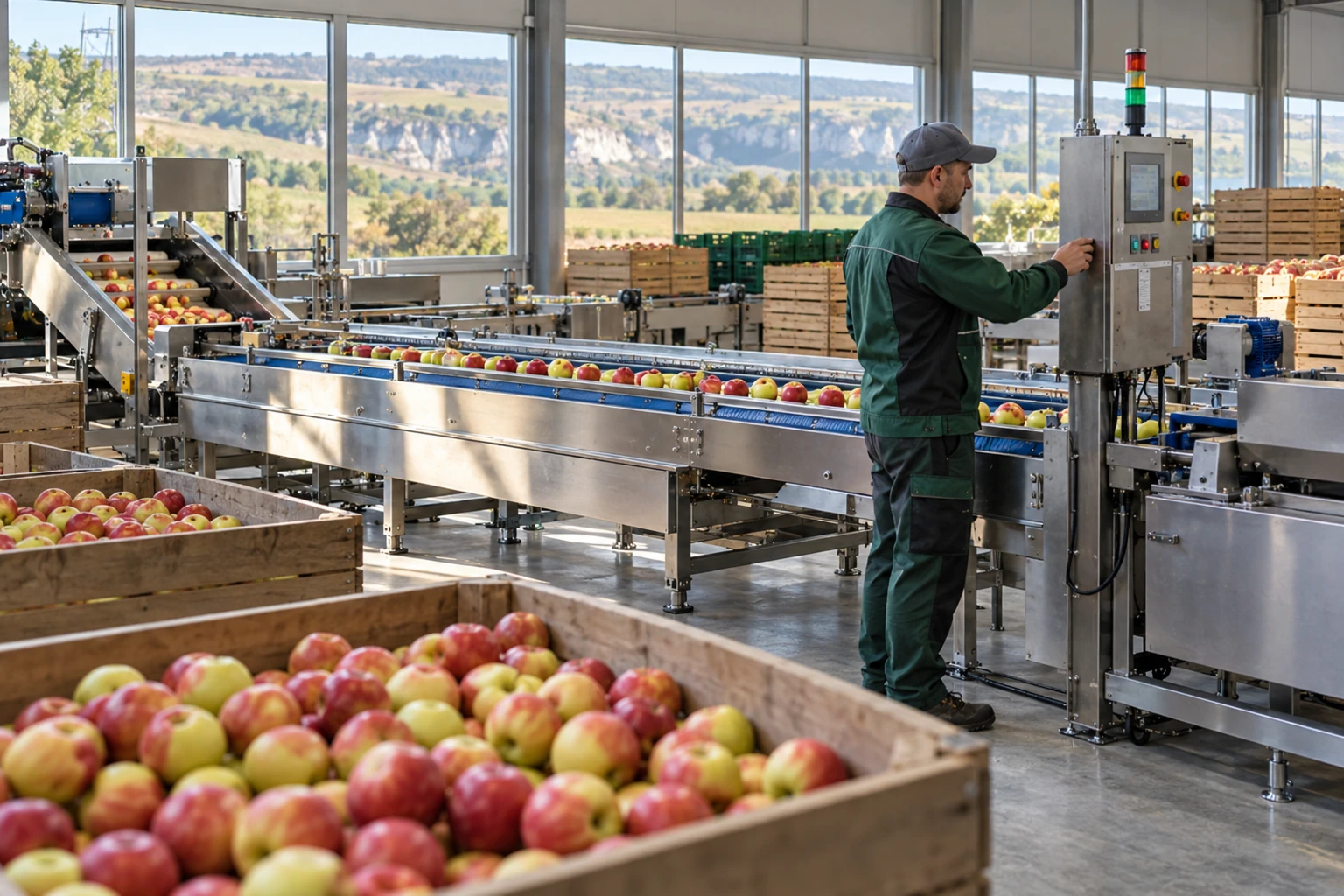
In a hypothetical fruit-sorting example, a stopped belt may affect one stage while loss of cooling has different consequences. Record equipment, goods and operational impact separately. This is not a real ING Broker customer case or confirmation that all such losses are covered.
Assess suppliers, power and customers separately
A business can have undamaged property yet be unable to operate because of an external dependency. Do not automatically merge this scenario with damage to owned property. Describe the supplier or service, the dependent location and alternatives. Confirm any extension and its conditions before treating it as included protection.
Apply the same approach to access, rented premises and major customers. Distinguish matters within the company's control from third-party responsibilities. Some problems call for contractual arrangements, spare stocks or operational changes, not only a policy. Keep these solutions distinct rather than presenting insurance as a universal answer.
If operations are interrupted
Follow safety measures and incident procedures. Check the insurer's notification instructions and contact the broker for guidance. Keep a timeline of interruption, interventions and partial recovery. Record observed facts, not unverified conclusions about the final cause or amount to be paid.
Collect technical and financial records as they become available. Separate usual costs from incident-related expenditure and document continuity decisions. Check contractual procedures and approvals before major expenses without delaying urgent safety measures. This article provides no universal settlement deadline or guaranteed compensation.
Confirm the evidence behind each recovery estimate
A supplier's written delivery confirmation differs from an internal assumption. Record that distinction beside the timeline. If an alternative workshop is only a possibility, do not describe it as booked capacity. Likewise, management approving an extra expense does not establish insurer acceptance. Keep the internal decision, supporting documents and any contractual response separate. This makes later discussion traceable without turning a planning sheet into a claim decision. After recovery, retain actual partial and full restart dates so the next review can distinguish experience from forecasts.
Frequently asked questions about loss of profit
Is a sales decline enough?
No. Check the contractual event and connection to the claimed loss. Lower demand, losing a customer or a weak trading period must not be presented as automatically accepted events.
Does property insurance always include interruption?
Do not assume inclusion. Identify the component, sum, period and conditions explicitly. A building or machinery value alone does not confirm protection for financial results.
How should the indemnity period be chosen?
Prepare a documented recovery timeline, including stages after repairs. Compare offered options and discuss uncertainty. Do not choose solely by an estimated maintenance intervention.
How much does interruption insurance cost?
Price belongs to a specific proposal. Compare identical activities, sites, values, periods and scenarios. A lower premium does not prove equivalent protection.
What can I prepare before speaking to the broker?
Describe the critical process, dependent property, expected recovery time and the person able to explain financial data. Mark missing information rather than presenting assumptions as facts.
Next step
Request a discussion with ING Broker to check assessment and intermediation possibilities. The broker explains options and intermediates; risk acceptance, conditions and claims decisions belong to the insurer under the contract. This article does not confirm product availability or cover for an individual event.
Read also: Insurance for industrial machinery and equipment.
Sources and limits of this information
- MOLDASIG: property and production interruption, a local example
- National Bank of Moldova: elements of an insurance contract
The Romanian source consulted these sources on 7 November 2026. Preparation lists are editorial recommendations, not policy conditions. Examples belong to the cited providers and are not an ING Broker offer. Legal obligations and individual situations require specialist verification.