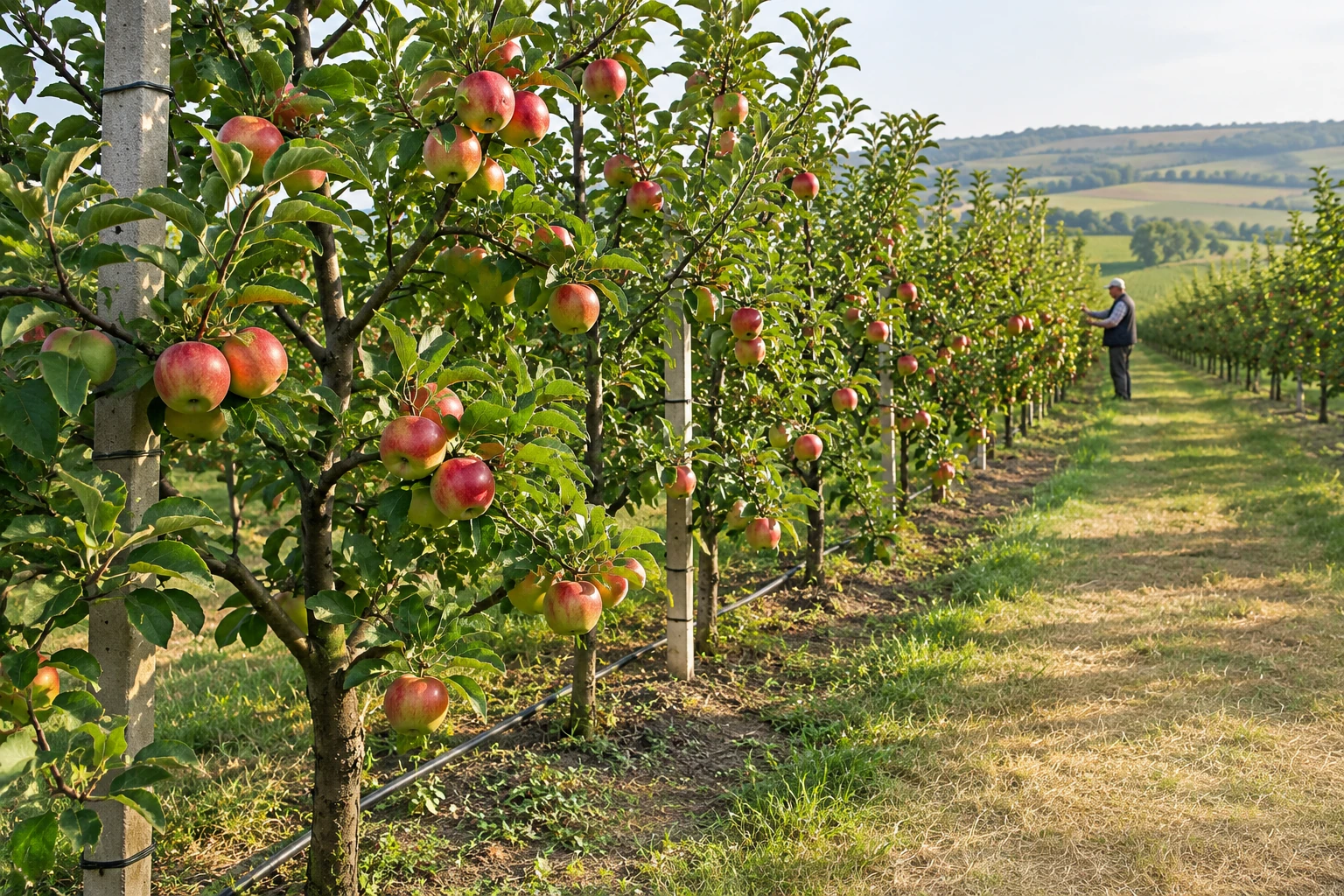

Orchard and vineyard insurance in Moldova
When assessing an orchard or vineyard, separate the plantation from a season's harvest and the installations used. Losing fruit is not the same as destroying trees. A crop policy does not establish protection for trellises or an irrigation pump. Identify each category separately when reviewing the proposal.
In the Republic of Moldova, MOLDASIG publicly presents insurance for crops and perennial plantations. This local example helps explain how to prepare information for an assessment without stating that every species, age or risk is accepted. Farmers should check the actual subject, period and conditions before including potential compensation in the business budget.
Three separate lists: plantation, crop and equipment
First describe the planting: species, varieties, area, planting year and location. In the second list identify the relevant season's crop and its estimate basis. Third, inventory installations and structures. This separation is useful even where all items appear on one company's balance sheet and are used by the same team.
Do not assign the same value to every category. A young tree, a mature fruit-bearing tree and fruit awaiting harvest have different economic support. Ask which value is accepted and which documents each subject needs. Internal records are a starting point, not confirmation of an insurer's future payment.
Identify orchard and vineyard blocks
Divide the holding into blocks recognisable in the field and documents. Record areas, access, rows and important differences in age or technology. Identify plots in different localities separately. “The company's orchard” is insufficient to prevent confusion when only a particular section is affected.
Check the plan against reality: replanting, gaps, cleared sections or changed land use. Supply the current list and retain its confirmation date. Prepare relevant land-use documents on request. The farm address alone does not establish every use right and property interest.
Hail: fruit, leaves and the plantation structure
Ask which subject is assessed and how damage is established. Affected fruit, reduced quantity and tree damage are different topics. Do not turn a general reference to hail into a promise that every consequence is assessed identically. Ask how damage to the crop would be assessed and which documents would support the inspection.
If hail nets are used, describe their area, structure and condition. Their existence may help explain the holding but does not automatically confirm a discount or insurance for the installation itself. List supports, anchors and mechanisms separately. Compare proposals for the same property, not one for fruit and another for the complete arrangement.
Discuss frost in relation to the plants' growth stage
Prepare information about species, varieties and the current condition of each planting block. For low temperatures, request the period and definitions used in the proposal. A presentation about winter frost does not establish acceptance of a cold spell during flowering. Clarify the distinction for the actual product and season.
Separate temperature observations from conclusions about yield. Record when and where damaged flowers were observed without prematurely declaring a total loss. Ask which inspections and data sources are required. One row's photograph or a district forecast alone does not explain damage throughout every block.
Drought and irrigation are not one question
Show irrigated areas and the system's supply. Describe actual capacity, not only a pump specification. Identify dependence on a particular water supplier or electricity. Water shortage, installation failure and a weather phenomenon require separate discussion without assuming equivalent protection.
For plants and crops, request the drought definition and assessment criteria if offered. Prepare a separate equipment inventory. Additional watering costs are not automatically reimbursed under an insurance policy. Where a cost matters to the farm budget, ask explicitly and ask for an answer in the relevant proposal or contract documents rather than a general statement about agricultural security.
Describe the age and condition of the plantings accurately
Record replanting, regeneration and significant work changing the orchard or vineyard. Young areas without commercial production need a different description from mature blocks. Do not calculate the value of both categories solely from the harvest achieved in the best year. Request the appropriate valuation basis and retain its supporting explanation.
Document maintenance in the farm's ordinary way: operations, dates and responsible people. This supports explanations without becoming a universal contractual duty list. Disclose areas already affected by disease, pests or damage. Do not conceal current condition or confuse a known problem with a future event.
Estimated production and selling price
Prepare an explained estimate, not merely a rounded total. Show productive area, quantity assumptions and relevant economic records. Ask which value can be accepted and how it affects assessment. A hoped-for selling price and contractual amount are not automatically identical and should not be mixed in budgets.
Explain the actual destination of fresh fruit, table grapes and processing grapes. If quality losses concern you, request a separate explanation. Do not assume every commercial loss, buyer rejection or price fall is included in crop insurance simply because it affects farm income.
Deductibles, limits and calculation units
A deductible, also called an excess, is the part of a loss borne by the insured under the contract. Ask for the exact form and calculation basis. Check whether assessment uses a plot, block, crop or another defined unit. A percentage discussed for another farm is not a rule for your orchard. Documents should address the actual situation.
Exclusions are situations or risks without contractual cover. Request an explanation against the plantation's important concerns. Compare periods, amounts, limits and damage assessment before price. Proposals with similar premiums may treat damage affecting only some fruit or a single block differently.
Coordinate harvesting and assessment
On observing an incident, use the contract's procedure and deadlines with confirmed contacts. Identify affected blocks and known facts. Request instructions on assessment and urgent operations. Do not delay necessary measures protecting people or property based on this article; actual directions belong to competent people and institutions.
Before harvesting an affected area, clarify required documentation. Preserve original photographs and available quantity records without modifying images to exaggerate an event. This material promises no payment based on photographs. The insurer checks circumstances and extent under the contract and file documents.
Storage, transport and goods after picking
Plan post-harvest stages separately. Fruit in cold storage, refrigeration equipment and transport to the buyer should not be assumed included in a field crop policy. Establish when and where the assessed protection ends. Prepare separate property, equipment and transit questions where relevant.
If a partner owns the storage facility, describe the contract and responsibilities without automatically assigning every loss to one party. Retain batch and handover records. This article does not confirm a solution for every stage. Separation aims to reveal gaps before treating all production as protected.
A separate sheet for every planting block
A practical sheet can start with four fields: plants present, location, assessed crop and installations used. Add valuation documents and insurer questions separately. Do not group nets, trees and harvest under one inventory name simply to reach a quick total. Separation reveals which category lacks an answer.
For a replanted block, keep the update date and remove estimates no longer describing the field. Explain mixed varieties rather than using an unsupported whole-farm average. These recommendations assist preparation, not a contractual valuation method. The insurer may request other information before confirming the proposal.
At season-end, retain lessons about inventories, work records and incident communication. The absence of a claim does not, by itself, show whether a policy was suitable or unsuitable. For the next assessment, check changed subjects, values and periods. Consistent records remain useful even if a different insurance structure is chosen next year.
Working example: updating one orchard block
Consider a hypothetical holding that replants part of its orchard while another part remains productive. An old table has one area and average age. Before assessment, explain the change with separate entries for the previous block, replanted area and plan update date. Do not treat a young planting's anticipated future harvest as a confirmed current result.
Clarify which subjects are to be assessed: perennial plants, seasonal fruit or installations. Nets and irrigation may serve both areas without becoming one property category. Identify owners and available records, leaving unknown values open. A fictional sum does not repair missing evidence.
The financial contact prepares economic records while the agronomist explains plant condition and actual work. In this hypothetical preparation exercise, each person should explain matters within their own area of responsibility, without certifying something they cannot verify. Compare proposals against the same description version. Equal hectares do not establish equal scope if one option concerns mature crops and another perennial plants. This example is not an ING Broker customer or a compensation promise.
Frequently asked questions for plantation managers
Does crop insurance include trees and vines?
Do not assume so. Ask for the insured subject and each category's value. The plantation and one season's crop are assessed separately.
Is a hail net protected by fruit insurance?
A policy name does not establish that. Prepare the installation inventory and check accepted property, causes and limits separately.
Can I compare proposals only by premium per hectare?
That is insufficient. Compare the same crop, values and periods, followed by risk definitions, deductibles and damage valuation.
What should I prepare before discussing insurance?
Block plans, species, age, productive areas, current condition and supported values. Acceptance and further documents are checked for the actual plantation.
Next step
Request a discussion with ING Broker to check assessment and brokering possibilities. The broker explains options and acts as intermediary. Risk acceptance, conditions and claims decisions belong to the insurer under the contract. This guide does not confirm product availability or cover for an individual case.
Read also: What to check when assessing drought risk for crops.
Sources and information limits
- National Bank of Moldova: checks before signing
- MOLDASIG: agricultural risk presentation, a local example
The Romanian original records consultation of these sources on 9 November 2026. The translation revision date does not represent a new legal or product verification. Preparation lists are editorial recommendations, not policy conditions. Product examples from cited providers do not constitute an ING Broker offer. Legal obligations and individual circumstances require specialist review.