
Solar panel insurance: preparing a photovoltaic system assessment
Solar panel insurance is assessed for the actual installation, not simply the number of panels. Their location, associated equipment, ownership and project stage matter. A building policy does not automatically confirm inclusion of the entire electricity-generating system.
For a company in Moldova, this article is a preparation checklist covering inventory, documents, risk questions and the differences between warranties, maintenance and insurance. It does not confirm product availability for every solar installation. Eligibility and protection must be checked in the insurer's proposal and conditions against the project's particulars.
Describe the entire system, not just solar modules
The inventory may include panels, mounting structure, inverter, cables and protective equipment where part of the project. An inverter converts electricity produced by panels into a form usable by the installation. Identify components located in other rooms or away from the panels too.
If batteries are present, describe them separately and request their own review. The phrase solar panels does not automatically include energy storage. Keep identifiers and purchase records linking equipment with declared values without publishing serial numbers or sensitive security information.
Identify owners of the equipment and site
A business may own panels without owning the building or land. Prepare documents explaining use of the site and the relationship between owner, user and financier. An installation address does not establish that everything there belongs to one person.
For financed projects, clarify contractual insurance and beneficiary requirements from the financing documents rather than this article. With relevant specialists, check that people and property identified in the proposal match the actual project structure.
Separate installation from operation
State whether equipment is stored, being installed, under testing or already operating. Each stage can raise different questions about location, participants and operations. Confirmation for an operating installation does not automatically cover transport or unfinished work.
Prepare the schedule, installation contract and available handover records. If some components operate while others await installation, explain this. Discuss stage changes explicitly instead of assuming insurance updates itself when the project progresses.
Document roof-mounted or ground-mounted locations
For roof mounting, describe the building, access and fixing system using technical documentation. For ground mounting, describe the land layout, fencing and maintenance access. Do not work at height merely to obtain photographs. Use safely available documents and images.
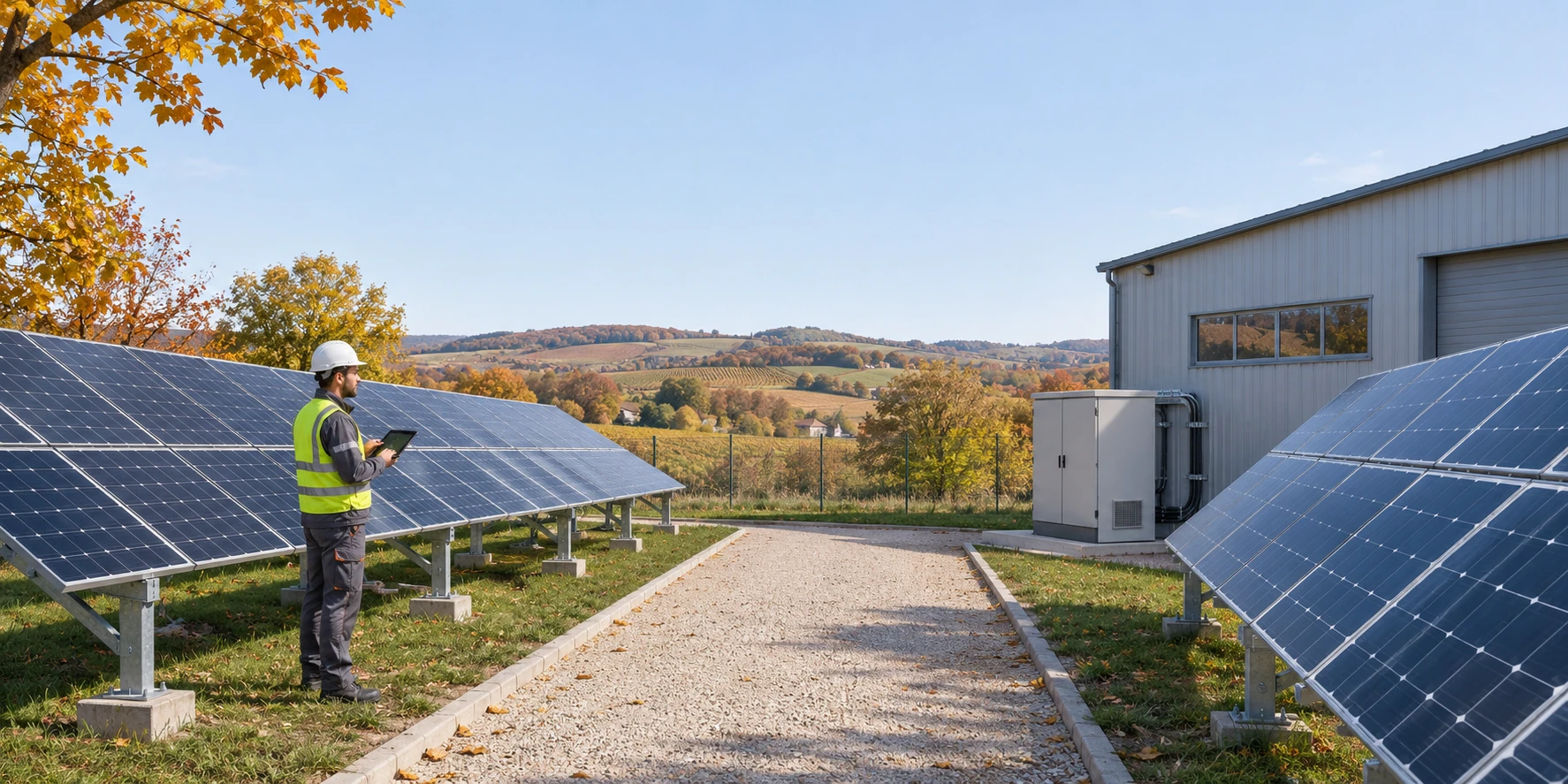
Identify surrounding features relevant to assessment: nearby structures, traffic, vegetation or water drainage paths. They describe exposure but do not certify structural stability. Technical assessment belongs to competent specialists, not the broker or the illustrative photograph in this article.
Ask separately about natural events
If hail, wind, snow or lightning concerns you, list each in the request and obtain separate answers. Do not treat natural hazards as a presumed coverage list. Definitions, limits, exclusions and protective conditions must be read in the actual proposal.
Explain where technical documents are kept and what site checks are available. A panel's resistance specification is not acceptance of an insurance claim. Declared product performance and protection under an insurance contract require different assessments.
Distinguish electrical failures and components
An inverter problem, damaged cable and broken module are not the same failure. List components and ask for distinctions between accidental damage, manufacturing defects, wear and other contractual situations. This article does not establish that any one is included.
Keep intervention reports and repair history. Describe already known defects accurately at assessment. A new policy must not be presented as a way to finance an already necessary repair. An accurate timeline is more useful than generally calling the installation new.
A manufacturer's warranty does not replace insurance review
Read equipment warranties, installer commitments and maintenance contracts separately. Record who handles complaints, which documents are requested and which services are described. Do not assume all documents concern identical expenses or causes of damage.
A performance or product warranty must not be presented as a promise of constant income. Ask how the insurance proposal relates to warranties and technical work. Keep unconfirmed issues open rather than replacing them with commercial claims of total protection.
Establish value from installation records
Use invoices and contracts to distinguish components from installation, transport and other expenses. Ask which valuation basis is proposed. Accounting investment value, replacement cost and a sum in a quotation should not be treated as identical without verification.
If the system was expanded or modernized, update its inventory before renewal discussions. Describe both a building policy and any separate programme to avoid unexplained duplication of components. The broker can organize questions; specialist technical and financial valuations require their own review.
Ask about costs following damage
Besides a damaged component, dismantling, access, transport and reinstallation may be needed. Ask how the proposal treats each. Being necessary to resume operation does not automatically establish inclusion. Keep a separate question about compatible replacement components.
The excess or deductible is the share of a loss borne by the insured under the contract. Request a calculation using the actual proposal and ask whether some situations have different limits. A quotation cannot be compared accurately solely by its premium, meaning the amount paid for insurance.
Lost income needs a separate assessment
A shutdown can affect self-consumption or electricity delivery, but equipment value alone does not describe the financial consequence. Prepare production records and explain how energy is used in the business. Separate estimated savings from actual receipts and continuing expenses.
Ask whether an eligible solution exists for interruption consequences and on which conditions they could be considered. Do not claim every production decline or lack of sunlight is insured. The link between an event, shutdown period and calculation method requires contractual confirmation.
Keep maintenance and modification records
Organize an accessible file for the responsible person: inventory, design, handover, interventions and service contacts. Keep current documents and change history. Clear records support discussion with insurers and technical specialists without guaranteeing risk acceptance.
This article is not an electrical repair manual. Cleaning, connection checks and interventions depend on technical documentation and competent personnel. If damage is observed, avoid improvised repairs and request appropriate checks. Safety takes priority over obtaining photographs quickly for a submission.
An illustrative agricultural-business file
A hypothetical agricultural company uses a photovoltaic system for a sorting building. Panels stand on company land, the inverter is in a technical room and equipment was installed in two stages. The file identifies each stage's components, values and available commissioning records.
The business requests separate answers about property, breakdown and possible business interruption. This is not a real client or an accepted offer. It shows why one panel photograph and total investment cost are insufficient for a complete project assessment.
Use monitoring as evidence, not a payment promise
If monitoring software is used, identify who follows alerts and retains relevant reports. Ask a specialist to distinguish a shutdown, missing measurement and reduced production. A screenshot alone does not establish the technical cause or whether an event is insured.
A useful timeline records when a signal appeared, who noticed it, checks performed and subsequent intervention. Do not publish application credentials or details permitting system control. Send documents only to authorized recipients and only as needed for assessment.
Before signing, check the proposal's company, site, components and period. Resolve an incorrect address or omitted inverter before confirming the contract. Do not leave this review until a problem has already occurred.
Documents for the first conversation
- Site address and description, including roof or ground mounting.
- Panels, inverter and other components, with batteries separately identified.
- Documented values, owner, user and relevant financing.
- Project stage and available installation and handover records.
- Warranties, maintenance, interventions and known damage.
Frequently asked questions
Does building insurance automatically include rooftop panels?
Do not assume this. Check identification of the installation and components, value and building-policy conditions. Request written confirmation of included elements and those needing separate review.
Is hail included?
The answer depends on the actual contract, not this article's title. Ask for the event definition, limits, exclusions and excess. General property insurance information does not confirm an individual case.
How much does solar panel insurance cost in Moldova?
No unverified tariff is published here. Prepare inventory, values, location and project stage for eligibility checks and any proposal. Compare cost alongside risks and expenses retained by the business.
Does a policy guarantee annual energy production?
Do not describe insurance that way. Property, technical performance and financial consequences require distinct assessments. Check the actual product and accepted events without turning production estimates into compensation promises.
Next step
Request a conversation with ING Broker to check assessment and intermediation possibilities. The broker explains options and arranges insurance. Risk acceptance, conditions and claims handling belong to the insurer under the contract. This article does not confirm product availability or coverage of an individual case.
Related reading: Business interruption and loss of profit: a separate review.
Sources and limits
- National Bank of Moldova: insurance contract conditions
- MOLDASIG: property insurance for legal entities, a local product example
The Romanian original records source consultation on 8 November 2026. The translation revision date does not mean the sources have been checked again. Preparation lists are editorial recommendations, not policy conditions. Cited products belong to their providers and are not ING Broker offers. Legal obligations and individual circumstances require specialist verification.