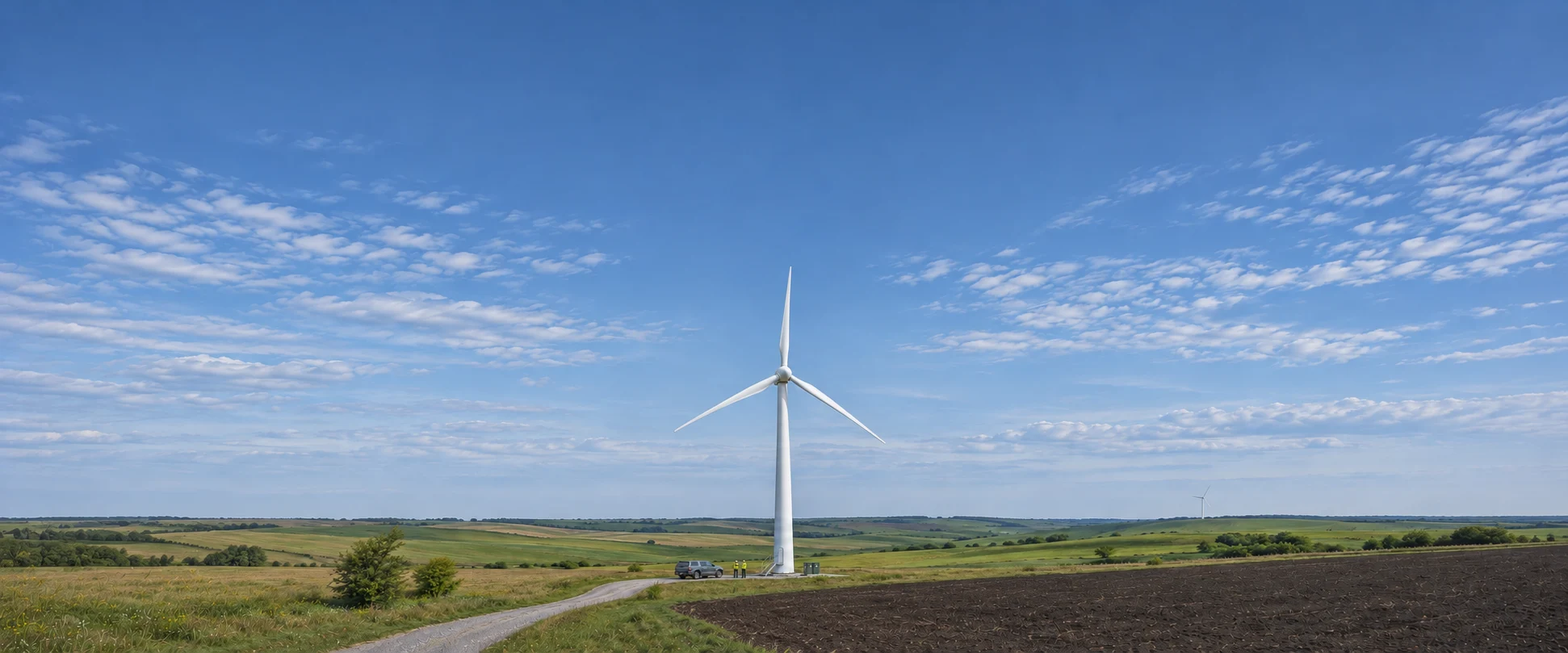

Wind farm insurance: turbines, maintenance and production interruption
Assessing a wind farm in Moldova requires more than turbine numbers and investment value. Equipment, project stage, maintenance and recovery after failure matter. A turbine, collection cable and transformer station have different functions. The file should identify what the company owns and what stops when one component fails.
This material is for investors, managers and financial teams. It prepares information rather than offering insurance for every technology. Moldova's Ministry of Energy publishes separate sector information. Insurance conditions must be checked in an actual proposal, not inferred from renewable-energy development objectives.
Which equipment is being assessed?
Start with turbines, foundations, electrical components, cables and the project's station. Record model, identifier, year and valuation evidence. Do not publish technical inventories, passwords or access details. A commercial overview may suffice initially, with sensitive documents shared separately with authorized recipients.
Check whether the inventory matches the installation actually built, not only the original contract. Components or suppliers may have changed during the work. Mark known differences and the documents explaining them. A single value for the entire project hides these uncertainties. Also ask which assets belong to the grid operator or another owner so they are not automatically counted as company property.
Distinguish equipment value from transport, lifting and installation costs. Do not assume every cost falls in one sum or receives identical treatment. Before comparing premiums, meaning insurance payments, ask about valuation basis. Preserve currency and dates. An estimated conversion is not an insurer-accepted value.
When does installation end and operation begin?
Turbines may be at different stages: some accepted, others under testing, while connection works continue. Describe each significant component and available handover documents. First electricity production does not establish that every work item is complete or operating protection has automatically begun.
Keep the contractor, supplier and commissioning agreements. Record who coordinates tests and who documents their results. An acceptance record, a manufacturer certificate and a policy have different purposes. Describe any reservations at acceptance or planned interventions factually. Do not present an insurance document as technical confirmation of the work, or treat a technical document as proof that the insurer has accepted every component.
For expansion, separate existing installations and new work. Explain access, cable and operating changes. An old policy is not automatically suitable for the expanded configuration. Clarify questions before the relevant operation with project specialists and those competent to review insurance documents.
Why does the maintenance agreement matter?
Prepare the list of services actually agreed, not merely the commercial package name. Who monitors alarms, who attends the site and who supplies parts? Is there a procedure outside normal working hours? Record the answers and their contractual source. A general statement that service is available does not explain the time or operations needed for a particular repair, or identify which provider is responsible for each step.
Separate periodic inspections from unplanned interventions. Retain work records, recommendations and any problems still unresolved. Hiding a known alert does not make the risk description more useful. Explain what was observed and which action is planned without deciding the technical cause yourself. Diagnosis and the decision to operate belong to specialists, not to this article or a commercial form.
A manufacturer's warranty and insurance are different documents. Ask about parts, labour, dismantling, transport and recommissioning. Confirmation of one item does not establish payment of every shutdown cost. Compare documents applying to your project rather than importing another country's or investor's turbine conditions.
Preparing a shutdown scenario
Build a working timeline covering detection, access for the specialist, diagnosis, ordering a component, transport and testing after the intervention. For each stage, record what is confirmed and what remains estimated. Do not calculate the duration only from the part delivery period. Site access, available providers and necessary checks can be separate elements of the recovery plan and should be described as such.
If lifting or special transport may be needed, ask technical specialists to explain organization. This article provides no operational instructions or wind-related safety limits. Do not improvise interventions to shorten an assumed stoppage. Existing procedures, responsible people and contractor confirmations are useful; unsafe demonstrations are not.
For example, a manager might establish documents and services needed to replace an important component. This is hypothetical, not a real claim or confirmation of reimbursement. It reveals dependencies. A policy conclusion requires reading accepted events, limits and exclusions in the actual proposal.
For a hypothetical component replacement, record each dependency without assuming reimbursement: site access, specialist availability, compatible part, transport and tests. Preserve the source for confirmed timing and label estimates. This does not calculate an insured interruption period or instruct a repair. It helps avoid a recovery estimate based only on one part's advertised delivery.
Does low production automatically mean an insured loss?
No. Production below budget can have different causes. Comparison with a financial plan does not prove a covered event. Separate generated energy, wind conditions, installation availability and external restrictions. Keep relevant records and verified explanations rather than replacing cause assessment with a compensation conclusion.
For interruption discussions, prepare revenue calculations and continuing costs. Distinguish forecasts from realized, documented amounts. Ask what event triggers protection, which period is considered and how an accepted loss is calculated. No compensation is promised here for lack of wind or every revenue difference.
Review dependencies on the station, grid, communications and external providers separately. A stopped turbine and an off-site interruption are not automatically the same risk. Explain what the company controls and what depends on another party. This helps discussion but establishes neither legal responsibility nor an extension of cover.
What should the proposal contain?
Request full documents and identify subject, period and parties. Match the actual installation against the description. Exclusions are events or risks without cover. The excess is the insured's share of a loss under the contract. Read them alongside benefits before selecting a price.
Ask whether relevant assets, correct stage and discussed costs are described. Which records are required when reporting a problem? Do the quotation, schedule and general conditions disagree? Seek written clarification before presenting a confirmed solution to management. A summary does not replace the contract or certify acceptance.
Compare without losing significant differences
Use the same internal fields for both proposals: subject, stage, dates, sum, currency, risks, exclusions, excess and records. Beside each answer, identify its page or schedule. Missing information should be marked to clarify, not included. This avoids turning assumptions into benefits promised to management or financiers.
Add separate questions about the wind farm components. Does each proposal describe the same turbines and stations? Does it use the same values and operating stage? If one proposal starts from another configuration, the premium difference cannot be interpreted only as a price advantage. Ask for the input information to be corrected and keep the reply before choosing a version.
At renewal, do not automatically resend the previous year's file. Review interventions, replaced components, extensions and changes in contracts. A wind farm that has operated for some time may now have a different history and new documents available. Prepare the actual changes and known problems without inventing an improvement in risk. Discuss renewal on the current situation. An earlier policy does not automatically confirm the same conditions for the following period.
The wind-farm manager's preparation sheet
- Actual configuration and stage of each component.
- Inventory, owners and documented values with currencies and dates.
- Handovers, reservations and unfinished work.
- Maintenance, warranties and intervention records.
- Repair steps and dependence on parts or providers.
- Production data and internal shutdown-assessment method.
Update the sheet after configuration, ownership or service changes. Preserve versions instead of retrospectively replacing records to conceal a difference. Initially send a clear description and unresolved questions. Share sensitive annexes separately. The broker helps review assessment and arrangement possibilities; the insurer decides acceptance and claims.
Frequently asked questions
Can I use another farm's quotation?
Only as a question list, not confirmation for your project. Configuration, owners, stage, maintenance and conditions may differ. Request assessment of your own circumstances.
Are all repair expenses included?
No general confirmation is possible. Parts, transport, lifting, labour and unrealized income need separate discussion. Check actual limits, exclusions and excess rather than inferring from a product name.
Must technical documents be published?
Not for an initial commercial discussion. Do not publish passwords, sensitive diagrams or access information. Agree necessary documents, recipients and an authorized channel.
Next step
Request a conversation with ING Broker to check assessment and intermediation possibilities. The broker explains options and arranges insurance. Risk acceptance, conditions and claims handling belong to the insurer under the contract. This article does not confirm product availability or coverage of an individual case.
Related reading: Solar panels: equipment and documents to check.
Sources and limits
- Ministry of Energy: renewables and storage context
- National Bank of Moldova: insurance contract elements
The Romanian original records source consultation on 10 November 2026. The translation revision date does not mean the sources have been checked again. Preparation lists are editorial recommendations, not policy conditions. Cited products belong to their providers and are not ING Broker offers. Legal obligations and individual circumstances require specialist verification.