
Environmental risks and remediation: preparing an insurance file
For a company storing fuel, using substances in production or operating an industrial site, environmental risk assessment starts with the location. The useful question is not simply whether pollution insurance exists. It is which situations, expenses and responsibilities can be considered for that particular operation. This article does not confirm that ING Broker offers an environmental insurance product or that an existing contamination can be insured.
Separate four parts of the exposure
Prepare a working sheet for each location, distinguishing the company's property, neighbouring interests, possible remediation works and operational consequences. These are assessment categories, not confirmed insurance benefits. A general liability policy does not establish that every category is included. Keep the person responsible for each question identifiable without distributing unnecessary personal information.
- What are the site's current activities and known previous uses?
- Which substances, tanks, pipes and discharge points are present?
- What documented information about contamination is available?
- Who owns the land and who has contractual intervention responsibilities?
- What response plans, responsible roles and intervention providers actually exist?
Questions that make proposals comparable
Ask how the proposed wording distinguishes existing circumstances from future events, sudden pollution from gradual processes, and the company's land from harm claimed by other parties. Request explicit explanations of investigation, cleaning and defence expenses. Listing an expense in your enquiry does not mean an insurer has accepted it. Compare written answers against the same site description rather than comparing premiums alone.
An illustrative storage-area working sheet
Imagine a company using part of a rented site to store production materials. Separate the land, containers, substances and transfer operations. Identify records describing the condition at handover and responsibility for equipment maintenance. This is an organizational example, not a conclusion that a particular activity or substance qualifies for insurance. It concerns no actual ING Broker customer.
Create separate columns for information held by the landlord and documents available within the company. If no soil-condition report exists, record that absence. Do not enter 'no pollution' simply to complete the form. For a previous incident, retain the information source, observation date and intervention records. A working sheet supports an accurate conversation; it cannot replace a technical investigation or establish the condition of land.
Connect new investment to the site file
Installing a tank, replacing a pipe or changing a production process should prompt an update to the activity description and document inventory. Ask whether the insurance proposal needs reassessment. The same address does not necessarily mean the same exposure. Keep technical commissioning records separate from insurance replies: equipment acceptance for operation is not evidence of its acceptance under a policy.
For each submission, retain its date and the version of the attachment reviewed. If a response depends on further information, show that condition to management rather than describing it as final acceptance. Assign the outstanding question to the role able to supply the document. The file should remain understandable when another colleague takes over its administration.
Start with the site, not a coverage catalogue
For industrial land, a warehouse or a workshop, prepare a plan identifying buildings, storage zones, tanks, pipes and neighbouring areas. Distinguish landownership from the business operating there. Owners, tenants and service providers may have different roles. Their contracts should not be reduced to an assumption that one party always answers for everything. Seek competent advice on the meaning of particular responsibilities.
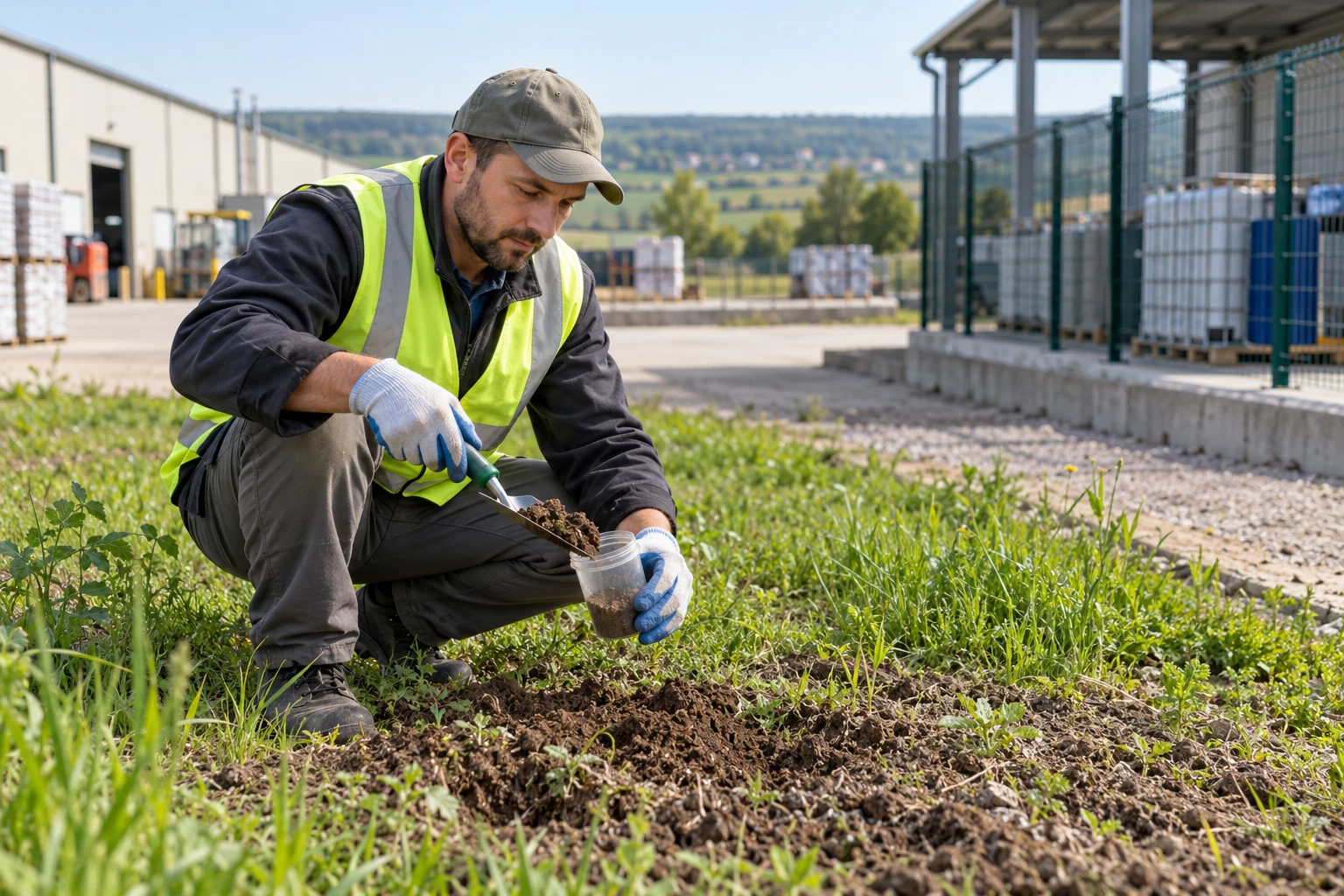
Describe current operations and known historical uses. Attach the source and date of any contamination information. If investigations are unavailable, say so. A missing report does not demonstrate uncontaminated land. A photograph that appears clean also cannot provide that evidence. Technical conclusions require competent specialists, not a visual opinion supplied to an insurance broker.
A leak can involve different property and expenses
In a preparation exercise, follow the source, the company's own area and potentially affected neighbours separately. Repairing a tank, investigating soil and responding to a third party's demand are different matters. Record them separately and ask which can be assessed under the proposed terms. Possible consequences must not become a list of promised protection when the file is summarized.
Property insurance or general liability insurance alone does not demonstrate inclusion of environmental remediation costs. Request a clear explanation of the insured subject and exclusions, meaning situations the contract does not cover. If environmental matters appear in a presentation, read the definitions in the actual wording. A Moldova operation needs assessment of its own circumstances, not an assumption imported from another jurisdiction.
Information that helps a substance inventory
Record substance types and their locations. Describe containers, quantities relevant to operations, transfer activities and existing containment arrangements using verified technical information. A vague label such as 'production liquid' is not a reliable substitute. Do not publish access arrangements or a detailed site-security plan in a general enquiry. Agree on recipients and a suitable channel before transferring sensitive technical records.
- Receiving, storage, use and discharge areas.
- Tanks and pipes with available inspection documentation.
- Operations performed by employees and by external providers.
- Existing detection systems and internal procedures.
- Documented earlier interventions, repairs and incidents.
This checklist organizes information. It replaces neither safety data sheets nor operating instructions nor legal assessment. If a field cannot be completed, retain it as an open question and request the record from the technical team. An invented answer is less useful than an explicitly identified gap, especially when later decisions depend on the reliability of the description.
Sudden, gradual and known circumstances need accurate descriptions
Damage noticed today does not prove that a process began today. Retain reports, dated photographs and intervention histories. Distinguish the observation date from the event date when the latter is known. Do not assign a technical cause unsupported by records. Clearly mark an estimate as an estimate and leave the cause open when specialists have not established it.
Ask how a proposal addresses pre-existing circumstances, gradual processes and sudden incidents. Do not assume every contract defines these terms identically. Information known before contracting needs open discussion with the specialists involved. This article neither determines whether particular contamination is insurable nor promises funding to clean a site already affected. A new policy is not automatic retrospective protection.
Lease agreements and work by other parties
For rented premises, identify provisions on handover, maintenance, substances and intervention. Retain available evidence of the initial condition. Where a supplier fills or maintains an installation, record its operations and contractual role. An obligation assigned by a commercial contract is not automatically accepted by an insurance policy. Contractual responsibility and insurance treatment require separate examination.
Seek legal advice about the obligations and an independent explanation of relevant insurance terms. A provider's statement that it 'has insurance' does not show the subject, period and limits. Check relevant certificate information without inventing provisions that only the full contract could establish. Identify each legal entity correctly. A group name or site nickname may not identify the actual contracting party.
A response plan should not be invented after an incident
The company needs an operational understanding of who observes, who reports and who can intervene safely. Keep technical procedures and role-based contacts accessible to authorized staff. An insurance article cannot safely provide improvised neutralization or handling instructions. Unsuitable action may endanger people and worsen the situation. The broker does not certify site safety or replace emergency services.
During an actual incident, follow emergency procedures and contact competent specialists or authorities as appropriate. Insurance notification follows the applicable contract. Evidence collection matters only where safe: do not enter a hazardous area for photographs. Keep operational response distinct from commercial clarification, so waiting for an insurance answer does not replace necessary competent intervention.
Organizing evidence and expenses
Separate observation costs, urgent measures, investigations, proposed works and completed works. For every entry retain documents explaining its purpose. A cleaning quotation is not a paid invoice. Paying an invoice does not itself establish acceptance under a policy. Ask about any approval process before assuming all works will be reimbursed, and retain the written answer with the relevant version.
Preserve report versions and distinguish internal observations from expert conclusions. Sampling and interpretation belong to competent specialists. This article supplies no sampling method or contamination threshold. Its purpose is a traceable file, not a promised outcome. Where different reports appear inconsistent, identify the discrepancy for specialist review rather than choosing whichever conclusion seems commercially convenient.
What to compare in the proposal received
Check the sites, activities, entities and expense categories described. Ask about the overall limit, any sublimits, the excess - the part of a loss borne by the insured under the contract - and exclusions. Compare own-site situations and third-party demands on the same basis. Record who implements additional proposed conditions and how implementation would be evidenced.
At renewal, review changes to processes, storage, substances and ownership. A new production line may change the assessment despite an unchanged address. Keep written answers and unresolved points visible. The useful result for a Moldova company is an assessment grounded in actual operations, not a claim that every environmental exposure already has an available insurance solution.
Frequently asked questions about environmental remediation
Does a new policy pay to clean contamination already identified?
Do not assume that. Disclose the known history and have it assessed before reaching any eligibility conclusion. A product description alone cannot answer the question.
What checks are needed for a site in Moldova?
Prepare site records and the operational description. Obtain separate specialist checks of applicable Moldova obligations and any insurance terms proposed for the particular risk.
Does insurance replace a response plan?
No. Prevention, operational procedures and contract assessment serve different purposes. A real incident may require competent specialists and authorities, according to the situation.
Next step
Request a conversation with ING Broker about assessment and intermediation possibilities. Insurance ING Broker SRL is an insurance broker. The insurer decides risk acceptance and handles claims under the contract. This information does not confirm product availability, acceptance of a particular site or payment of a particular expense.
Related reading: The separate question of business interruption.
Sources and information limits
The Romanian original records source consultation on 7 November 2026. The translation revision date does not mean the sources have been checked again. Preparation lists are editorial recommendations, not policy conditions. Cited product examples concern their providers and are not ING Broker offers. Legal obligations and individual circumstances require specialist verification.