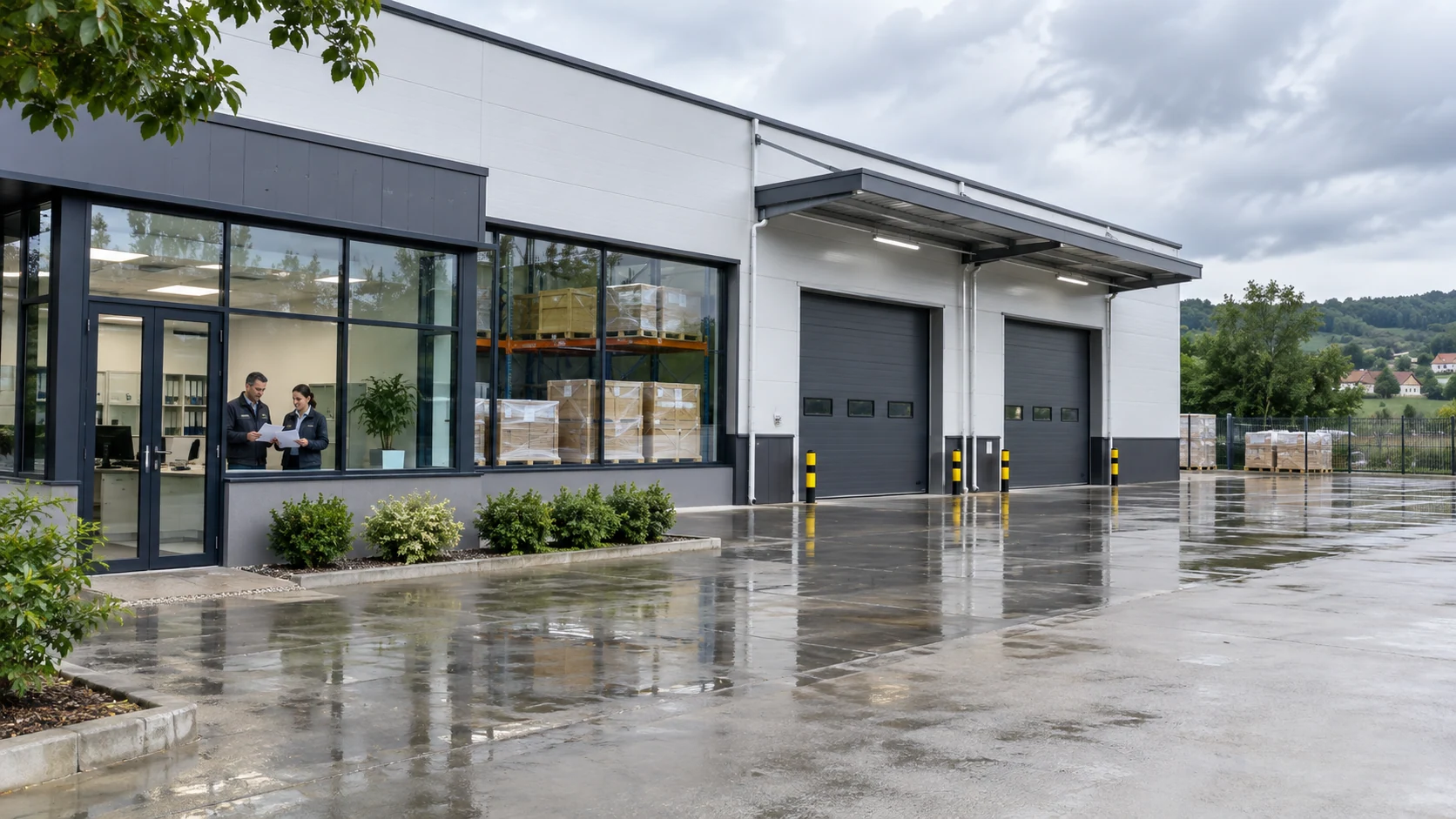

Catastrophe risks: business property and continuity
A severe natural event can affect a company's building, machinery, stock and access to services at the same time. For businesses in the Republic of Moldova, catastrophe risk assessment starts with locations and property records, not a promise that every consequence will be paid. Earthquake, flood and other phenomena must be considered separately against actual activities and insurance terms.
This article offers an administrative framework for preparing a file and continuity questions. It does not calculate disaster probability, establish a building's safety or provide technical emergency instructions. In a real situation, competent authorities and specialists take priority. The existence of an article about a risk does not confirm that every type of cover is available.
Start with locations and their business functions
A company may have an office, workshop, warehouse and shops with different functions. Prepare a sheet for each location with relevant property and activities. Do not treat sites as identical simply because they belong to the same business. Share assessment information in a controlled way without publishing premises security details.
Record the company's relationship to each asset: ownership, lease or management for someone else. Keep documents explaining the parties' roles. Commercial and legal conditions require specialist review; this article does not allocate landlord or tenant responsibility. An address and a photograph cannot replace an inventory and the relevant location documents.
Ask a specific question about each phenomenon
A request for insurance against all catastrophes can conceal expectations incompatible with the actual documents. Ask how natural risks are defined, which property they concern and what exclusions apply. A product name or short advertising list is not evidence of cover. The wording of the contract is what needs clarification.
Do not confuse water escaping from an installation with natural flooding, or gradual deterioration with a sudden event. Causes require competent assessment. In the working file distinguish known location information, available reports and missing data. This administrative description is not a technical evaluation.
Keep location history without exaggeration
Retain the dates and sources of documents about previous incidents, works and specialist observations. An informal account should not be presented as a technical report. The absence of known previous incidents does not establish the absence of risk. Equally, an event elsewhere does not automatically establish exposure at the company's premises.
Communicate the history accurately without concealing known issues. Mark incomplete information for verification. Do not invent frequencies, hazard zones, magnitudes or water levels. Such information needs appropriate sources and expertise and cannot be inferred from an article's photographs.
List buildings and contents separately
Keep inventories for buildings, installations, machinery, equipment and stock. Each value needs a document and date. Do not assume the building's amount includes every asset used by the business. Explain shared areas and customers' property through their contractual relationships instead of combining them into an undifferentiated total.
Seasonal stock can change substantially from an old inventory. Prepare relevant periods using records rather than convenient approximations. Ask which valuation basis applies to each category. Acquisition cost, accounting value and replacement cost are not universal answers and should not be substituted for one another without explanation.
Value concentration can change the economic effect
Two sites may hold similar values but perform different roles. A machine with no substitute or a seasonal stock concentration may affect recovery more than its accounting figure suggests. Describe the dependency administratively and leave technical assessment to specialists. Do not publish vulnerabilities or details exposing installations.
Check for duplicates between the general inventory and location annexes. A transferred item should remain identifiable in the records. An updated file supports questions about limits and values without guaranteeing risk acceptance or full payment of every expense following an event.
Repair and business recovery are different stages
Repairing an asset may leave administrative and operational work: competent checks, restocking, sourcing or reorganizing orders. For internal planning describe the stages and assumptions. There is no standard recovery time for every company. Estimates need to reflect its records, suppliers and actual circumstances.
Separate continuing expenses, reduced expenses and proposed extra costs. Delayed receipts are not all lost profit. If business interruption terms are being considered, ask about the link with the event, the relevant period and calculation basis. Property insurance does not automatically confirm every financial consequence.
Preparedness is more than insurance
The General Inspectorate for Emergency Situations, IGSU, publishes guidance on preparing for risks and the first 72 hours. It is official preparedness information, not a list of insured events. Company procedures require competent specialists and instructions. This article replaces neither a building safety assessment nor an applicable emergency plan.
Administratively check whether responsible staff know where necessary documents are held and who can communicate for the company. This page does not publish access plans, vulnerabilities or installation instructions. Organizing records must not delay safety measures or require people to obtain evidence from dangerous areas.
Documents that may help after an event
After competent interventions, and only when safe, the file may include available findings, communications, inventories and expense records. Distinguish an observation, estimate and report conclusion. Keep photographs with their context rather than presenting them as complete proof of the cause or all property values.
For an existing policy, check its actual notification procedure and document requirements without inventing a universal deadline. Keep paid invoices, estimates and repair alternatives separate. Several quotations for the same work must not be added together as if all were expenses already incurred.
Understand limits and deductibles before comparing
A lower price may describe different limits, assets or conditions. Compare the same categories and risks. The deductible is the part borne under the contract; a sublimit can concern a specific category. Do not assume the total policy limit applies identically to every phenomenon or expense.
Ask how events are grouped and what documents assessment requires. Request a written explanation of unclear wording. These questions do not confirm a particular product's existence. They are intended to base decisions on actual documents rather than an informal statement that disasters are included.
Example: a warehouse with seasonal stock
A hypothetical business holds more stock before its selling season. Staff prepare an inventory by period, distinguish owned goods from property received for storage and identify processes that would need restarting. They do not independently diagnose a natural event's cause or probability.
This is not a real customer. The example shows why a value from one day may describe the business incompletely. Insurance assessment needs documents about property, periods and conditions, while safety requires specialist checks. This article promises no protection for every warehouse loss.
A useful review before renewal
Compare the inventory and locations with the previous year. Record extensions, new machinery, transferred assets and works not yet accepted. Update values through appropriate evidence. Renewal for the same amount does not automatically preserve an accurate business description when stock or production processes have changed.
Insurance ING Broker SRL is an insurance broker, not a civil protection authority or structural safety expert. Discussion of records and conditions does not certify premises safety. Availability, eligibility and payment require separate verification with the insurer and relevant specialists. There is no guarantee that disasters will not occur or losses will be recovered in full.
Identify stock belonging to other companies
A warehouse may hold several owners' goods as well as its own. Record handover documents and contractual relationships without public client lists. A system's total value may include property that does not belong to the business requesting assessment. Separating ownership helps avoid duplication.
For a claim, connect the item, owner and requested amount to evidence. A loss of owned stock and someone else's claim may arise from one event but are not automatically the same insurance category. Liability questions require separate examination from property and contract conditions.
Seasonal data is not a disaster forecast
A production or sales calendar explains business values and dependencies; it does not establish natural hazard probability. Use it to describe stock and economic effects without alarmist statements about a season or locality. Hazard and safety information requires appropriate sources and expertise.
In the financial summary distinguish confirmed orders from commercial targets. A budget can help planning but does not alone prove revenue that would have arisen. This distinction prevents an optimistic forecast from becoming an assumed loss or a promise of compensation.
For a practical administrative check, compare the inventory date, period of peak stock and document supporting the figure. If a delivery is planned but not received, keep it separate from goods already present. If one item moved between sites, correct the location record rather than counting it at both. These steps improve the description; they do not determine coverage or the technical safety of either location.
Frequently asked questions about catastrophe risks
Does building insurance include every natural event?
Do not infer this from its title. Read the defined risks, limits, deductibles and exclusions. The building, stock and business interruption can require separate checks.
Does no previous incident mean zero risk?
No. History is information, not a guarantee. Technical assessment and relevant data require competent sources. This article does not calculate probabilities or rank locations by danger.
Can the same valuation basis be used for everything?
Not automatically. Explain categories and valuation through documents. Clarify buildings, installations, machinery and stock without duplication or treating historical cost as any possible contractual amount.
What takes priority after an event?
People's safety and instructions from competent authorities and specialists. Do not enter unsafe areas for photographs or use this article as technical guidance. Administrative work must not delay necessary measures.
Next step
Discuss your situation with ING Broker to check possibilities for analysis and intermediation. The broker explains and intermediates options; risk acceptance, conditions and claims settlement belong to the insurer under the contract. This guide confirms neither product availability nor cover for an individual case.
Read also: Business interruption and its economic effects.
Sources and information limits
The Romanian original records consultation of these sources on 15 November 2026. The translation revision date does not represent a new legal or product verification. Preparation lists are editorial recommendations, not policy conditions. Supplier examples are not an ING Broker offer. Legal obligations and individual situations require specialist verification.