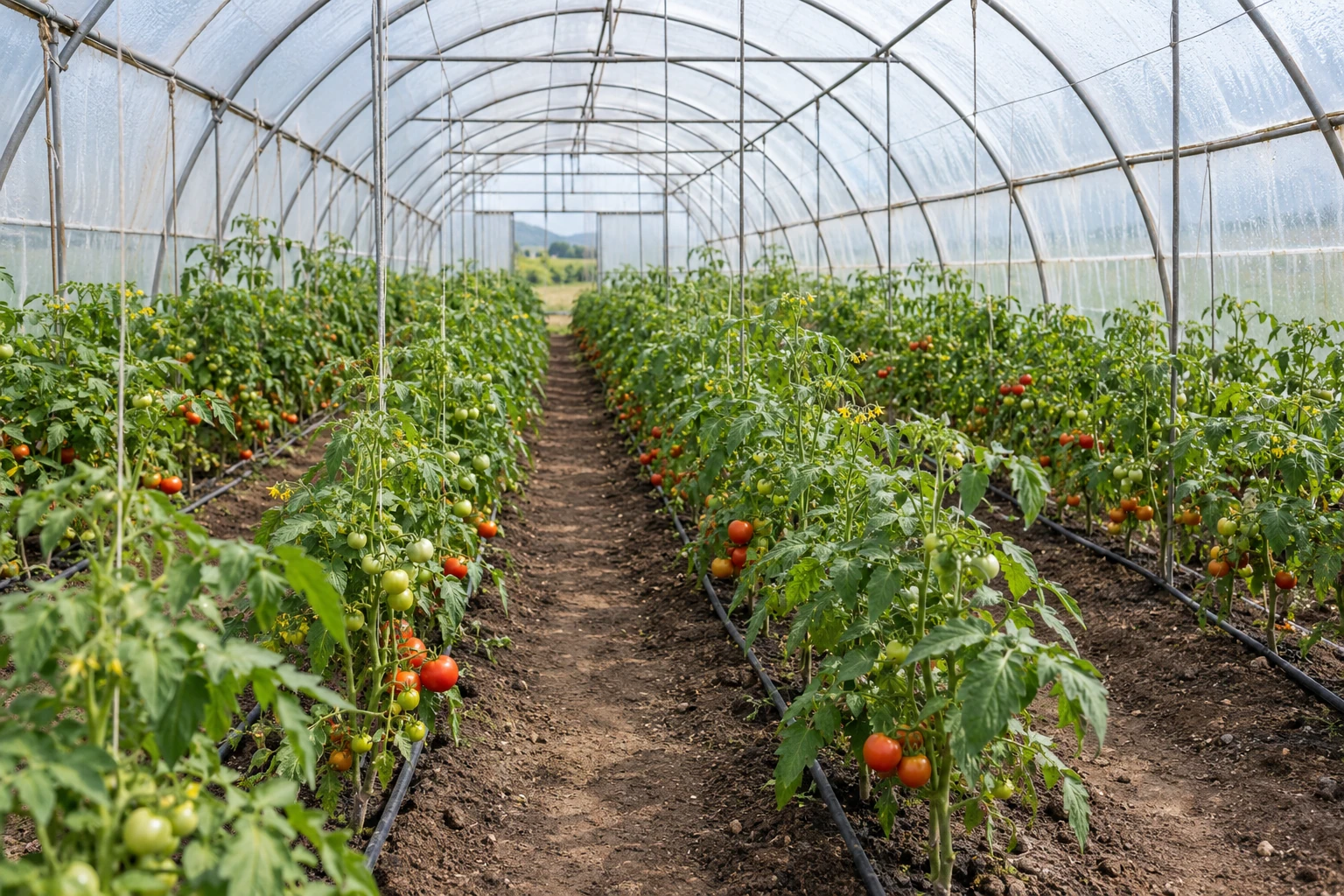

Greenhouse insurance: separate structures and crops
A greenhouse or polytunnel is not one uniform asset. Its frame, covering, installations and plants need separate descriptions when insurance assessment is requested. The existence of an offer for the building does not confirm protection for crops or losses caused by heating failure. Identify the actual objects being discussed before relying on the product's general name.
Divide the file into four categories
- Structure: location, dimensions, materials, anchoring and construction year.
- Covering: glass, polycarbonate or film, condition and replacement.
- Installations: heating, ventilation, power, irrigation and controls.
- Crops: species, cycles and supported values for specialist discussion.
Check production dependencies
For internal planning, record what happens if electricity fails, a pump stops or the covering is damaged. Prepare information about backup measures and maintenance history. These scenarios help the assessor understand operations. They do not establish that every cause or consequence is insurable, and internal planning should remain distinct from the conditions in a proposal.
Request explicit explanations of wind, hail, snow loading and installation breakdown against the actual structure being considered. Discuss limits, maintenance conditions and documents requested after an incident. Do not turn a general list of weather events into confirmed protection for every greenhouse: the construction, its condition and the proposed wording matter.
Illustration: two differently equipped tunnels
A grower has an unheated tunnel and another equipped for a longer production period. Do not describe them only by combined floor area. Prepare two sheets showing frame, film, installation year, technical systems, use and property belonging to others. For the heated tunnel, include heating, controls and power supply. This is information organisation, not an insured situation or standard offer.
Explain which elements can be replaced separately and which interventions affect the whole structure. For shared installations, identify the dependency and owner. This avoids two errors: entering the same equipment twice or omitting it because it belongs to neither individual structure. Request an inventory check before comparing offers. More photographs or a larger file cannot compensate for unclear property boundaries.
Documents for updated values
Keep film-replacement, frame-repair and heating-upgrade costs separate. They describe different objects and should not be added without explanation. For new investments, record installation dates and when they were disclosed for insurance assessment. A repair quotation is not a paid invoice. Distinguishing existing documents, estimates and missing information makes comparison more precise and avoids inconsistent values.
What to separate in a greenhouse inventory
Begin with a site plan and assign a code to each greenhouse or tunnel. Record area, frame material, covering type, installation year and anchoring arrangements. Describe new, repaired and extended structures separately. A general term such as agricultural complex does not show how many objects exist or the value assigned to each one.
In the same records, distinguish structural elements from systems maintaining the growing environment. Heating, ventilation, irrigation and controls may have different documents, values and maintenance histories. If equipment is leased or belongs to a partner, state that explicitly. The proposal should reflect the actual property interest, not only the person who works in the greenhouse each day.
- Columns, arches, supports and foundations.
- Declared covering material.
- Heating, pumps, ventilation, supply and control.
- Work tables, supports and machinery.
- Plants and materials requiring separate answers.
Crops are different from structures
The cost of replacing damaged film does not automatically express the value of affected plants inside. Describe the crop, production cycle and period when exposed value is higher. Do not use total sales as a property value without clarifying the valuation basis. Keep stocks, growing plants and expected sales income separate rather than combining their different interests.
MOLDASIG publicly mentions greenhouses and tunnels within agricultural equipment considered for insurance. This does not mean every structure, covering or crop is accepted on identical conditions. Request identification of the actual objects in the proposal. If an element remains outside the offer, record it explicitly in the farm's risk budget rather than inferring inclusion from a category name.
Prepare weather-risk discussion
A useful assessment starts with construction characteristics, not a generic weather list. Present materials, covering condition, location and alterations made after installation. If a design, installation documentation or manufacturer recommendations exist, include them on the file list. Do not invent a resistance class from a photograph or treat an image as an engineering assessment.
Ask how worn components, temporary repairs and maintenance are treated. Request explanations of exclusions, meaning situations where the contract provides no protection. Insurance does not replace technical assessment of the structure. If stability is doubtful, seek a competent inspection. The broker cannot certify the frame's resistance merely from records supplied for an insurance quotation.
For cold periods, describe supervision, heating and response. These are operational facts, not snow-removal or work-at-height instructions. Follow technical safety procedures; do not undertake dangerous work to satisfy an assumed article-based condition.
Heating and power dependencies
Record what happens if heating stops and who first notices. Describe any alarm, backup source or possibility of transferring part of operations. Explain supervision periods and responsible roles without publicly revealing sensitive farm-security information. A concrete description is clearer for assessment than the general statement automatic system, which does not explain what is actually monitored.
Separate failure of the installation from its effect on the crop. Ask whether the proposed assessment concerns machinery, plants, extra expenses or business interruption. Do not assume all those consequences automatically follow building cover. If an answer depends on an extension, request its wording and limits rather than relying on a short verbal assurance.
Compare price without losing important conditions
The premium is the price of insurance. The deductible is the part of a loss remaining with the insured under the contract. Compare offers using the same inventory and values. Check sums for the frame, installations and other accepted objects separately. A lower total may result from omitting a category, not from a genuine commercial advantage.
Ask how a replacement covering is valued and which documents justify expenses. Clarify transport, fitting and materials still usable after an incident. Do not assume an internal estimate will be accepted without evidence. Before signing, retain a final inventory matching the accepted proposal so the property discussed and the property documented do not differ.
A grower's seasonal sheet
Build a calendar of preparation, planting, growth and harvest. Beside each stage, identify the critical installation and available alternative. Heating may matter differently from irrigation depending on the crop's stage. This is an organisational exercise, not an estimate of losses or confirmation that they are covered. It helps explain dependencies without prescribing agricultural methods.
Update the sheet when the crop, structure or operating method changes. If adding a greenhouse, do not wait for annual renewal to ask about inclusion. Check when any agreed amendment takes effect and retain the response. A purchase invoice alone does not prove that a newly acquired item is included in an existing policy.
After greenhouse damage
First restrict access to unsafe areas and obtain help appropriate to the situation. Follow the contract's notification procedure. Photographs are useful only if they can be taken safely; include overall views and relevant details. Record discovery dates, affected components and urgent work without reaching your own final technical conclusion about the cause.
Keep purchase and maintenance records, requests to providers and expense evidence. Separate structural repairs from measures intended to save plants. Request guidance before disposing of materials relevant to assessment, insofar as retaining them is safe. Acceptance of expenses and assessment of a loss depend on the contract and circumstances, not merely on the file being organised.
Questions for the broker meeting
Prepare answers to four questions: what do you own, where is it, what could stop production and what could you do if that happens? Add available records and mark missing information. Do not fill unknowns with assumptions. An honest file with clarification points is more useful than a formally complete questionnaire containing unsupported answers.
At the end of discussion, request a list of assessed objects, proposed options and unconfirmed matters. Insurance for greenhouses and tunnels should fit the actual operation in Moldova. Product name and price are only two parts of the decision. Written conditions and response arrangements also matter for the grower's practical operations.
Frequently asked questions about greenhouses
Does property insurance include film and plants?
Do not assume so. Identify each category and limitations in the proposal.
Is there one solution for every structure?
Not without assessment of materials, location and operation.
How do I compare proposals?
Use identical values and inventory, marking accepted, excluded and uncertain items before price.
Next step
Request a discussion with ING Broker to check assessment and intermediation possibilities. The broker explains options; acceptance, conditions and claims decisions belong to the insurer under the contract. This article does not confirm availability or individual cover.
Read also: Inventorying irrigation installations.
Sources and limits of this information
- National Bank of Moldova: contract checks
- MOLDASIG: property, machinery and interruption
- MOLDASIG: agricultural equipment and risks
The Romanian source consulted these sources on 7 November 2026. Lists are editorial recommendations, not policy conditions. Examples are not an ING Broker offer. Legal obligations and individual situations require specialist verification.