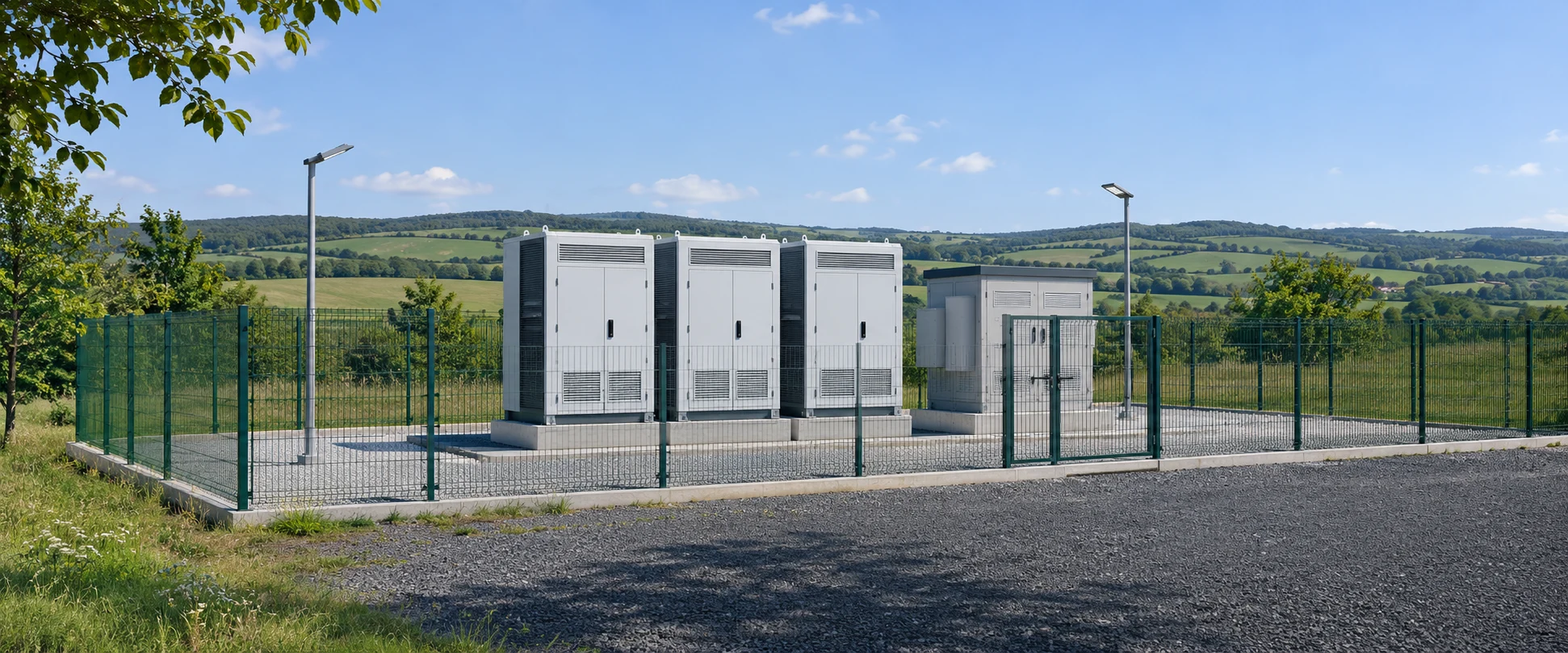

BESS battery storage insurance: configuration and risk preparation
A BESS stores electrical energy in batteries for later use or delivery. Insurance assessment in Moldova needs the entire system, not just battery capacity: modules, conversion, controls, cooling and connection with the served installation. Investment value alone does not explain operation or shutdown consequences.
This material helps investors, operators and businesses preparing storage projects. Moldova's Ministry of Energy publishes information about such installations. The article organizes a risk submission, provides no technical intervention instructions and confirms no policy for every configuration. Acceptance, conditions and possible arrangement require separate project-specific checks.
Describe the actual BESS configuration
Prepare a simplified diagram checked by the technical team. Show battery, conversion and control locations. Is the system standalone or associated with a solar plant, factory or another installation? State its actual function rather than calling every configuration a solar battery. Keep sensitive details out of a commercial overview.
Record the manufacturer, model and documents identifying the technology. Do not infer battery properties from the appearance of a container. Ask the technical specialist to confirm what can safely be shared for assessment. Include the actual stage: design, installation, testing or operation. If extensions are planned, distinguish them from equipment already installed so assessment does not begin with a future situation presented as current.
Keep component inventories and valuation records. One invoice may cover an assembly while other costs appear separately. Identify transport, installation and auxiliary work without double counting. Preserve currencies and dates. Ask how the proposal treats those items; this article sets no universal sum-insured rule.
Power and stored energy are different indicators
Keep power separate from stored energy. Documents may use kW or MW for power and kWh or MWh for energy. Ministry materials present those indicators separately. Do not substitute one for the other or copy a number simply because headings look similar.
Ask the technical team to confirm the indicators for the actual configuration and explain their meaning in the submitted sheet. If the system has several units or has been expanded, show which component each figure describes. Retain the original unit and source. This simple check helps avoid an inaccurate commercial description, but does not calculate operating duration, certify performance or establish compensation.
For one actual configuration, link equipment to its owner, location and source document. Keep power and energy fields separate and identify which unit each figure describes. Do not infer technical characteristics from a photograph or silently replace missing information with another project's numbers.
Who owns and operates the system?
Owner, site user, operator and financier may differ. Prepare relevant relationships and communication roles. A company name in a project does not automatically confirm insured interests. Before comparing proposals, ask for checks of parties and property. A clear role table prevents documentary misunderstanding.
Separate commercial administration from technical decisions. Who monitors operation, who receives an alert and who may decide on an intervention? Do not give the broker credentials, system access or details that would permit control of the installation. Descriptions of roles, documents and existing procedures are useful for preparing the file. Security checks and actual operation belong to competent authorized people, not an editorial exercise.
If storage serves a factory or warehouse, explain the business's dependency. Battery stoppage and complete business stoppage do not always have identical consequences. Describe functions that continue and those affected. This supports discussion without confirming insurance for every indirect consequence.
Installation and acceptance documents
Collect the applicable design, equipment records, installation agreements and acceptance documents. Check whether their versions refer to the same configuration. A change in modules or auxiliary equipment may leave discrepancies between documents. Record those differences and ask for clarification. Do not retrospectively complete the file with unverified information merely to produce a description that appears uniform.
Document testing and operational handover separately. Who recorded results and which issues remain open? Do not publish sensitive reports or treat one certificate as proof of every system feature. Insurance stage, period and conditions require actual document review. Starting commercial activity does not independently establish protection discussed earlier.
For expansion, show what continues operating and what is being installed. Have the team explain boundaries. Common premises or ownership do not automatically include new work. Configuration updates and contract review are separate steps. Describe changes accurately without promising acceptance on unchanged conditions.
In the timeline, distinguish installed, tested and operating portions. An expansion may share a site without sharing the same assessment stage. Preserve earlier and updated versions, and ask how the change affects the proposal. This organizational example does not authorize commissioning or replace specialist technical decisions.
Describe monitoring and maintenance
Prepare the existing procedures and agreements for periodic inspections and unplanned interventions. Record which provider services each system part and which documents remain after the work. A commercial description of monitoring does not show every operator responsibility. Ask the team to explain actual processes, rather than functions that will only be installed or activated at a future stage.
Preserve known alerts, deficiencies, timelines and specialist actions. Do not delete information to simplify the file. Separate observations from causal assumptions. This article cannot decide whether operation may continue. Do not open modules, change settings or conduct dangerous tests to complete a commercial questionnaire.
Discuss contractor access, spare parts and post-repair checks separately. Telephone availability does not establish immediate replacement of all components. Seek relevant confirmations and state information limits. Realistic dependencies are more useful than undocumented recovery times or blanket promises of permanent service.
Is degradation the same as accidental failure?
Do not automatically equate them. Describe observations, dates and checks. Preserve warranty records and technical reports. A declining application figure alone establishes no insurance cover. Cause, timing and conditions need competent assessment for the actual situation.
Commercial warranties, service agreements and insurance have different roles. Ask what each confirms and leaves unspecified. Parts, transport, labour, replacement and unrealized income do not combine automatically into a payment promise. Keep written explanations instead of turning a verbal answer about one item into a complete solution.
Prepare an interruption scenario
Describe effects on actual storage, delivery, self-consumption or other designed functions. Separate physical operation, sales arrangements and costs. A financial forecast is a planning assumption, not proof of earned income. Prepare evidence explaining the period and consequences without invented loss percentages.
For any interruption proposal, ask about triggering events and calculation methods. Price changes, network restrictions and deviations from planned yield are not automatically insured physical damage. Distinguish scenarios and look for answers in the actual proposal, not an article about another technology or market.
Comparing proposals
Use the same configuration and dates. Record subject, sums, risks, limits and exclusions, meaning situations without cover. The excess is the insured's share of a loss under the contract. The premium is the insurance payment. Price separated from those conditions is insufficient for an informed comparison.
Mark missing information as a question, not an included benefit. Request complete documents and identify where every answer is supported. If the quotation, schedule and technical description use different versions of the installation, clarify the discrepancy before choosing. Do not send a financier or partner a statement of complete protection based only on a preliminary calculation or the name of an insurance category.
The investor's preparation list
- Actual configuration, function and site.
- Owners, operator and other contractual roles.
- Inventory, valuation documents and version differences.
- Project stage, handover and open interventions.
- Maintenance, warranties and spare-part dependencies.
- Shutdown scenarios and supporting assessment data.
Update the file after expansion or operating changes. Accurate description is more useful than contradictory documents. Agree separate delivery of sensitive annexes. Insurance ING Broker SRL is a broker; risk acceptance, conditions and claims handling belong to the insurer under the contract.
Frequently asked questions
Is a battery added to a plant automatically included?
Do not infer inclusion from a shared site. Describe configuration, owner, value and stage. Request review and confirmation before representing protection as effective.
Is there a standard price for every system?
This article gives no such tariff. Assessment needs project data and an available proposal. Compare premium with subject, limits, exclusions and excess.
Should I provide my system account to demonstrate operation?
Do not share passwords or operational control for commercial discussion. Request appropriate records from specialists through authorized channels. A screenshot does not replace acceptance, technical verification or policy conditions.
Next step
Request a conversation with ING Broker to check assessment and intermediation possibilities. The broker explains options and arranges insurance. Risk acceptance, conditions and claims handling belong to the insurer under the contract. This article does not confirm product availability or coverage of an individual case.
Related reading: Solar panels: equipment and documents to check.
Sources and limits
- Ministry of Energy: renewables and storage context
- National Bank of Moldova: insurance contract elements
The Romanian original records source consultation on 10 November 2026. The translation revision date does not mean the sources have been checked again. Preparation lists are editorial recommendations, not policy conditions. Cited products belong to their providers and are not ING Broker offers. Legal obligations and individual circumstances require specialist verification.